Bagasse Containers: The Smart, Eco-Friendly Choice for Your Takeout Business
By
Contents
- What Are Bagasse Containers and Why They Matter?
- Bagasse vs Plastic vs Paper Containers
- How Bagasse Containers Fit Different Restaurant Scenarios
- A Real-World Example: Packaging That Paid for Itself
- Cost, Sustainability, and Long-Term Benefits
- Post-Purchase Best Practices
- Alternatives and When to Consider Them
- Frequently Asked Questions
For takeout operators, bagasse containers are less about “going green” and more about fixing three daily headaches at once: soggy packaging, delivery damage, and weak brand perception.
What Are Bagasse Containers and Why They Matter?
Bagasse is the fibrous pulp left after sugarcane is pressed for juice. Instead of treating it like waste, manufacturers clean it, press it under heat, and turn it into food containers that can handle heat, grease, and moisture without a plastic lining.
That matters more than it sounds. If you have ever watched a paper box collapse under a saucy lunch order, you already know why this material gets attention. It holds shape better than standard paper, and it skips petroleum entirely, which is a big reason restaurants are paying closer attention to it.
A 2021 life cycle assessment published in Journal of Cleaner Production found that bagasse can emit up to 65–80% less CO₂ than PET plastic across its production lifecycle.
Bagasse vs Plastic vs Paper Containers
Here is the part most buyers actually care about: how it performs when the food leaves the kitchen.
| Feature | Bagasse | Plastic (PP) | Paper / Kraft |
| Heat resistance | Up to 95°C / 200°F | Varies | Low |
| Grease resistance | Strong | Strong | Weak without lining |
| Freezer-safe | Yes | Yes | Limited |
| Microwave-safe | Yes | PP only | Usually no |
| Leak resistance | Good for soups and sauces | Excellent | Poor without liner |
| Compostable | Yes, 60–90 days | No | Partially |
Bagasse usually costs more than commodity plastic, but the extra unit cost does not tell the whole story. In cities with tighter plastic rules, that difference can be easier to justify than a late-night call from a customer whose soup leaked through a flimsy box. It also helps when the packaging itself makes the order feel more intentional.
One vendor I spoke with at a weekend market put it pretty simply:
“When we switched, we stopped explaining our packaging. People just understood it.”
That’s the kind of invisible upgrade that’s hard to measure but easy to feel.
How Bagasse Containers Fit Different Restaurant Scenarios
Not every menu needs the same packaging, and bagasse works especially well when the food is hot, slightly oily, or moving through delivery.
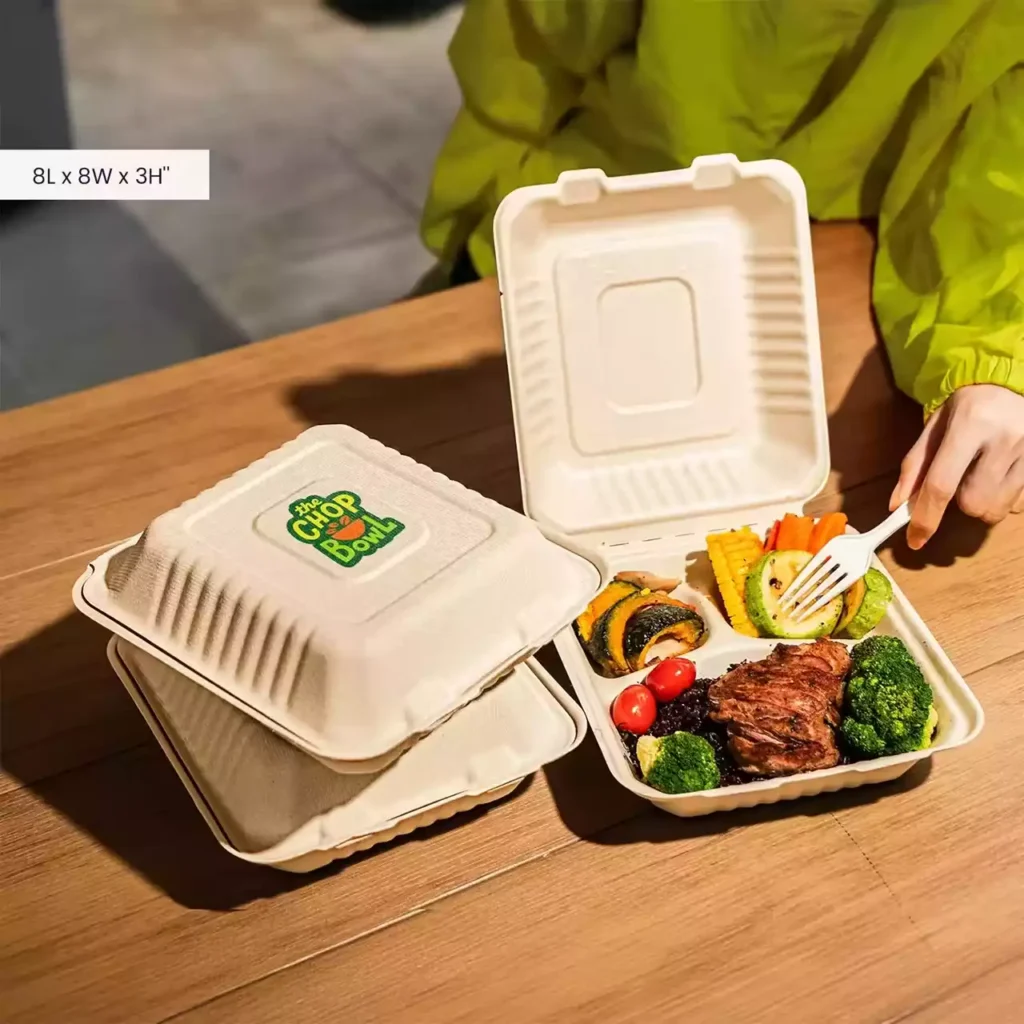
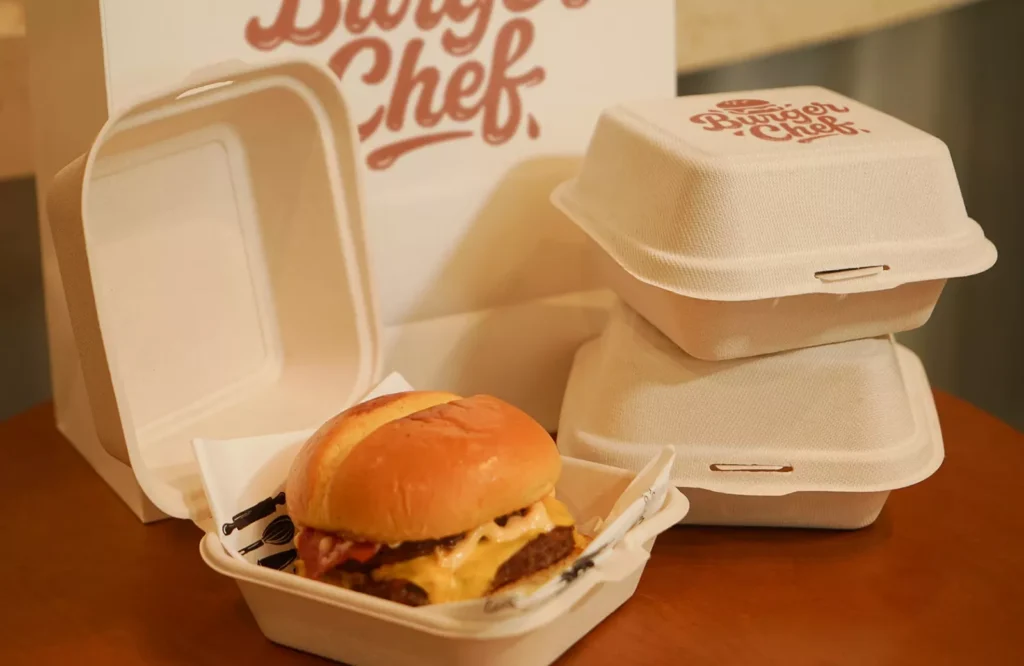
- Fast-casual and quick-service: clamshells hold burgers, rice plates, and grain bowls without sagging.
- Health food and salad bars: divided trays keep ingredients separate instead of turning everything into one soft mix.
- Soup and curry shops: deep bowls with fitted lids seal better than plain cardboard.
- Food trucks: lightweight, stackable, and easier to store in tight prep areas.
- Coffee shops: useful for baked goods, overnight oats, and lunch items that need a cleaner look.
For delivery, structural strength matters more than most people think. A box that looks fine on the counter can still fail in a delivery bag after ten minutes of jostling. Bagasse tends to stay more rigid than thin plastic clamshells, which helps reduce the “lid popped open in transit” problem that shows up in app reviews.
Compostable fiber clamshells are also increasingly replacing EPS foam, which has been phased out in many places because of environmental concerns. Bagasse stands out here because it combines grease resistance with a sturdier feel, not just a greener label.
Suppliers like Fusenpack offer compostable bagasse formats such as 3-compartment trays, clamshells, and fiber bowls, along with custom branding options and lower minimum order quantities that make testing easier for smaller operations.
A Real-World Example: Packaging That Paid for Itself
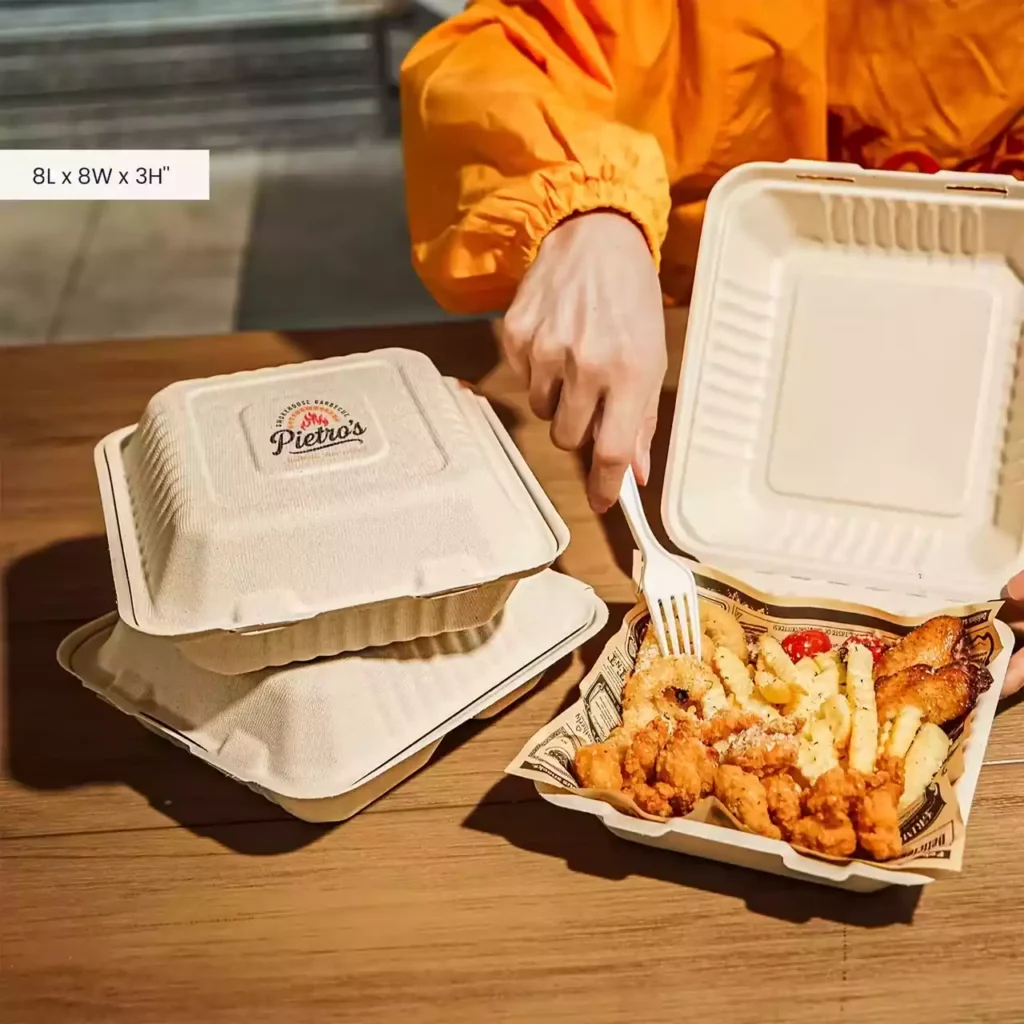
One pizza shop in New York switched to sugarcane bagasse boxes through Fusenpack and saw a noticeable lift in repeat orders. The owner told me the biggest change was not the packaging cost itself. It was the reaction at the door: the box looked deliberate, not disposable.
They started with one container size, tested it for two weeks, and then expanded. Fusenpack provided several custom design concepts quickly, which made the whole move feel lower risk. That matters when a small restaurant does not have time to build a packaging team from scratch.
A logo, a short sustainability line, even a QR code — that is often enough to turn a container into a brand touchpoint. The National Restaurant Association’s 2025 Off-Premises Trends report found that over 60% of Gen Z and millennial adults will pay more for takeout when the packaging signals quality and sustainability. [Data source:National Restaurant Association, 2025 Off-Premises Trends]
Cost, Sustainability, and Long-Term Benefits
Bagasse containers typically cost 15–30% more per unit than basic polypropylene. PLA, which is made from corn-based feedstock, often lands in a similar range, but it still depends on industrial composting facilities that many municipalities do not have. [Data source: Industry procurement price range and supplier quotations]
On the production side, a 2024 lifecycle analysis reported that bagasse container manufacturing uses 65% less energy and emits 89% fewer greenhouse gases than petroleum-based plastic. [Data source:Lifecycle Analysis, 2024] That does not automatically make bagasse the cheapest option, but it does make the business case stronger once you account for brand value, compliance pressure, and customer perception.
Under industrial composting conditions, bagasse breaks down in roughly 60–90 days. In home composting, the process is slower and depends heavily on moisture and airflow. In a landfill, of course, the story changes again. That is why the composting setup matters just as much as the material itself.
Post-Purchase Best Practices
Getting good results from bagasse containers is mostly about storage and handling, not magic.
Storage
- Keep them in a cool, dry place.
- Avoid damp storage rooms, since bagasse can absorb humidity over time.
- Do not stack heavy inventory on top for long periods.
- Keep them out of direct sunlight if they sit in storage for weeks.
Use
- Bagasse is fine for same-day dine-in use or short-term handling, but it is not made for repeated washing.
- For serious reuse programs, a dedicated reusable container is the cleaner choice.
- Rotate stock using FIFO so older inventory is used first.
A coffee shop I worked with cut warped packaging problems by tightening storage conditions, not by changing suppliers. That is the kind of fix that sounds boring until you see the complaint count drop.
Fusenpack’s free design concepts and 3D previews also help smaller restaurants test packaging without hiring a designer. That lowers the barrier to branded packaging, which is often where small operators stall.
Alternatives and When to Consider Them
Bagasse is strong, but it is not the answer for every menu.
- Reusable containers make sense for dine-in-heavy operations or deposit-return systems. They reduce single-use waste the most, but they need washing infrastructure and customer cooperation.
- PLA containers work better for cold items such as salads, chilled desserts, or clear-lid presentation.
- Kraft paper boxes can work for dry foods like fries and pastries, but once grease or moisture enters the picture, performance drops fast.
There are also cases where bagasse may not be the right move:
- You are in a region with no industrial composting access, and the sustainability story will feel weak.
- Your order volume is very low, so the unit-cost premium hurts more.
- Your menu is almost entirely cold, where PLA or another format fits better.
A hybrid setup often works best. Bagasse for hot and delivery items, reusable for dine-in, PLA for cold food. That is usually more practical than forcing one material to do everything.
Frequently Asked Questions
Q: Can bagasse containers be microwaved or frozen?
A: Yes. They are microwave-safe and freezer-friendly. They should not go in a conventional oven.
Q: How long does it take to compost bagasse containers?
A: Around 60–90 days in industrial composting facilities. Home composting takes longer.
Q: Are bagasse containers leak-proof for saucy dishes?
A: They hold up well for curries, stir-fries, and soups with a fitted lid. Very thin soups still need careful sealing.
Q: Bagasse vs PLA vs paper: which is better for my restaurant?
A: Bagasse is usually stronger for hot, oily, and wet food. PLA fits cold food better. Paper is fine for dry items, but it struggles once moisture shows up.
Bottom line: bagasse containers are not just a greener swap. They are a packaging choice that can improve delivery performance, make the food feel more intentional, and support the brand without adding a lot of complexity.