Custom Coffee Cups with Logo: Sizes, Printing, MOQ & Cost
By
Contents
- Why Most Coffee Shops Overspend on Custom Coffee Cups
- Hot Cups vs. Cold Cups: Know What You Are Actually Buying
- Common Sizes: Which One Actually Moves for Takeaway?
- Printing: How to Balance Your Logo, Colors, and Budget
- MOQ: Why a Lower Minimum Is Not Always the Better Deal
- Real-World Example: Why a Smaller Design Choice Can Save You More Than a Bigger Discount
- What Actually Determines the Cost of Custom Coffee Cups?
- Material: What Fits Your Brand, Your Customers, and Your Operations?
- How to Place a Smart Order and Not Get It Wrong
- FAQ: What Café Owners Actually Ask
- Final Thought
Most cafés do not lose money on custom coffee cups. They lose it on ordering the wrong mix, in the wrong quantity, at the wrong time.
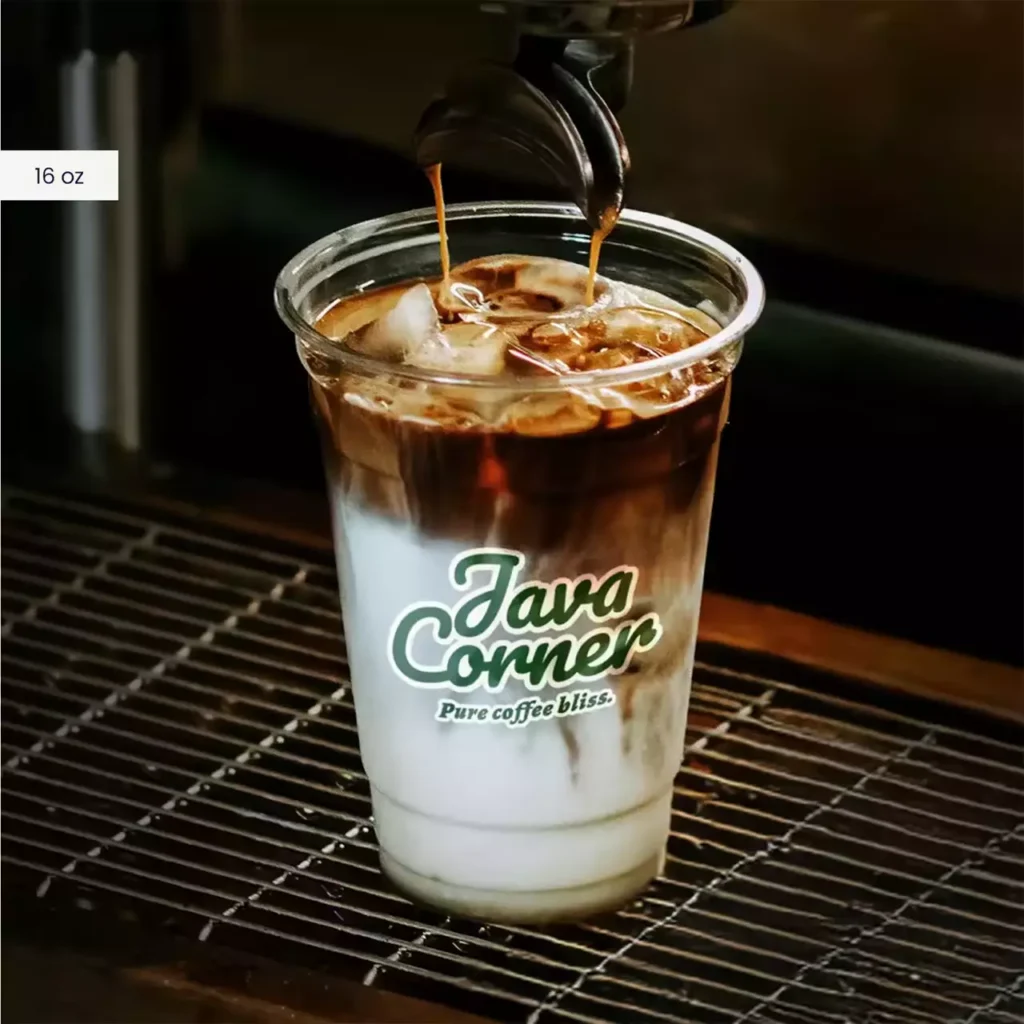
If you are sourcing custom coffee cups with logo for a coffee shop, takeaway brand, or multi-location chain, the real question is not which cup looks nicest on a mockup. It is which size, print method, and order quantity actually fit the way your business runs.
That is what this guide is about. Not just cups, but the decisions behind them: size, printing, MOQ, cost, and material. Get those right, and your packaging works quietly in the background. Get them wrong, and it turns into dead stock, rushed reorders, and avoidable cost.
Why Most Coffee Shops Overspend on Custom Coffee Cups
The cup itself is rarely where the money disappears. The waste usually comes from the order pattern: too many sizes, too many color variations, a small run with high setup fees, or a reorder schedule that creates extra shipping and admin work.
Buying custom coffee cups is really five choices wrapped into one:
- Which size or sizes to stock
- Which printing method fits your brand and budget
- What MOQ actually makes sense for your volume
- What the full landed cost looks like, not just the unit price
- Which material matches your customers and operating model
Get those five right, and the packaging becomes part of the brand. Get them wrong, and you end up with inventory that sits too long, reorders that land too late, or cups that look fine but cost more than they should.
Hot Cups vs. Cold Cups: Know What You Are Actually Buying
Before you spec anything, separate hot cups from cold cups. They are built for different jobs, and they are not interchangeable.
Hot cups are coated to handle heat and resist leaks. They usually come in single-wall and double-wall formats. Single-wall is the workhorse. Double-wall gives better hand comfort and usually feels more premium in the customer’s hand.
Cold cups are built for iced drinks. They need better moisture resistance so condensation does not soften the cup halfway through the drink.
A few common formats:
- Single-wall paper hot cup — standard for most espresso-based drinks
- Double-wall paper hot cup — better insulation and a cleaner customer experience
- Kraft paper hot cup — a more natural look for specialty or eco-positioned brands
- Paper cold cup — for iced lattes, cold brew, soda, and other cold drinks
If your business is mostly takeaway coffee, hot cups will usually carry most of the volume. That is also where branding gets seen the most, because this is the cup your customer actually walks out with.
Common Sizes: Which One Actually Moves for Takeaway?
Size is one of the easiest decisions to overcomplicate.
| Size | Volume | Best for |
| 8 oz | ~240 ml | Espresso, flat white, short black |
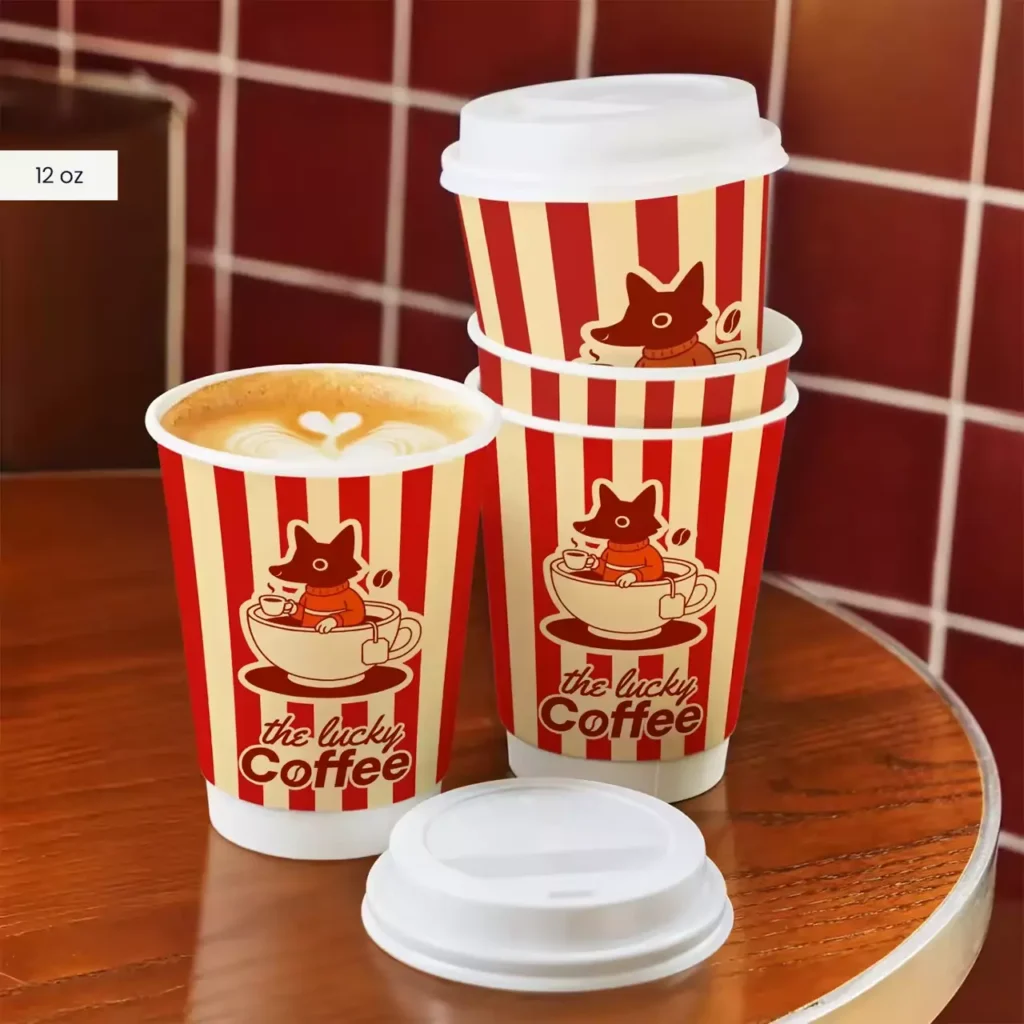
| 12 oz | ~360 ml | Standard latte, cappuccino |
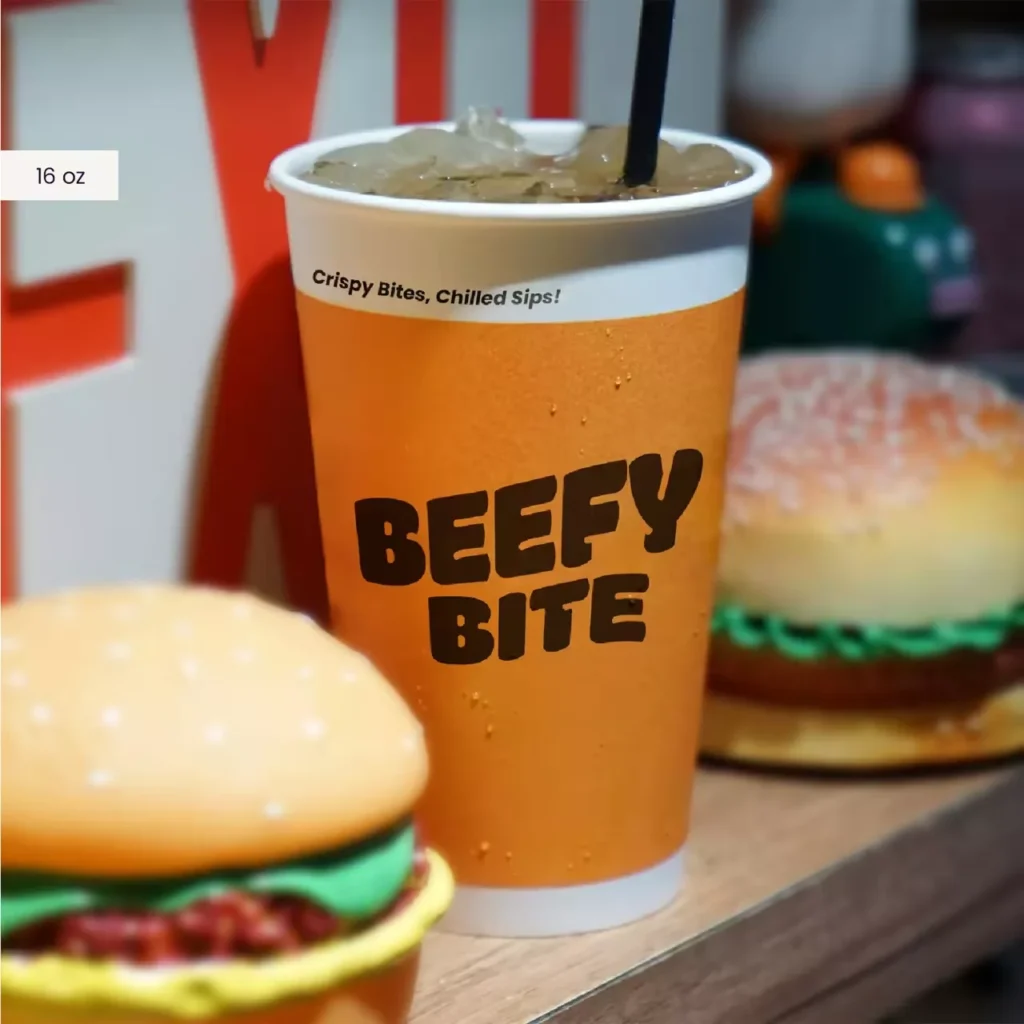
| 16 oz | ~480 ml | Large latte, flavored drinks, oat milk drinks |
| 20 oz | ~600 ml | Larger-format drinks and high-volume menus |
Most independent cafés only need 12 oz and 16 oz. Add 8 oz if you serve many espresso drinks. Don’t use more than three sizes — they take extra storage, cause confusion and slow down inventory.
Printing: How to Balance Your Logo, Colors, and Budget
Printing is where a branded cup either feels polished or starts to get expensive.
The main printing methods are:
- Flexographic printing — best for larger volume runs and straightforward branding
- Offset printing — better for sharper detail and more complex artwork, but usually higher setup cost
- Digital printing — more flexible for short runs, though the unit cost is usually higher
A few things move the quote fast:
- Number of colors — more colors usually means more cost
- Logo placement — a full wrap costs more than a simple front-panel design
- Finish — matte reads more premium; glossy feels more standard and commercial
MOQ: Why a Lower Minimum Is Not Always the Better Deal
MOQ, or minimum order quantity, is where a lot of buyers misread the market.
A lower MOQ sounds safer, but it often comes with a tradeoff: higher unit cost, fewer print options, slower production, or more frequent reorders.
When you order small, you usually pay for some combination of:
- Higher per-unit pricing
- Setup and plate fees spread across fewer cups
- Less production flexibility
- More shipping cycles and more admin time
For a café with steady daily customers, bulk orders usually cost less overall than small low-MOQ orders. Smaller runs make sense when testing a new shop or menu. But once demand is stable, focus on the order size with the lowest total cost in 3–6 months, not just the lowest MOQ.
Real-World Example: Why a Smaller Design Choice Can Save You More Than a Bigger Discount
A good example comes from Cipota Coffee. In a 2025 case study, the brand started with stamps and stickers on stock cups, then moved to fully printed custom paper cups. The reason was not only aesthetics. The sticker process took extra time, and the cost difference was not as meaningful as it first looked. The team also felt the full print “pops more,” which mattered for brand impact.
That is the part most buyers miss. The cheapest-looking option is not always the cheapest option. If your team has to spend time applying stickers, managing mixed packaging, or fixing a design that photographs badly, the “budget” choice can become the expensive one.
What Actually Determines the Cost of Custom Coffee Cups?
The unit price on a quote sheet is only the beginning.
| Cost component | What affects it |
| Material | Single-wall vs. double-wall, kraft vs. standard paper |
| Size | Larger cups use more material |
| Number of colors, artwork complexity, setup fees | |
| Quantity | Volume breaks matter a lot |
| Packaging | How cups are packed and protected |
| Freight | Shipping terms and destination costs |
The hidden costs buyers often forget are the sample fee, plate or setup fees, and the cost of a supplier delay that pushes a launch by weeks. A cheap quote with a messy process is not really cheap.
Material: What Fits Your Brand, Your Customers, and Your Operations?
The sustainability conversation matters, but it does not mean every café needs to switch materials just for branding.
A practical way to think about it:
- Single-wall PE-coated paper cup — common, cost-efficient, and practical for everyday takeaway
- Double-wall paper cup — better heat retention and no sleeve needed
- Kraft paper cup — a natural look that fits specialty coffee brands well
- PLA-lined cup — useful where composting exists, but not always the simplest operational choice
The best material is the one that fits your drink temperature, your disposal setup, and the way your customers actually use the cup. A cup that sounds sustainable in a brand deck is not automatically the right choice at the counter.
How to Place a Smart Order and Not Get It Wrong
Here is the order of operations that usually keeps buyers out of trouble:
- Lock your sizes — choose the top 2–3 SKUs first
- Finalize your artwork — confirm logo format, colors, and placement
- Request a sample — always check a physical sample before a full run
- Review the full quote — unit price, setup fees, freight, and lead time
- Start with one run, then scale — especially if this is your first order with a new supplier
A smart order is not the one with the fanciest cup. It is the one that fits your service model, your storage space, and your reorder rhythm.
If you are comparing custom coffee cups with logo suppliers, Fusenpack’s product pages show free design service, free storage, and a 36-hour quote and mockup response, which can make the early procurement stage easier to manage.
FAQ: What Café Owners Actually Ask
Q: What’s the best takeaway coffee cup size?
A: 12 oz is the standard. 16 oz works if you sell many large lattes.
Q: What’s the MOQ for custom cups?
A: Usually 5,000 units.
Q: How long is production?
A: 8–12 weeks.
Q: Best printing for logos?
A: Flexo or Pantone with few colors is best.
Final Thought
Most cafés do not lose money on custom coffee cups. They lose it on choosing the wrong ordering strategy.
Get the size mix right. Keep the print simple enough to scale. Treat MOQ as a planning problem, not just a price filter. And before you commit to a supplier, make sure the quote, the lead time, and the actual cup all work together.