Burger Boxes: There’s No “Best” Box—Only the Right One for Delivery
By
Contents
- Why Most Burger Boxes Fail in Delivery
- What Actually Causes Leaks, Soggy Buns, and Crushed Burgers?
- What Makes a Burger Box Work? Structure and Material Matter
- Not All Burger Boxes Fit Every Delivery Scenario
- Compostable vs. Grease-Resistant: The Trade-Off Nobody Talks About
- How to Choose the Right Burger Box for Your Business
- Recommended Burger Packaging Solutions from Fusenpack
- FAQ
- Final Takeaway: There Is No Best Burger Box—Only the Right One for Delivery Conditions
Burger boxes that look fine on the prep table can fall apart fast once they leave the restaurant.
That is the part most operators learn the hard way. A box that works well for dine-in often struggles in delivery, and the cost shows up in soggy buns, greasy bags, and reviews you do not want to read twice.
Why Most Burger Boxes Fail in Delivery
Most burger packaging problems start after the order is packed, not while the food is being made.
Over the years, I have seen operators spend real money on better patties, better buns, and better toppings—only to lose the whole experience because the box could not handle a 20-minute ride.
The issue is usually not supply. Burger boxes are everywhere. The issue is fit. A box that feels sturdy on a shelf can behave very differently once it is stacked in a delivery bag, pressed against hot fries, and bounced around on the road.
Common delivery failures include:
- Buns turning soggy because steam has nowhere to go
- Grease soaking through the bottom and staining the bag
- Burgers shifting and collapsing under pressure from other items
- Lids opening halfway through delivery
This is not bad luck. It is packaging being used in the wrong conditions.
What Actually Causes Leaks, Soggy Buns, and Crushed Burgers?
Three things cause almost every delivery burger failure: steam, grease, and pressure.
- Steam buildup
When heat stays trapped inside a sealed box, moisture collects fast. It lands back on the bun, and the texture starts going soft almost immediately. - Grease penetration
High-fat burgers—especially smash burgers, double patties, or anything sauce-heavy—push oil into the board. Standard cardboard can absorb that fast, which weakens the box and leaves the package looking rough on arrival. - Structural collapse
Delivery bags are not gentle. Orders get stacked, set down hard, and shifted in transit. If the box does not have enough rigidity, that pressure reaches the burger itself.
Once you understand these three failure points, choosing packaging becomes much easier.
What Makes a Burger Box Work? Structure and Material Matter
A good burger box is not just thicker cardboard. It has to handle ventilation, locking, and grease resistance at the same time.
Ventilation Helps Reduce Sogginess
Ventilation holes let steam escape during transit instead of building up inside the box. That matters most when delivery takes longer than a few minutes. Without that release point, the bun softens fast.
Locking Structure Prevents Opening During Transport
Tuck-in flaps, friction locks, and interlocking tabs help keep the lid shut even when bags shift or tilt. If the lid opens in transit, the problem is no longer just presentation—it becomes a customer complaint.
Grease-Resistant Material Prevents Leaks
Grease-resistant burger boxes use coated or treated paperboard to slow oil absorption. For high-juice burgers, that extra resistance is often the difference between a box that holds up and one that looks tired by the time it lands.
This is exactly where Fusenpack’s burger packaging solutions are designed to help: better fit, better hold, and better delivery performance.
Not All Burger Boxes Fit Every Delivery Scenario
This is the part most buyers overlook: delivery conditions are not the same.
Packaging should change with the order, the route, and the food.
Short-Distance vs. Long-Distance Delivery
| Delivery Type | Main Priority |
| Under 10 minutes | Speed of assembly, basic grease resistance |
| 10–30 minutes | Ventilation, structural rigidity, secure lock |
| 30+ minutes | Heavy-duty grease resistance, reinforced base, full lock |
Short runs forgive a lot. Longer runs expose every weak point.
Single Burger vs. Combo Meals
A single burger in a well-fitted box usually travels cleanly. A combo meal is different. It adds stacking pressure, heat transfer, and weight distribution problems. That means stronger bases and better lid locks matter more.
Greasy Burgers vs. Dry Burgers
A smash burger with double sauce needs a grease-resistant burger box. No debate there.
A grilled chicken burger with drier toppings is more forgiving, but structural stability still matters. The menu should guide the packaging—not the other way around.
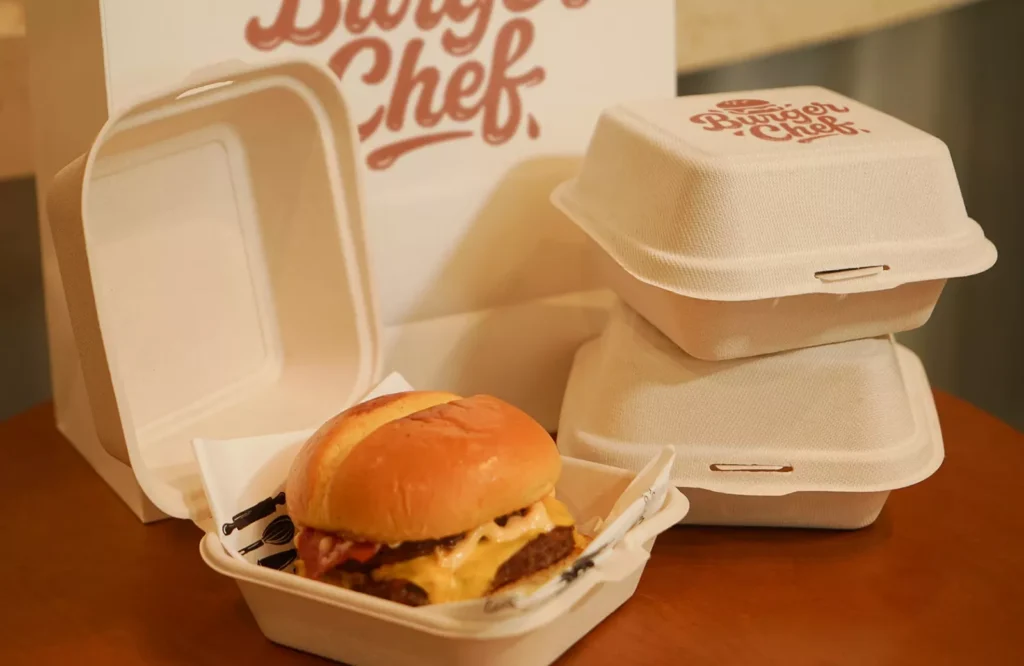
Compostable vs. Grease-Resistant: The Trade-Off Nobody Talks About
Here is the part many packaging suppliers gloss over: compostable burger boxes are better for the environment, but they are not always the best choice for delivery performance.
Compostable options can work well for:
- Lower-fat menu items
- Shorter delivery windows
- Brands where sustainability is part of the selling point
Where they can struggle:
- High-oil, high-moisture burgers on longer routes
- High-volume operations that need consistent structure under pressure
A better way to think about it is this: environmental value and delivery performance are not always the same thing.
You need the box that fits the food, the route, and the brand promise.
How to Choose the Right Burger Box for Your Business
Skip the guesswork. Use the menu and the delivery profile to guide the choice.
If You Need Better Oil Resistance
Go with a grease-resistant burger box.
That is the safer choice for smash burgers, double-patty builds, heavy sauce, and delivery distances over 15 minutes.
If You Want More Sustainable Packaging
A custom compostable burger box makes more sense for brands that prioritize sustainability and serve lower-fat or drier menu items. It fits fast-casual concepts that want the packaging to match a clean brand story.
If You Need Branding and Scale
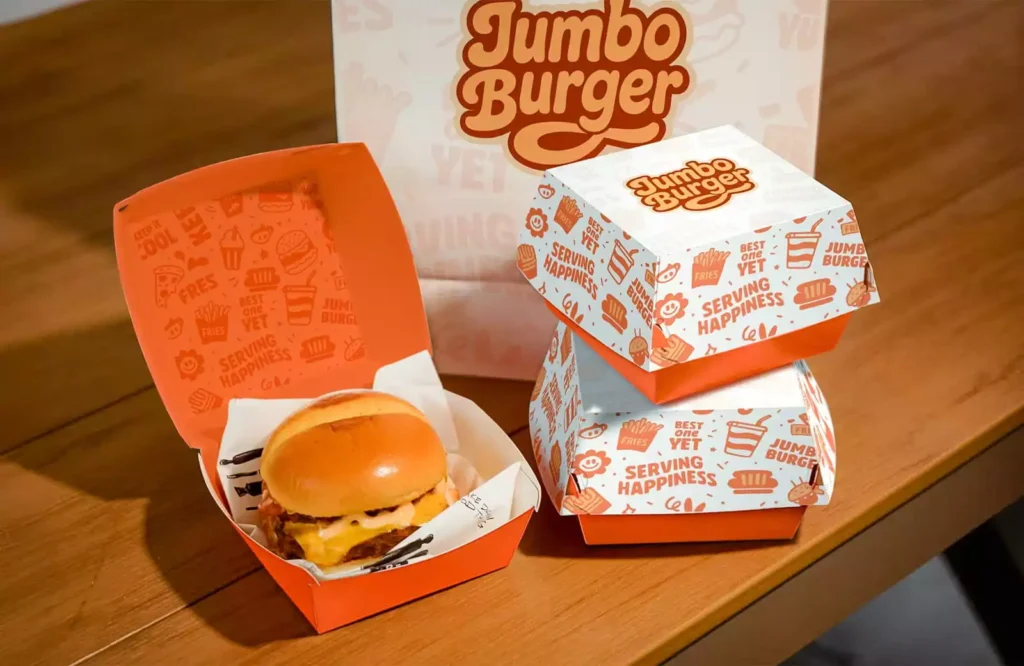
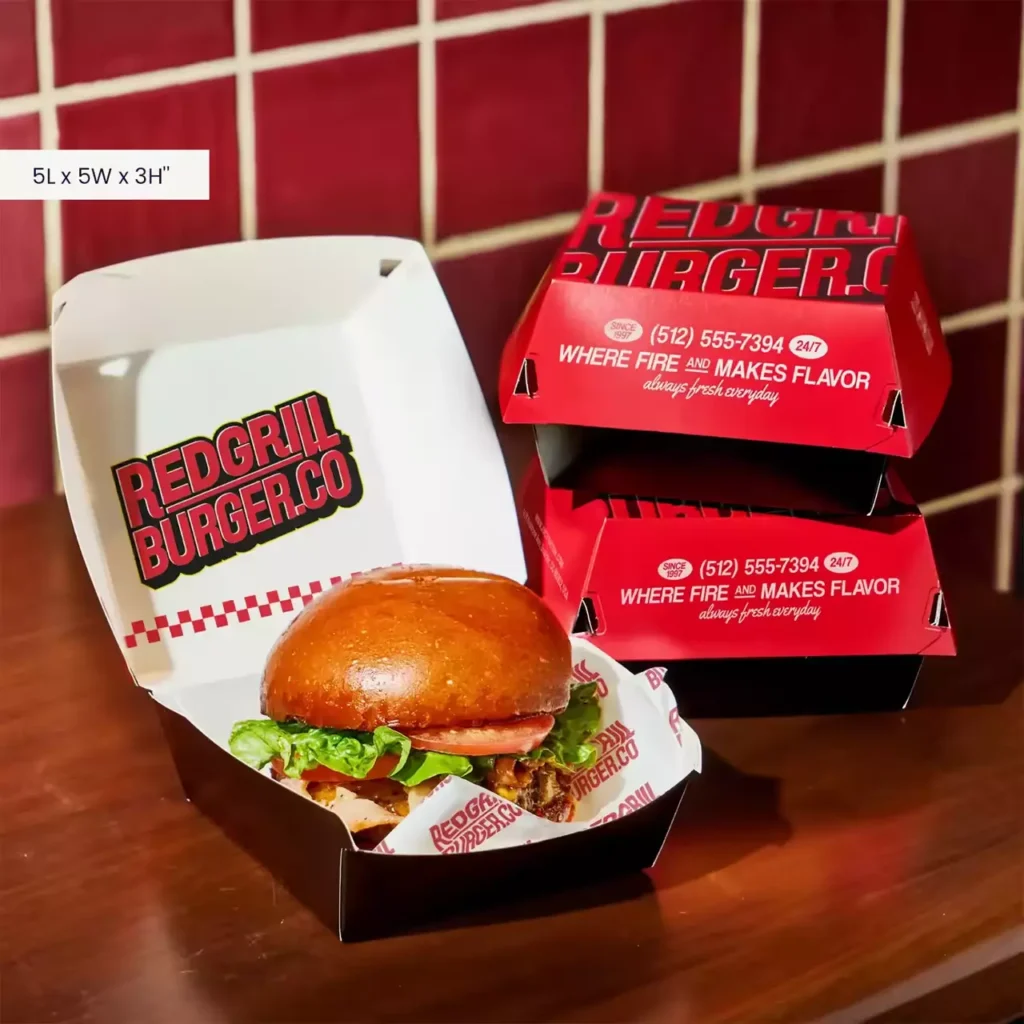
A custom paper burger box with logo printing gives you brand visibility at volume. If you are ordering in bulk and need consistent sizing, print quality, and presentation, this is usually the strongest direction.
Recommended Burger Packaging Solutions from Fusenpack
Fusenpack is not just selling boxes. The real goal is to match packaging to how the food actually travels.
For burger packaging, the main directions are:
- Custom Paper Burger Box – ideal for branded, high-volume operations
- Custom Compostable Burger Box – for sustainability-focused businesses with the right menu profile
Each option can be configured for size, print, and grease-resistance level based on your order type.
View Products | Request a Quote | Explore Custom Options
FAQ
Q: What is the best burger box for delivery?
A: There is no single best option. The right choice depends on delivery distance, burger fat content, and order volume. For high-oil burgers on longer routes, grease-resistant boxes are usually the safest pick.
Q: Do burger boxes need ventilation holes?
A: Yes, especially for deliveries over 10 minutes. Ventilation helps release steam and reduces soggy buns.
Q: Are compostable burger boxes good for greasy burgers?
A: Not always. Compostable materials can struggle more under heavy oil exposure. For high-fat menu items, grease-resistant packaging is usually a better fit.
Q: Can I customize burger boxes with my logo?
A: Yes. Custom paper burger boxes can support logo printing and bulk ordering with consistent sizing.
Final Takeaway: There Is No Best Burger Box—Only the Right One for Delivery Conditions
Stop asking which burger box is best. Start asking which box fits your delivery distance, your burger profile, and your order volume.
That shift matters because packaging failure is rarely random. It usually comes from using the wrong box for the wrong job. When the box matches the route and the food, the whole delivery experience gets better.
That is where Fusenpack comes in: not as a box seller, but as a packaging partner for real delivery conditions.
Explore Fusenpack’s burger packaging options and find the setup that actually fits your business.