Takeout Soup Containers: How to Choose the Best Option for Food Delivery
By
Contents
The best takeout soup containers are not the cheapest, thickest, or those labeled “leak-proof.” They are container-and-lid systems suited to your soup, fill level, delivery route, holding time, and reheating instructions.
For restaurants, cloud kitchens, catering programs, and food brands, soup packaging has one unforgiving job: it has to travel. A cup that looks fine at the pickup counter may fail in a courier bag if the soup is oily, filled too high, sealed over a dirty rim, or matched with the wrong lid.
Use a failure-risk approach: identify what is most likely to go wrong first, then compare material, price, customization, and supplier options.
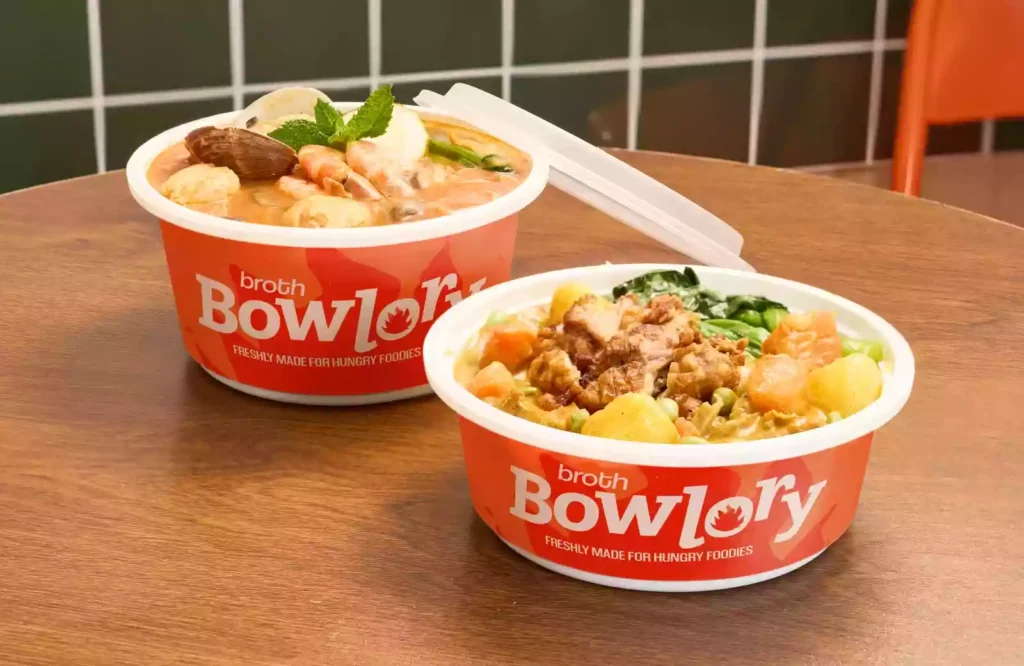
The Best Container Is the One That Survives Your Route
Soup delivery puts packaging under more stress than many dry or semi-dry meals. Hot liquid moves in transit. Steam can affect paper structures or lid fit. Oily broths may challenge coatings. Overfilling removes the headspace that helps the lid stay secure.
Start with four operating questions:
- What are you packing: clear broth, creamy soup, chili, stew, ramen, pho, or sauce-heavy noodles?
- How long will the order travel before the customer opens it?
- Will customers reheat the food in the same container?
- Do you need plain, custom-printed, recyclable, compostable, or reusable packaging options?
For U.S. use, “food-grade” is not specific enough. The FDA separates food-contact use by food type and condition of use, including hot-filled foods, refrigerated or frozen storage, and foods reheated in the container. See the FDA’s guidance on Food Types & Conditions of Use for Food Contact Substances.
The base, lid, coating, and printing system should match the actual soup and use conditions—not just generic food contact.
Match Soup Behavior to Material, Size, and Lid
Material matters, but the material name does not decide performance by itself. A PP container can still leak if the lid is weak. A paper soup cup can soften if the lining or seam is not suitable for the soup. A compostable format only makes sense if the disposal system can actually process the item.
Use this table to narrow your sample request, not as a substitute for testing.
| Soup or Menu Type | Main Packaging Risk | Container Features to Prioritize | What to Test Before Bulk Order |
| Clear broth, consommé, light soup | Sloshing and lid leakage | Tight-fitting lid, stable base, enough headspace | Tilt test, side-rest test, lid seal after hot fill |
| Cream soup or chowder | Heat, fat, and residue at rim | Heat-suitable base, clean rim seal, grease/moisture barrier | Rim wiping process, lid retention, softening after hold time |
| Chili, stew, curry | Weight, oil, staining, long hold | Rigid sidewalls, strong barrier, secure lid | Filled stacking, delivery-bag movement, seepage |
| Ramen or pho | Large volume, toppings, broth movement | Larger usable capacity, topping clearance, strong lid fit | Usable fill volume, headspace, noodle/topping fit |
| Sauce-heavy noodles or porridge | Viscosity plus heat | Stable shape, compatible coating or plastic, easy handling | Denesting speed, lid closure consistency, spill risk |
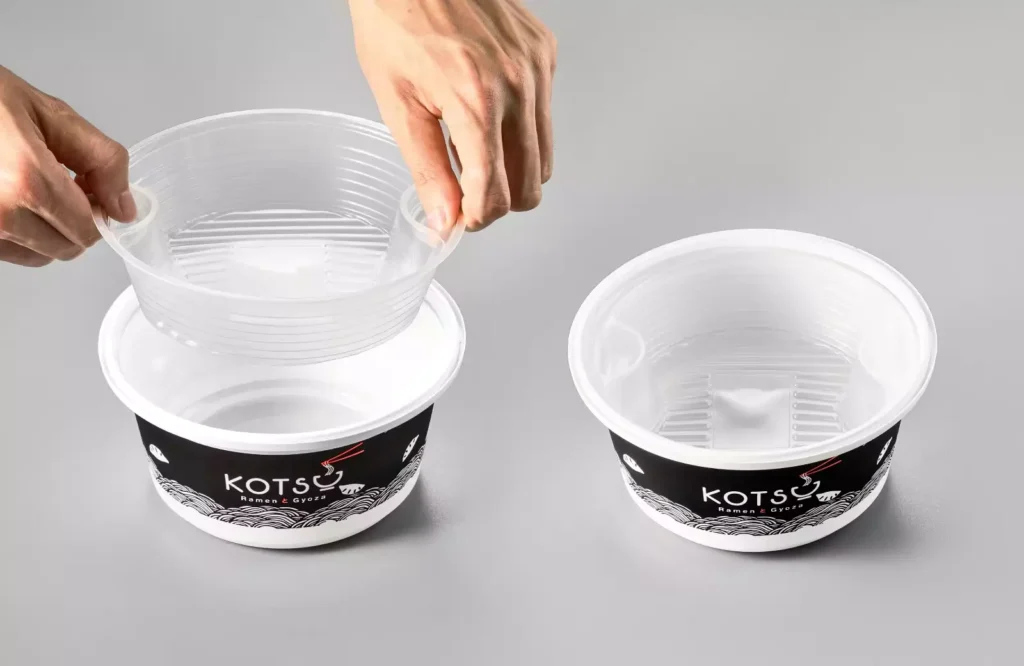
PP containers are often practical for hot soup delivery when the base and matching lid are rated for the intended hot-fill, transport, and reheating conditions. They can provide useful rigidity and moisture resistance, but leak performance still depends on rim design, lid fit, fill level, and how consistently staff close the lid.
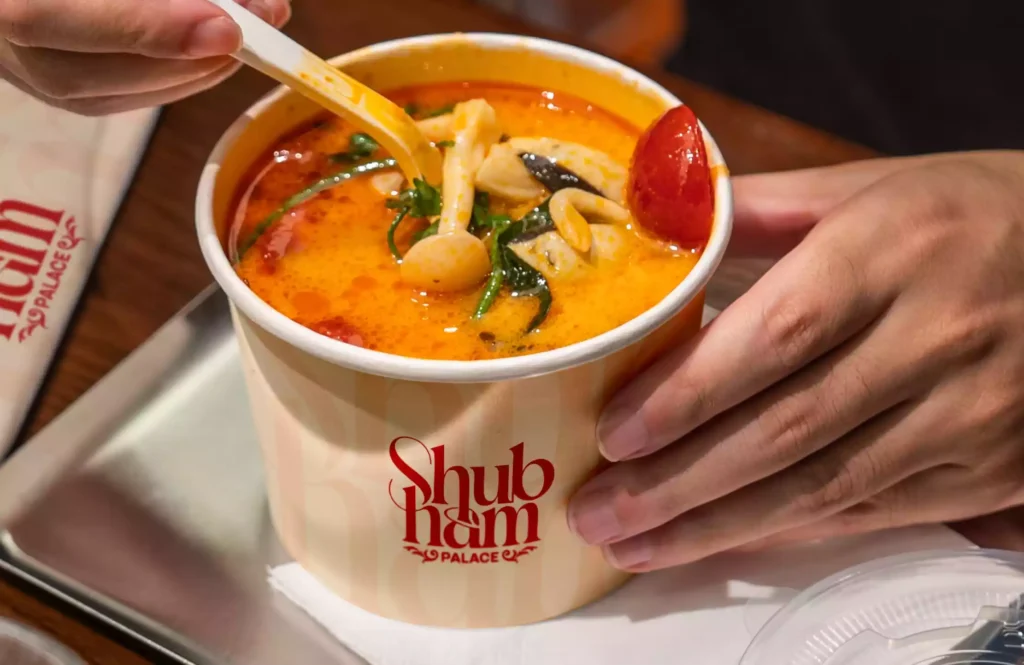
Paper soup containers can work well for many short-hold takeaway and delivery programs. Their performance depends on board weight, lining, seam design, and lid compatibility. For longer routes, oily broths, or heavy soups, test heat retention, softening, and lid security with the menu item you actually sell.
Kraft paper options are often selected for a natural visual style. Treat them as a paper-based packaging family, not as an automatic sustainability claim. The coating, lid, and disposal pathway still need to be verified.
Nominal capacity is not the same as delivery-ready capacity. A 16 oz container filled to the rim can be riskier than a slightly larger container with proper headspace.
| Menu Use | Common Starting Capacity | Buying Note |
| Side soup, broth, small add-on | 8–16 oz | Leave room below the lid, especially for hot liquid |
| Standard soup serving | 16–24 oz | Check whether toppings reduce usable volume |
| Chili, stew, curry, porridge | 24–32 oz | Test weight, stacking, and sidewall rigidity |
| Large noodle soup, ramen, pho | 32 oz and above | Verify broth level, toppings, lid clearance, and bag fit |
| Catering or shared portions | Project-specific | Confirm handling, secondary packaging, and transport method |
The safest rule is simple: test usable fill capacity with the real menu item. Add broth, toppings, garnish, and the lid exactly as staff would during service. Then check whether the container can be carried, stacked, and tilted without pushing liquid into the lid channel.
For liquid soup delivery, a tight-fitting lid is usually the first requirement. Vented lids may help release steam for some hot foods, but they can increase spill risk for brothy soups if liquid reaches the vent during movement.
Do not evaluate the base on its own. The package is a system.
A reliable soup container setup should have:
- A lid that seals evenly around the rim
- Sidewalls that resist flexing when filled with hot soup
- A stable base that sits flat in a delivery bag
- Enough headspace to reduce pressure against the lid
- Material and lid ratings that match hot filling and any reheating instructions
For microwave use, confirm the rating for both the container and the matching lid. Many PP bases may be designed for microwave applications, but some lids may need to be removed, loosened, or vented before reheating. Do not assume that “PP container” means the complete base-and-lid system is microwave safe.
One low-tech packing habit matters: wipe the rim before closing. Soup, oil, or starch on the rim can break the seal path and create a leak.
Run a Sample Test Before You Commit
Product photos do not show lid retention. Catalog descriptions rarely show how a container behaves when a driver brakes, stacks multiple orders, or tilts a delivery bag.
Before placing a bulk order, test samples with hot water and with your actual soup. Use the same fill level, closing method, and delivery bag used in service.
A practical soup container test can be done in this order:
- Hot-fill test: Fill the container at the intended serving temperature and leave proper headspace.
- Rim check: Wipe the rim, close the lid, and inspect whether the lid sits evenly.
- Tilt test: Tilt the sealed container in several directions for a few seconds.
- Side-rest test: Place it briefly on its side to reveal weak lid channels or rim leaks.
- Stack test: Stack filled containers as staff would during peak service.
- Hold-time check: Inspect after 15, 30, and 60 minutes for softening, condensation, seepage, or lid loosening.
- Reheat check: If reheating is part of the customer experience, verify the base and lid instructions with the supplier.
This is not a lab certification. It is a rollout screen. If a container fails this simple test, it is unlikely to become more reliable during a busy dinner rush.
Also compare total landed cost, not unit price alone. Freight, case pack, storage space, denesting speed, double-bagging, refund risk, MOQ, lead time, and whether one lid fits multiple sizes can all change the real cost of a soup container program.
Sustainability Claims Need a Disposal Pathway
If sustainability affects your brand promise, procurement policy, or customer expectations, verify the disposal pathway before selecting the container.
The U.S. EPA states that reusable food service ware is generally preferred when an effective collection, washing, and return system exists. If reusable ware is not feasible, commercially compostable food service ware only supports that claim when a local commercial composting program is available, accepts the specific item, and collection is properly managed. Recyclable claims also depend on local acceptance and contamination rules. See the EPA’s guidance on Identifying Sustainable Food Service and Food Service Ware.
For soup containers, ask which parts of the package the claim covers:
- Base
- Lid
- Coating or lining
- Printing ink
- Label or sticker
- Finished SKU after food contact
A “compostable bowl” paired with a non-compostable lid may create sorting problems. A “recyclable” container may not be accepted locally after oily soup residue. The correct claim is the one your operating location can actually support.
Supplier Checklist for Custom or Bulk Soup Containers
A useful supplier conversation starts with operating conditions, not a request for “the best soup container.”
Before requesting a quote, prepare:
- Soup type and whether it is watery, oily, creamy, or topping-heavy
- Target fill volume and required headspace
- Expected delivery time and transport method
- Hot-fill, refrigeration, freezing, or reheating needs
- Lid preference: tight-fitting, vented, clear, paper, PP, or other options
- Plain or custom-printed packaging requirements
- Destination market and any food-contact documentation needed
- Expected order volume, case pack needs, and timeline
If you are evaluating Fusenpack for a custom food packaging project, send your soup type, fill volume, lid requirement, artwork needs, destination market, and expected order quantity before requesting samples. Product-specific material options, capacity ranges, MOQ, lead time, certifications, and printing methods should be confirmed directly with the supplier before purchase.
Before You Request Samples
Choose soup packaging around the route, not the lowest unit price or the most familiar material.
Before bulk ordering, test the container with your actual soup, confirm the base and lid conditions of use, and check the disposal claim if sustainability matters. Then send your supplier a clear brief: fill volume, soup type, delivery time, lid preference, artwork needs, destination market, and expected volume.
That information gives the supplier enough context to recommend samples worth testing—and helps you avoid committing to a container that looks acceptable online but fails in delivery.