How Coffee Bags with Valve Help Protect Freshness and Coffee Quality
By
Contents
Freshly roasted coffee doesn’t stay fresh because it has a valve. It stays fresh because the entire package works together. A one-way valve releases excess carbon dioxide while helping keep oxygen out, but the valve alone cannot protect coffee. Barrier material, bag size, closure, and overall package design all influence freshness.
This guide explains how to choose the right coffee bags with valve for your coffee business, compares the most common options, and highlights the features to consider before placing a bulk order.
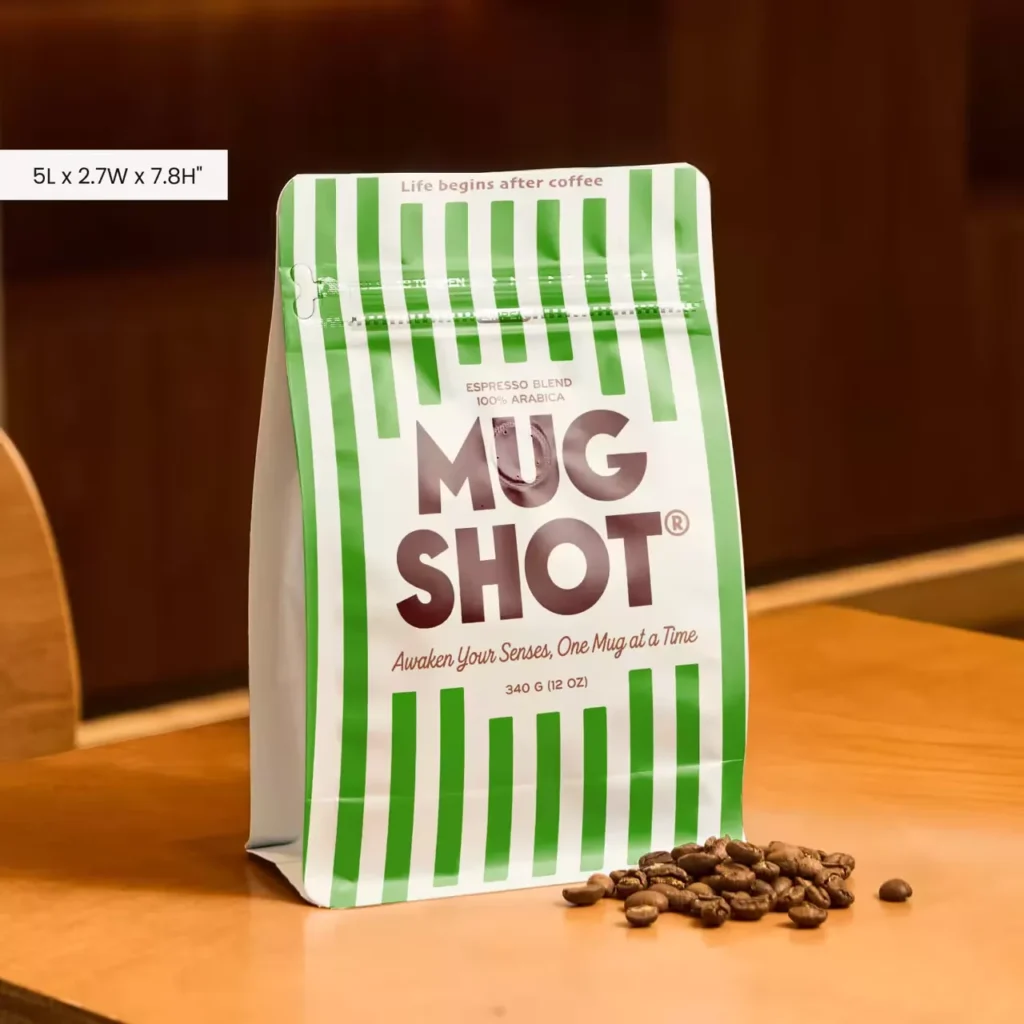
Why Coffee Bags with Valve Matter
Freshly roasted coffee continues releasing carbon dioxide after roasting. If the gas stays trapped inside a sealed bag, pressure builds up, causing the package to swell and increasing the risk of damaged seals during storage or shipping.
Freshly roasted coffee continues releasing CO₂ after roasting.
Without a one-way valve, pressure builds inside the bag and may damage the seals during storage or shipping.
The valve releases excess gas while helping keep oxygen out. Combined with a high-barrier bag, it helps preserve aroma and extend shelf life.
| Without a Valve | With a One-Way Valve |
| Bag swelling | Stable package |
| Faster oxidation | Better freshness |
| Higher shipping risk | Better protection during transport |
For most coffee roasters, a high-barrier foil coffee bag with a one-way valve offers the best balance of freshness, durability, and shelf appeal.
For example, Fusenpack’s Custom Foil Coffee Bag with Valve combines a high-barrier foil structure, a one-way degassing valve, optional zipper closure, and custom printing, making it a practical choice for specialty coffee brands.
How to Choose Coffee Bags with Valve
Not all coffee bags with valve offer the same level of protection. The right choice depends on your coffee, how it’s sold, and how long it needs to stay fresh.
When comparing suppliers, focus on these four factors:
- Barrier material
- Bag style
- Closure
- Bag size
1. Start with the Barrier Material
Material has the biggest impact on coffee freshness.
A one-way valve releases carbon dioxide, but it can’t stop oxygen or moisture if the bag itself has poor barrier protection.
Foil Laminated Bags
Foil laminated bags provide the best protection against oxygen, moisture, and light. They’re a good choice for retail coffee, e-commerce, exports, and any product that needs a longer shelf life.
Foil laminated bags also provide a premium surface for custom branding.
Kraft Paper Bags
Kraft paper bags create a natural look that’s popular with artisan coffee brands. For better freshness, many roasters choose kraft bags with an inner foil or plastic barrier instead of plain paper.
2. Match the Bag Style to Your Sales Channel
| Bag Style | Best For |
| Stand-up Pouch | Retail, online stores, specialty coffee |
| Flat Bottom Bag | Premium retail displays |
| Side Gusset Bag | Wholesale and bulk coffee |
For most coffee brands, a stand-up pouch is the most practical option. It stands securely on the shelf, offers plenty of branding space, and works well for both retail and e-commerce.
3. Select a Closure Your Customers Will Use
The valve works before the bag is opened. After opening, the closure becomes just as important.
| Closure | Best For |
| Zipper | Retail coffee |
| Heat Seal | Wholesale and foodservice |
| Tin Tie | Small artisan batches |
A resealable zipper is the most popular choice because customers can easily close the bag after each use. Heat seals work well for bulk coffee that’s transferred into storage containers after opening.
Fusenpack offers optional zipper closures, allowing brands to choose the packaging that best fits their customers.
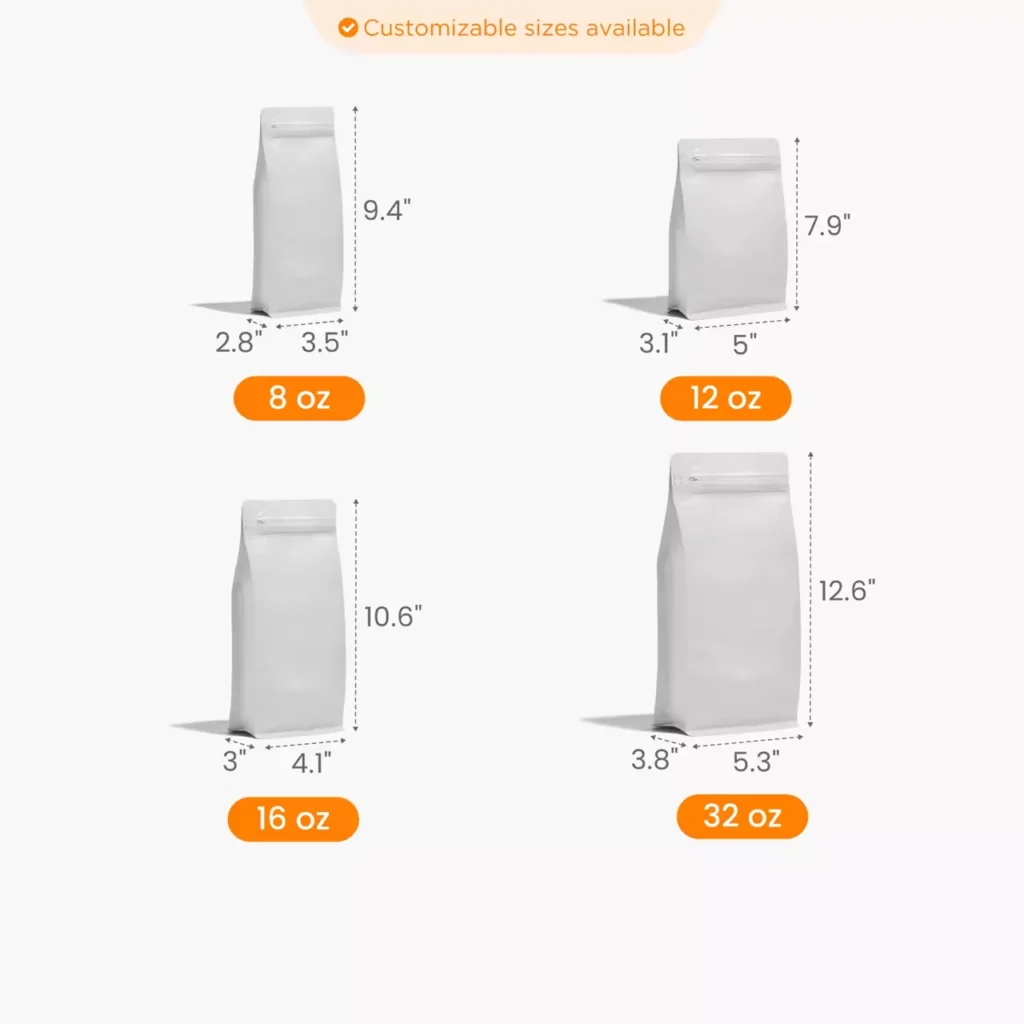
4. Size the Bag to Your Fill Weight
Choosing the right size improves both freshness and presentation.
A bag that’s too large leaves extra air inside, while one that’s too small can be difficult to seal.
| Bag Size | Typical Use |
| 8 oz | Samples and gift packs |
| 12 oz | Standard retail coffee |
| 16 oz | Family packs |
| 32 oz | Wholesale and cafés |
Select a bag that matches your fill weight instead of using the same size for every product. Fusenpack offers standard sizes from 8 oz to 32 oz, along with custom dimensions for brands that need a unique package.
Before Ordering Coffee Bags in Bulk
Before placing a bulk order, test the packaging with your own coffee under real production, storage, and shipping conditions. Laboratory specifications don’t always reflect real production or shipping conditions.
Before approving production, check these five points:
- Valve performance after roasting
- Seal strength during storage and transport
- Print quality and color consistency
- Zipper durability (if applicable)
- Overall bag appearance after filling
Testing before production helps identify potential issues early and gives you more confidence that the packaging will protect your coffee throughout its shelf life.
Common Buying Mistakes
Small packaging choices can create freshness problems later. These are four mistakes coffee brands should avoid when ordering coffee bags with valve.
Choosing the Cheapest Coffee Bag
The lowest price does not always mean better value. Poor-quality materials or unreliable valves can shorten shelf life and increase the risk of damaged packaging during shipping.
Focusing Only on the Valve
A one-way valve helps release CO₂, but it cannot compensate for a low-barrier coffee bag. Always evaluate the complete package structure, including the material, seal, and valve performance.
Using the Same Bag Size for Every SKU
Too much headspace means more trapped air, which can accelerate oxidation. Choosing the right bag size helps protect freshness and creates a better shelf appearance.
Skipping Sample Testing
Before placing a bulk order, test the bags with your own coffee. A small sample run can reveal sealing, printing, or valve issues before they affect a full production run.
Frequently Asked Questions
Do all coffee bags need a one-way valve?
No. Valves are mainly used for freshly roasted coffee because they let CO₂ escape while preventing oxygen from entering. Instant coffee and green coffee beans usually don’t need them.
How long does coffee stay fresh in a valve bag?
It depends on the bag material and storage conditions. A high-barrier valve bag generally protects coffee freshness better than a regular bag.
Do coffee bags with valves need zippers?
Not necessarily. The valve handles gas release, while the zipper helps keep coffee fresh after opening. Many retail coffee brands use both for better protection.
Are valve coffee bags recyclable?
It depends on the material. Traditional foil bags are harder to recycle, but some newer recyclable options are available. Check with your supplier if sustainability is a priority.
Can coffee bags with valve be vacuum sealed?
Not usually. Freshly roasted coffee continues releasing CO₂ after roasting, so vacuum sealing isn’t the best option. Instead, coffee bags with valve allow CO₂ to escape while helping keep oxygen out, making them a better choice for preserving freshness.
Finding the Coffee Bag That Fits Your Brand
A one-way valve helps, but it isn’t the whole solution. Coffee stays fresh when the valve, barrier material, closure, and bag size work together.
For most specialty coffee brands, high-barrier foil coffee bags with a one-way valve offer the best balance of freshness, durability, and shelf appeal.
Fusenpack’s Custom Foil Coffee Bags with Valve combine a high-barrier foil structure, a one-way degassing valve, optional zipper closures, custom printing, and flexible size options to help coffee brands protect freshness while help coffee brands protect freshness from roasting to retail.