2025 Custom Paper Bowl Buying Guide
By
Contents
- Why custom paper bowls will change the game in 2025
- Materials & Linings—Choose wisely
- Sizes, Shapes & Uses in Food Service
- Branding & Custom Printing—Make it memorable
- Performance Matters—Safe from Heat, Grease & Leaks
- Sustainability & 2025 Regulatory Trends
- Supplier Checklist—Key Questions to Ask
- What Makes Fusenpack Trustworthy?
- A quick list of things to check before you buy
Why custom paper bowls will change the game in 2025
At a time when environmental concerns are at the forefront and take-out dining continues to rise across the U.S., choosing a custom paper bowl is more than just selecting a product. It becomes a smart business move. Recent research shows that the global market for eco-friendly food packaging is expected to grow at a compound annual growth rate (CAGR) of 7.6% from 2025 to 2030, reaching about USD 353.78 billion.
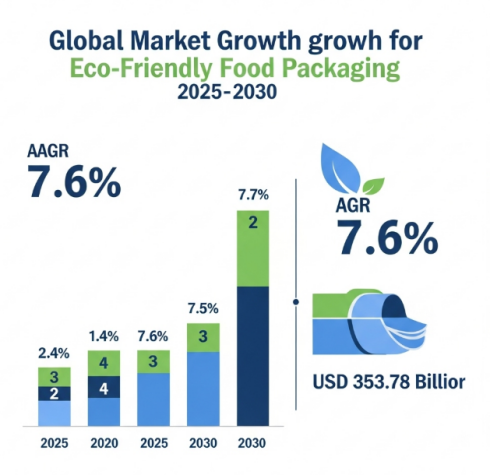
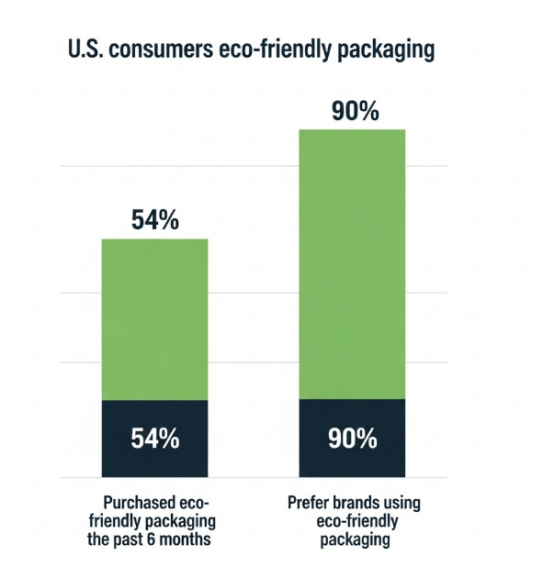
At the same time, consumer sentiment supports this trend: a survey in 2025 found that 54% of U.S. customers had intentionally chosen items with sustainable packaging in the last six months, and 90% said they were more likely to buy from firms that used eco-friendly packaging.
For restaurant businesses, cafés, and cloud kitchens in the U.S. and beyond, this means that picking a custom paper bowl can deliver three major strategic benefits:
- Branding: Your logo and design help people remember who you are when they use the product.
- Sustainability: Switching from plastic or generic bowls signals that you care about the environment and want to take a leadership role.
- Functionality: Contemporary paper bowls are heat-, grease-, and leak-proof — and they deliver all this at a relatively low cost.
At Fusenpack, we’ve helped many food-service brands take advantage of these benefits by providing custom-printed, eco-certified paper bowls with low minimum order quantities, rapid turnaround, and full design support.
Let’s explore how to pick the right custom paper bowl in 2025 — and why Fusenpack might be your best partner.
Materials & Linings—Choose wisely
Paper Base Materials
- Kraft unbleached paper: Offers a rustic, premium look; while slightly higher cost, it carries a strong sustainability story.
- Bleached white paper: Delivers a cleaner appearance and simpler brand-color reproduction; higher preparation cost, but common in premium markets.
- Bamboo or bagasse fiber: Lightweight, renewable options gaining traction in the U.S., especially with sustainability-minded brands and cities with compost programs.
Internal Linings and How Well They Work
In many use-cases — hot soups, greasy dishes, or take-out sauces—paper bowls require an effective liner. Options include:
- PLA (polylactic acid): Plant-derived, industrial-compostable, pairs well with the term biodegradable paper bowl.
- PE (polyethylene): Proven, cost-effective, but typically non-compostable and less aligned with sustainability narratives.
Choosing the correct liner affects both cost-structure and environmental claim of your bowl.
Eco-Claims and Certification
To ensure your custom paper bowl is positioned correctly in 2025, scrutinize any supplier claims such as:
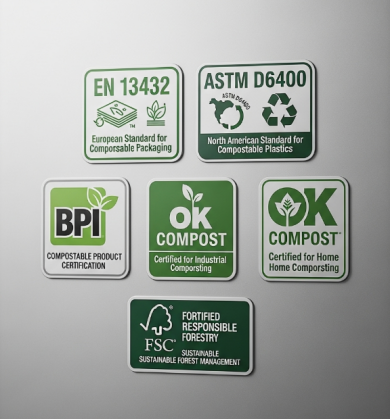
- EN 13432 / ASTM D6400: Recognized standards for industrial compostability.
- BPI / OK Compost: Certification labels proving compliance in certain markets.
The trend of “paperization”—replacing plastic with paper packaging—is no longer niche in 2025; many brands have shifted their food-service packaging accordingly. At Fusenpack, we supply detailed certification documents (FSC, BPI) and help you interpret what they mean in the U.S. market.
Sizes, Shapes & Uses in Food Service
The size and shape of a custom paper bowl matter as much as the material. Below is a quick reference table to help align capacity with dish type:
| Capacity | Diameter × Height | Recommended Use |
| 250 ml | approx. 120 mm × 50 mm | Small salads, side dishes |
| 500 ml | approx. 140 mm × 60 mm | Bowls for soups, rice, noodles |
| 750 ml | approx. 160 mm × 65 mm | Full meal salads, mixed dishes |
| 1000 ml | approx. 180 mm × 70 mm | Large entrées, kids’ meals |
| 1300 ml | approx. 200 mm × 75 mm | Family size, sharing bowls |
When you print your logo and brand colors, remember that shape affects how it looks, how easy it is to stack, and how easy it is to move. Shorter, wider bowls fit nicely in boxes, whereas taller, narrower ones may be better for soups but take up more shelf space.
Branding & Custom Printing—Make it memorable
When we say custom paper bowls with logo, we don’t just mean stamping your name on a bowl. Smart branding influences customer perception and encourages repeat purchases. Focus on:
- Print quality & color accuracy: Ensure your printer consistently produces vibrant brand colors.
- Ink & coating compatibility: Especially important when using recycled fiber or alternative liners (e.g., PLA).
- Finish & texture: Matte vs. glossy vs. kraft look — each delivers a distinct brand feel.
- Minimum Order Quantity (MOQ) & lead time: At Fusenpack, we support low MOQs (typically starting around 5,000 units) and provide full pre-print proofs.
- Cost vs brand impact: Upgrading to higher-quality print and sustainable materials often translates into stronger brand value; internally, we’ve noted that custom-printed bowls of superior material can command ~15% higher perceived value versus plain bowls.
Performance Matters—Safe from Heat, Grease & Leaks
Your customers expect bowls that hold up—not just look good. These are the performance benchmarks to ask your supplier:
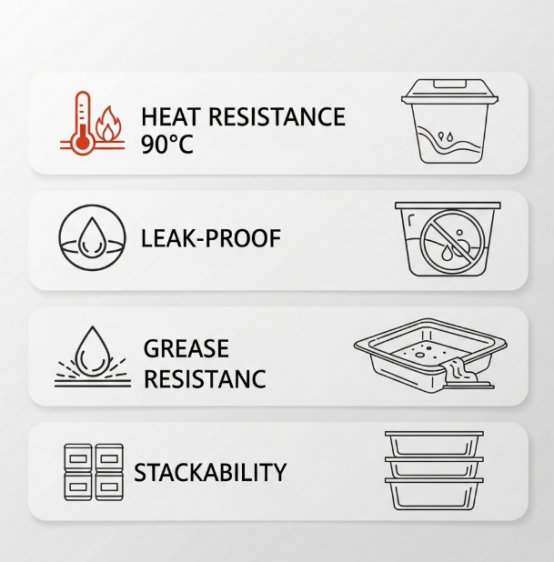
- Leak & grease resistance: Verify the bowl can contain oil and sauces for at least 15 minutes under typical conditions.
- Heat tolerance: For soups or hot foods, target bowls rated for at least 90°C without deformation.
- Stackability & durability during transport: Bowls that collapse, leak, or lose shape during delivery cost you returns and damage your reputation.
- Third-party test reports: Ask for lab test certificates (preferably ISO or ASTM standards) that validate the claims.
Sustainability & 2025 Regulatory Trends
In 2025, choosing a custom paper bowl aligns with both consumer demand and regulatory pressure. Here’s what you should know:
- The 2025 Sustainable Packaging Trends Report confirms that “paperization”—the shift from plastic to paper packaging—is now mainstream.
- A McKinsey survey revealed that younger consumers (Millennials & Gen Z) are the most willing to pay more for eco-friendly packaging.
- EU regulations around single-use plastics and packaging transparency are tightening; choosing a compostable paper bowl is a proactive compliance strategy.
- Remember: “compostable” doesn’t always mean home compostable. Many bowls labelled “compostable” require industrial composting facilities, which may not exist locally. The lining and certification type matter.
In short, if your brand wants to lead in sustainability, a custom paper bowl built from certified eco-materials, with strong branding and performance, is a strategic asset.
Supplier Checklist—Key Questions to Ask
Before you commit to a supplier of custom paper bowls, ask them:
- Can you supply a certificate for EN 13432 / ASTM D6400 or equivalent?
2. What is your Minimum Order Quantity (MOQ) for custom-printed bowls?
3. What is your lead time from sample to full order?
4. What tests do you run for leakage, grease and heat resistance?
5. What linings do you use (PLA, PE, or none)?
6. Are your materials FSC-certified or made from recycled pulp?
7. Can you match our brand colors (Pantone)?
8. What are your shipping options and costs to my region?
9. What is your defect rate in actual food-service use?
10. Do you provide digital design support and print proofs?
11. How transparent is your supply chain regarding labor and sustainability?
12. What is your packaging waste/recycling strategy?
What Makes Fusenpack Trustworthy?
Fusenpack has been making specialized food-service packaging and has delivered free designs to over 10,000 brands—and counting. This is what makes us different:
- All-in-one manufacturing of custom paper bowls: From design to production, printing, and shipping.
- Eco-friendly credentials: We have FSC/kraft papers and full certification sets.
- Low MOQs and fast turnaround: Perfect for restaurants, cloud kitchens, and brands that want to scale.
- Branding excellence: We help you with design and print quality that makes your bowls as memorable as your meals.
- Global shipping, local support: We treat every customer like a partner.
Are you ready to improve your packaging? To get a sample and find out how your brand might profit, get in touch with the Fusenpack team now.
A quick list of things to check before you buy
In short, when choosing the proper custom paper bowl in 2025, you should pay attention to five main things: the material, the size, the print/branding, the performance, and the supplier’s trustworthiness. If you get all five of these things right, you’ll amaze consumers, operate your business well, and be good for the environment.
To get started, ask Fusenpack for a sample, compare it to your best recipes, test it for performance, and make sure you’re ready for the challenges of 2025 and beyond.
Are you ready to ask for your free sample? Get in touch with Fusenpack so we can work together to design your next bowl.