Why Every Restaurant Needs a Leak-Proof Delivery Bag
By
Contents
- Why “Leak-Proof” Is No Longer Optional in Food Delivery
- What Buyers Actually Look For in a Leak-Proof Delivery Bag
- Delivery Scenarios That Decide What Your Restaurant Really Needs
- Why Cheap Packaging Gets Expensive Fast
- How to Use Reusable Delivery Bags Properly
- Where Fusenpack Fits in Real Operations
- FAQ
If a delivery order shows up wet, leaking, or already cold, most customers do not blame the rider.
They blame the restaurant.
That is why a leak-proof delivery bag is no longer just a nice extra. It is part of the delivery experience itself. The moment an order leaves the kitchen, the bag becomes the last layer of protection between your food and the customer’s first impression.
Why “Leak-Proof” Is No Longer Optional in Food Delivery
Soups, sauces, and drinks are where problems usually start
It rarely starts with a dramatic spill.
More often, it is a small tilt during braking. A soup cup shifts a little. A drink leans against the side of the bag. Steam builds up inside. Condensation starts to soften the packaging. By the time the order reaches the door, the damage has already been done.
The items that cause the most trouble are usually the same:
- Ramen, pho, and hot soup bowls
- Curry dishes and thick sauces
- Iced drinks and bubble tea
- Dressing packets and side sauces
These are the kinds of orders that expose weak packaging fast.
Paper bags were never built for real delivery routes
A paper bag may work for a short walk from counter to car.
Delivery is different. It means braking, turning, stacking, and a lot of movement in a short time. Add hot steam on one side and cold condensation on the other, and the bag starts losing strength much faster than people expect.
Customers don’t see packaging failure — they see brand failure
From the customer’s point of view, there is no separation between “bag issue” and “restaurant issue.”
A leaked order doesn’t get blamed on physics. It gets blamed on your name.
A 2023 Incisiv & TCS study found that 65% of customers will not reorder after a bad delivery experience.
That’s not a packaging issue. That’s a customer lifetime value issue.
What Buyers Actually Look For in a Leak-Proof Delivery Bag
A bag that “feels sturdy” is not always the one that performs best
A lot of buyers learn this too late.
Real performance is not about hype. It is about how the bag closes, how it holds its shape, and how well it keeps food protected in transit.
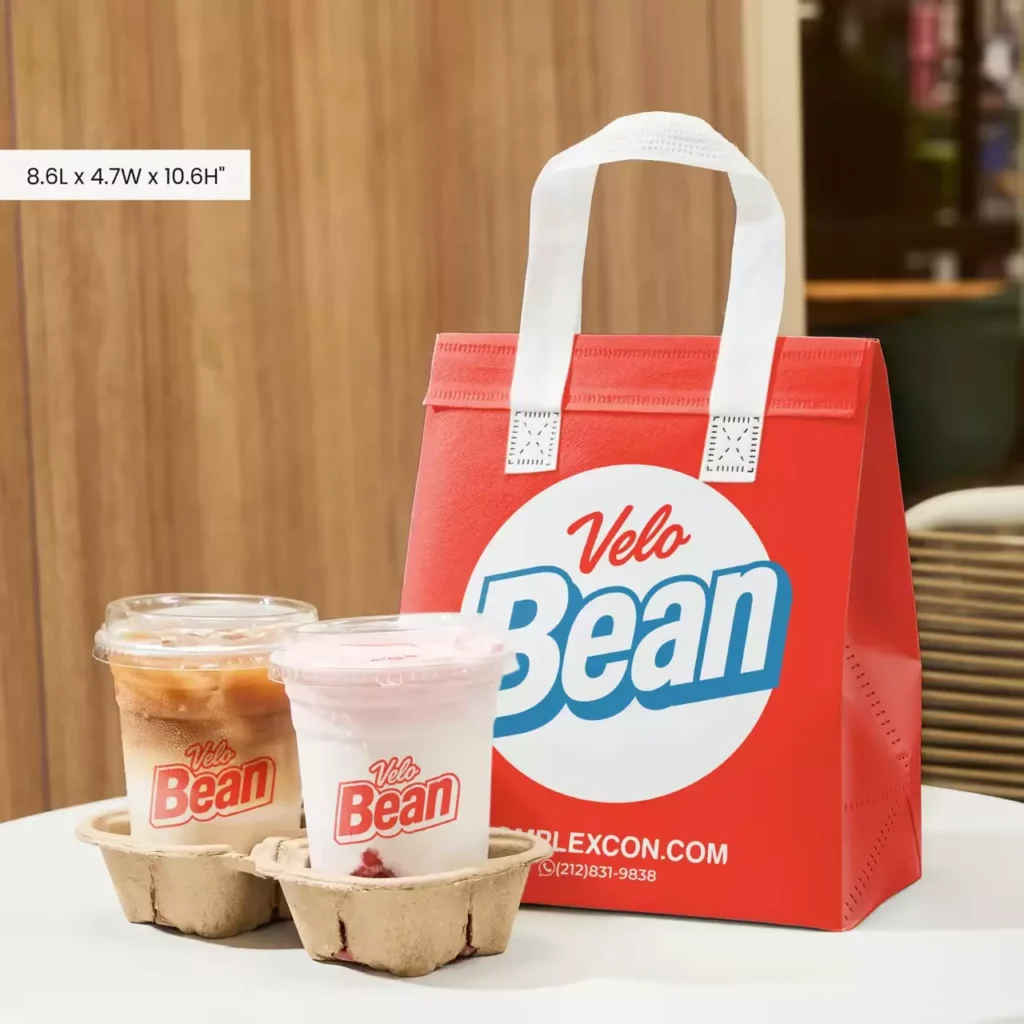
For this Fusenpack bag, the key detail is the closure. Offers two closure options: double-sided tape and hook-and-loop. Both are meant to keep the bag tightly closed and help reduce leaks during delivery.
Stability matters as much as insulation
A good delivery bag does two jobs at once: temperature control and physical stability.
| Feature | Real impact in delivery |
| Insulated walls | Keeps food stable during 20–40 min trips |
| Reinforced base | Prevents tipping in motion |
| Strong handles | Supports heavy multi-item orders |
| Internal separation | Stops cold/hot mixing effects |
When one of these fails, the customer experience breaks instantly.
Reusable bags do more than solve one delivery problem
Reusable packaging is not only about saving on disposables.
It also gives the restaurant a more consistent look every time. The bag is durable, reusable, and easy to store.
A delivery bag that looks clean, branded, and reliable sends a very different message from a thin disposable sack.
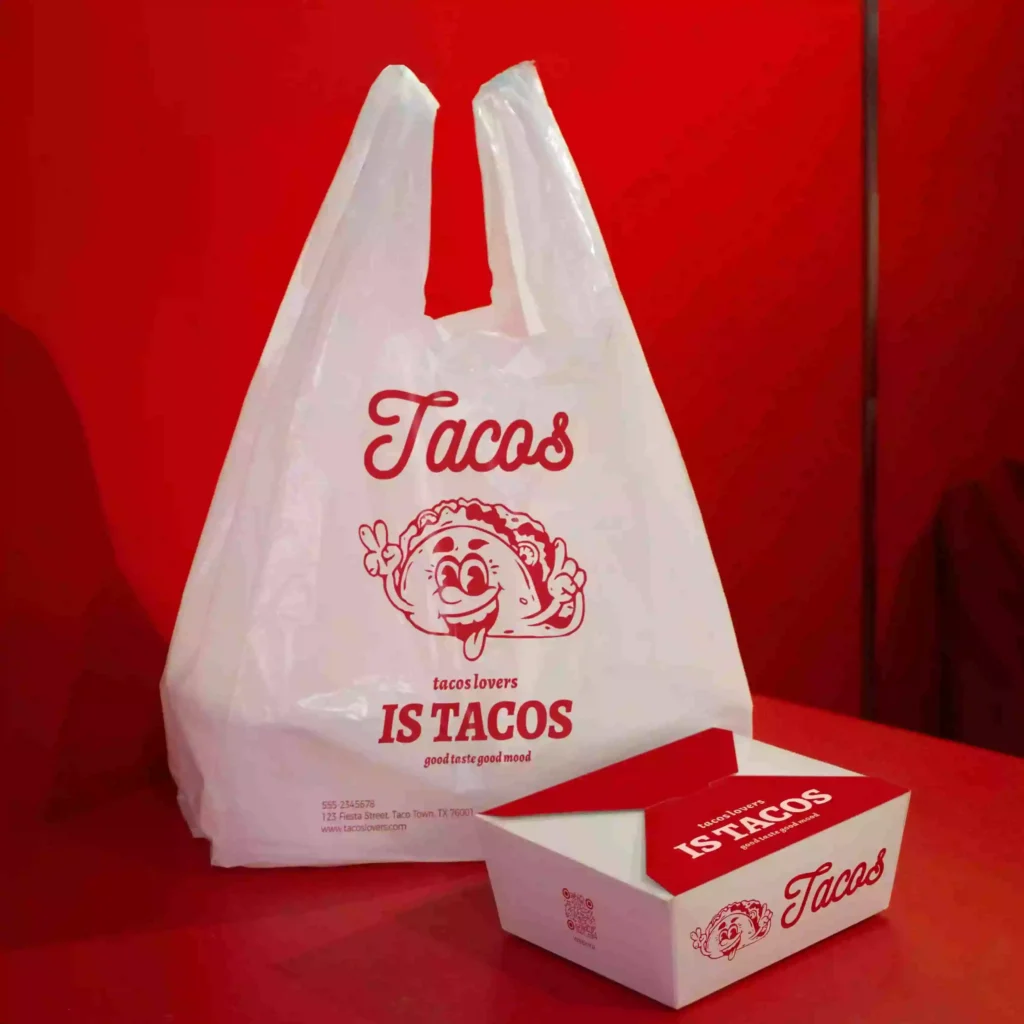
Delivery Scenarios That Decide What Your Restaurant Really Needs
Beverage-heavy orders
Bubble tea, iced coffee, and other drinks are sensitive to movement.
If the bag does not keep the cups stable, trouble starts almost immediately. Even a short ride can become messy if the order slides around inside the bag.
Hot food with liquid-based dishes
This is where weak packaging fails the fastest.
Soups, broths, and saucy dishes need two things at once: temperature support and spill control. Without both, the order may still arrive, but it will not arrive well.
Mixed hot and cold orders
This is the hardest delivery setup.
Hot steam and cold condensation create moisture from both sides. That is exactly why a sealable insulated tote bag is useful here: it gives the order a tighter, more controlled environment instead of leaving everything exposed inside a loose bag.
Catering and large orders
Big orders do not fail in a quiet way.
When a handle gives out or the base shifts, the whole order can be affected at once. For restaurants handling group meals, the packaging has to feel dependable from the start.
Why Cheap Packaging Gets Expensive Fast
A low-cost paper bag may look like a bargain.
Until one order leaks.
Then the real cost shows up in refunds, remakes, lost time, and the awkward experience of trying to fix something that should have been prevented in the first place.
That is why many restaurants eventually move toward a reusable, branded solution instead of treating packaging as a throwaway item.
How to Use Reusable Delivery Bags Properly
Pack smarter, not just tighter
Even a good bag cannot save a careless packing job.
Heavy items should sit at the bottom. Liquids should stay upright. Hot and cold items should be separated whenever possible. Small habits like that prevent a lot of delivery complaints.
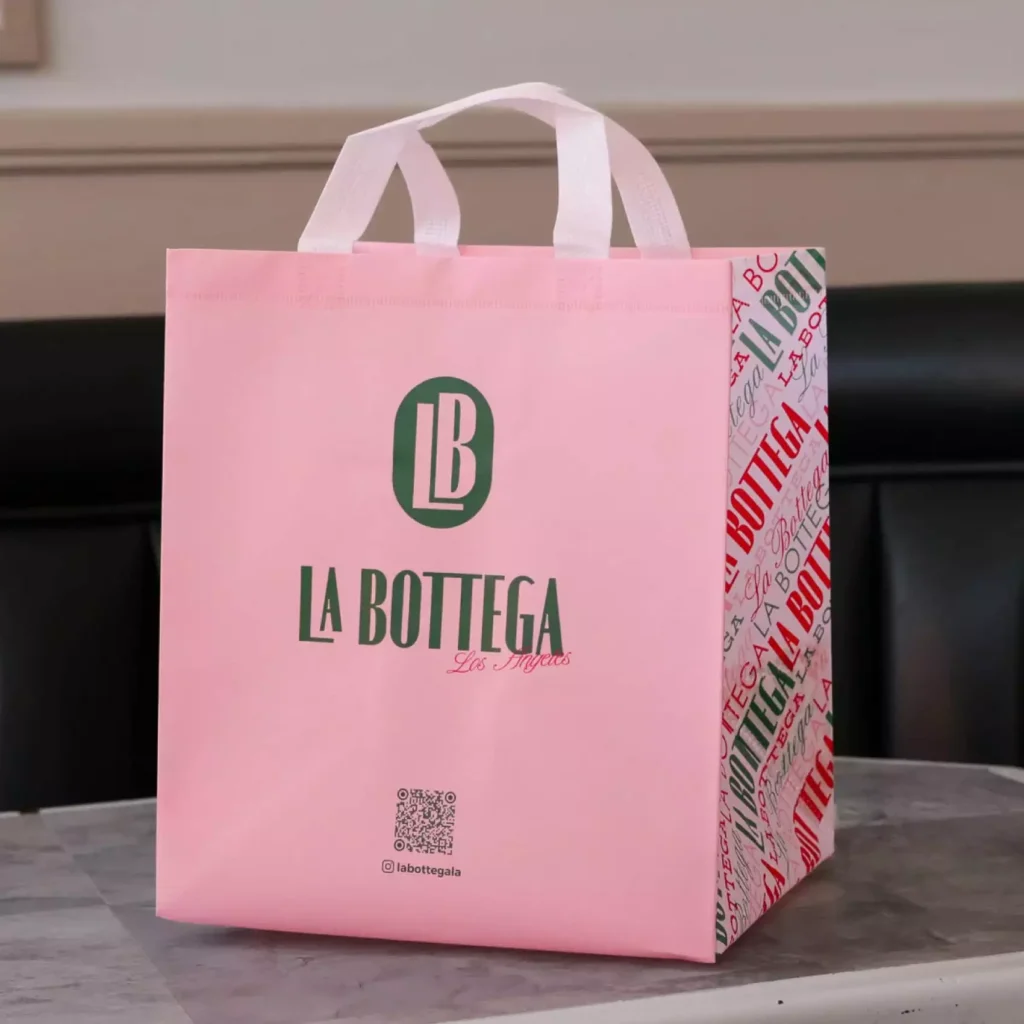
Where Fusenpack Fits in Real Operations
Fusenpack built this Custom Sealable Insulated Tote Bag for restaurants that need a practical, branded delivery solution rather than generic packaging. The highlights custom sizes, Pantone printing up to 5 colors, and the ability to request free design service and quote within 36 hours.
That makes it a better fit for restaurants that want consistency across repeated delivery runs, especially when the menu includes drinks, sushi, pizza, frozen drinks, or mixed takeout combos.
FAQ
Q: Can a leak-proof delivery bag stop a fully spilled soup container?
It cannot reverse a spill, but it can help contain the mess and keep it from spreading to the rest of the order.
Q: Does this bag help with both hot and cold items?
Yes. The foil lining helps keep hot food warm and cold food cold, and small ice packs can be added for longer deliveries.
Q: Is a reusable delivery bag worth it for restaurants with frequent orders?
For restaurants that care about consistency, presentation, and brand visibility, yes. A reusable branded bag is built to do more than carry food. It also carries your name.