Ice Cream Cups for Small Businesses: Wholesale Sizes, Custom Paper Cups & Buying Guide
By
Contents
- Why Ice Cream Cups for Small Businesses Matter More Than You Think
- Ice Cream Cup Sizes Explained (4oz–12oz) — and Where Shops Lose Money
- Wholesale Ice Cream Cups for Small Businesses — What Actually Drives Cost
- Custom Ice Cream Cups and Branding — When It Works (and When It Backfires)
- Inventory Mistakes That Quietly Kill Summer Profits
- How to Choose a Supplier Without Guessing Wrong
- Ice Cream Cups for Delivery and Takeaway — Where Most Fail
- Final Decision Framework (Simple, but Not Easy)
- Case Insight
- FAQ
The right ice cream cups for small businesses don’t just hold dessert — they quietly decide how your customer feels about your brand before the first bite.
A melted scoop in a weak cup doesn’t feel like a packaging issue.
It feels like a shop that didn’t care enough to get the details right.
And customers remember that.
Why Ice Cream Cups for Small Businesses Matter More Than You Think
Summer heat doesn’t just increase sales — it exposes every weak decision you made in sourcing.
A cup that softens after five minutes in a customer’s hand doesn’t just leak.
It signals inconsistency.
And inconsistency kills repeat customers faster than bad flavors ever will.
Ice cream cups directly shape perceived value.
A clean, sturdy cup tells customers:
“This place is organized. This place is worth coming back to.”
A flimsy one does the opposite — quietly, without complaint, without feedback.
Most small shops don’t notice this shift until revenue starts flattening.
That’s usually where packaging becomes visible.
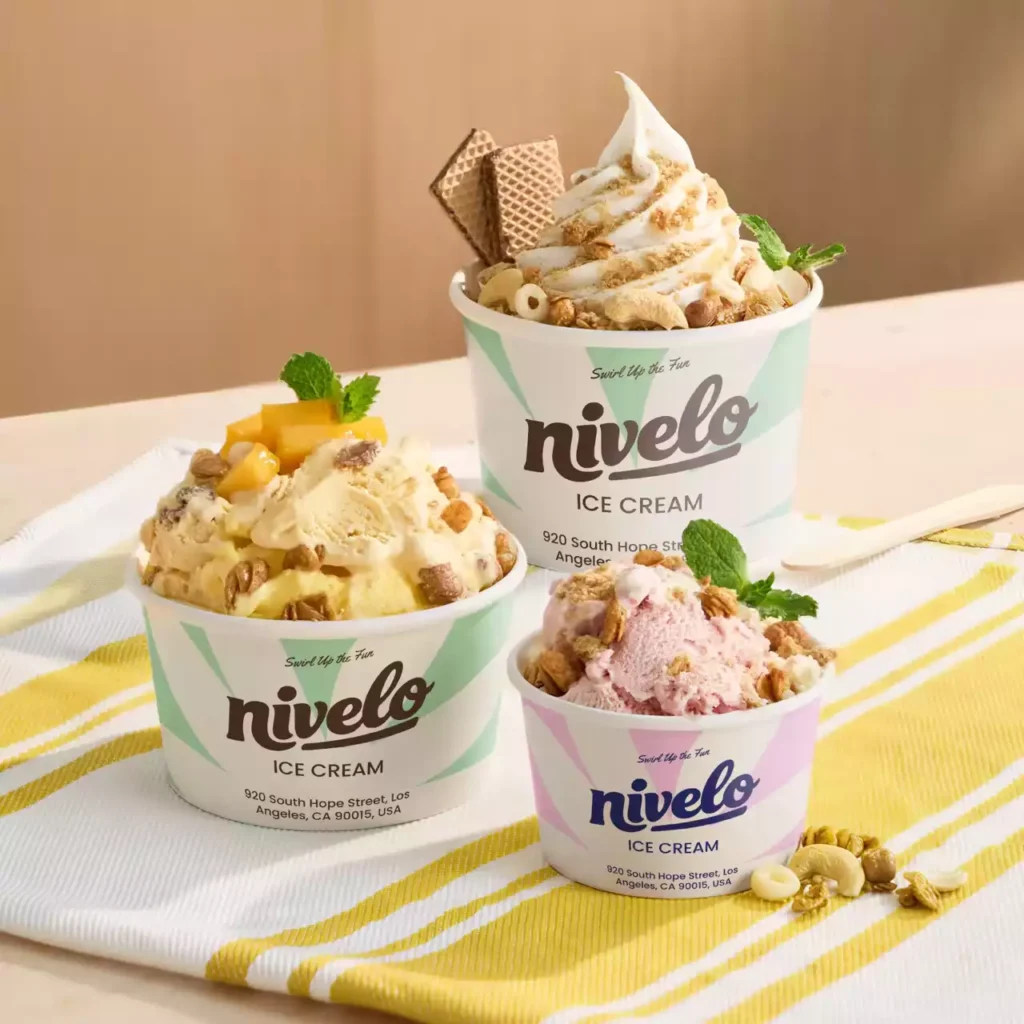
Fusenpack designs custom paper ice cream cups specifically for this gap — stable structure, consistent printing, and production control for growing food businesses.
Ice Cream Cup Sizes Explained (4oz–12oz) — and Where Shops Lose Money
“Just pick one size” is one of the most expensive assumptions in food service.
Because size isn’t about volume.
It’s about expectation management.
Here’s how it actually plays out:
| Size | Use Case | Reality in Operation |
| 4 oz | Sampling / kids | High margin control, low waste |
| 6 oz | Standard scoop | Fastest moving summer SKU |
| 8 oz | Double scoop | Works best for premium positioning |
| 12 oz | Large / sundaes | High perceived value, higher cost risk |
The problem isn’t the wrong cup.
The problem is what the wrong cup does to perception.
A 6oz scoop in a 12oz cup looks underfilled.
A 2-scoop order squeezed into 6oz turns into a spill problem before the customer leaves.
Both lead to the same outcome: silent dissatisfaction that never gets reported, only remembered.
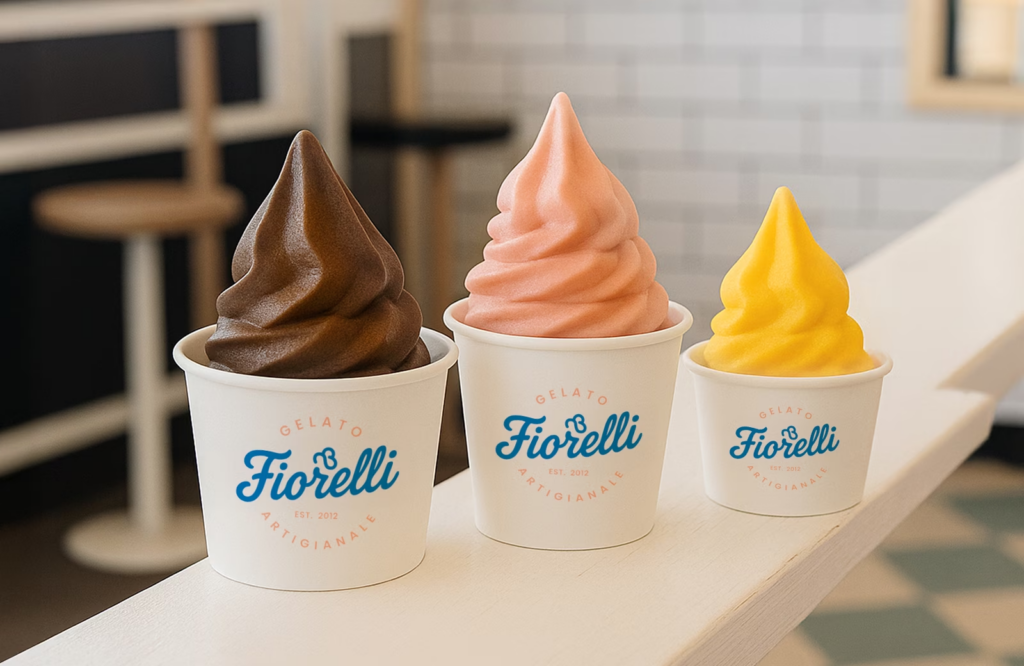
Wholesale Ice Cream Cups for Small Businesses — What Actually Drives Cost
Most buyers start with price per unit.
That’s the least important number.
Real cost shows up elsewhere:
- MOQ pressure affects cash flow more than unit price
- Lead time decides whether you win or miss peak summer
- Material thickness determines how many complaints you avoid
- Coating quality decides whether delivery survives 10 minutes in a bag
For reference, Fusenpack requires a 10,000-unit MOQ and 8–12 week production cycle for custom ice cream cups.
That’s not a limitation.
That’s a planning constraint.
If you ignore it, summer will remind you.
Their cups use 280–300g kraft paper with PE inner coating, designed to resist sogginess during melt cycles and maintain structure under heat exposure.
Rated performance:
- -20°C to 100°C temperature tolerance
- Frozen + hot topping stability
Custom Ice Cream Cups and Branding — When It Works (and When It Backfires)
A branded cup is free marketing.
Every customer becomes a walking impression.
But here’s what most guides won’t say:
Branding only works after your demand is stable.
If your shop is still changing menu, sizing, or traffic patterns every month, branding doesn’t amplify growth — it amplifies confusion.
It works best when:
- Your summer traffic is already predictable
- Your product lineup is stable
- Your location has foot traffic visibility
It fails when:
- You’re still testing core demand
- You don’t yet know your best-selling size
At scale, Fusenpack offers free design support for custom printing, including unlimited revisions for logo and layout alignment.
Inventory Mistakes That Quietly Kill Summer Profits
Most inventory problems don’t feel urgent — until they become irreversible.
Three patterns repeat every year:
- Overstock before season → cash trapped in storage
- Understock mid-season → lost peak revenue days
- Too many SKUs → operational slowdown during rush hours
Here’s the real fix:
Two sizes only. No exceptions.
- One standard (6oz or 8oz)
- One premium (12oz)
Everything else adds friction.
Storage matters too. Paper cups absorb humidity faster than most owners expect. Once they deform slightly, stacking and dispensing slow down — exactly when speed matters most.
Fusenpack offers free inventory storage support, allowing bulk orders to be held and shipped in batches during peak season.
How to Choose a Supplier Without Guessing Wrong
A cheap cup becomes expensive the moment it fails in service.
Here’s how experienced operators evaluate suppliers:
- Test with real product, not dry samples
Ice cream melts differently than water testing
2. Check print consistency across batches
Color drift = brand downgrade
3. Lock lead times in writing
“Estimated” is not a commitment
4. Verify certifications
BRC / FSC / FDA matter more now because customers notice packaging responsibility
Market context matters too:
Global ice cream consumption continues rising, especially in hot-weather regions where seasonal demand spikes sharply.
Ice Cream Cups for Delivery and Takeaway — Where Most Fail
Delivery is not dine-in.
This is where most packaging breaks down.
Key differences:
- Heat exposure inside delivery bags
- Delayed consumption window (10–15 min)
- Movement + vibration during transport
What matters most:
- Wall thickness > design
- Moisture resistance > aesthetics
- Structural integrity > branding
If your cup collapses in transit, branding doesn’t matter anymore.
It already failed.
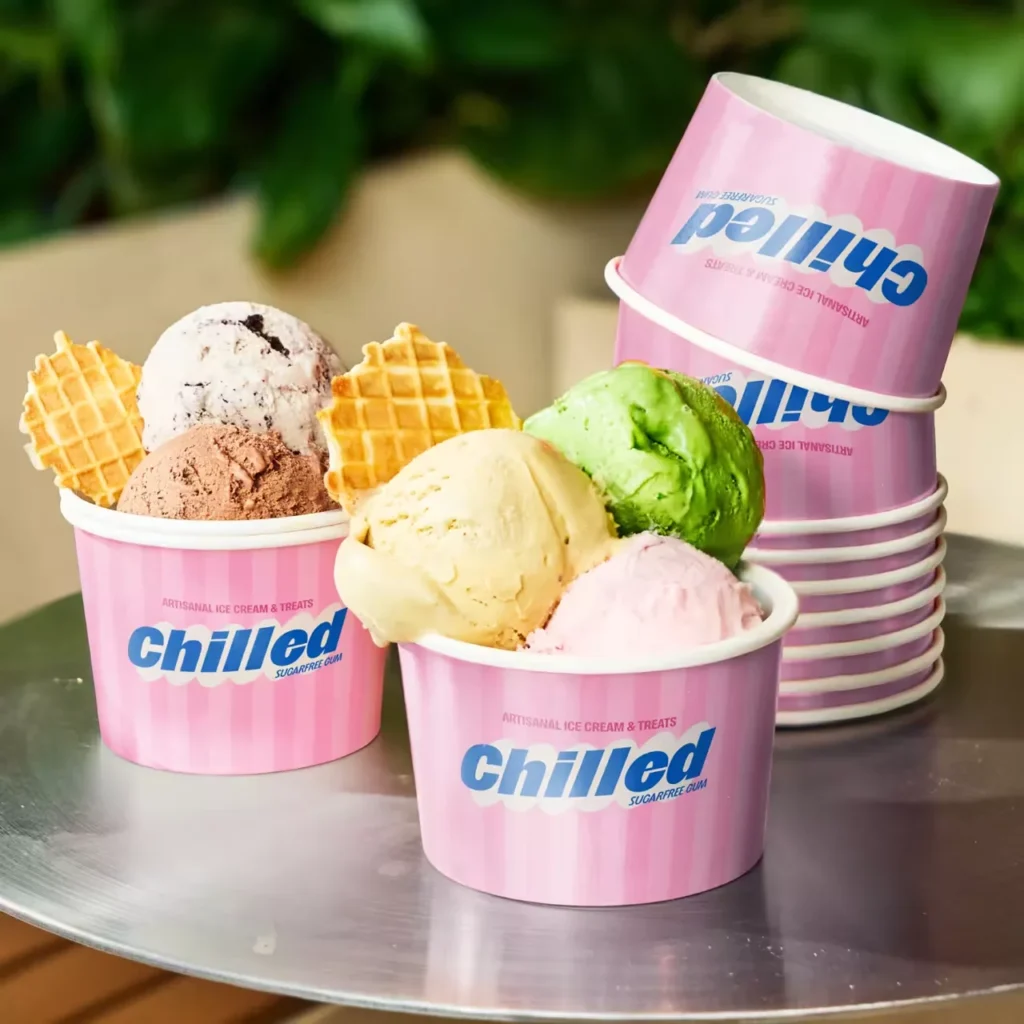
Final Decision Framework (Simple, but Not Easy)
Before placing any order, check this:
- Do I actually need more than two sizes?
- Does my supplier meet real summer conditions?
- Is lead time aligned with peak season?
- Is my storage plan realistic?
- Have I tested cups with real product?
Then decide.
Not before.
Case Insight
A gelato shop standardized on 6oz + 12oz cups, ordered 12 weeks ahead of summer, and used bulk storage support to avoid mid-season shortages.
Result: fewer packaging complaints and smoother peak operations.
Not because the product changed.
Because execution stopped breaking under pressure.
FAQ
Q: What’s the MOQ?
A: 10,000 units for custom production.
Q: How early should I order?
A: 8–12 weeks before peak season.
Q: Can I get design help?
A: Yes — Fusenpack provides free design support via email consultation.
Q: Are cups freezer-safe?
A: Yes — designed for frozen and hot temperature range (-20°C to 100°C) with food-safe certification.