12oz vs 16oz Cups: Which Should You Choose?
By
Contents
Selecting the appropriate cup size for drinks can significantly influence the experience and satisfaction of those consuming them.
As a café owner or a restaurateur, the decision between these two popular cup sizes impacts both customer satisfaction and operational efficiency. Let’s explore the key factors to consider when choosing the right cup size for your business needs.
Build branded packaging for your coffee shop!
Understanding Cup Sizes: 12 oz vs 16 oz
When comparing cup sizes, it’s crucial to first grasp what each offers in terms of capacity and common usage. A detailed look at the specifics of 12-oz and 16-oz cups will aid in aligning your choice with your requirements.
12oz Cups
A 12-oz cup is often viewed as a standard among casual coffee drinkers and anyone seeking a moderate serving. This size is frequently chosen for its balance between adequate volume and manageable size, making it ideal for many traditional beverages.
Ideal for:
- Standard Coffee and Espresso Drinks: This size is particularly suited for drinks that require a concentrated flavor profile, like regular coffee or espresso.
- Balanced Portion: It allows for just the right amount, avoiding excess that’s both economically and environmentally friendly.
- Convenience: Its manageable size is perfect for people on the go who need a quick and easy coffee fix.
16oz Cups
On the other hand, 16-oz cups cater to those looking for a more substantial beverage size. Liking a bigger cup steeped in additional flavors might sway your preference toward this option.
Ideal for:
- Larger or Specialty Drinks: Perfect for smoothies or large cappuccinos that demand more of everything—space, ingredients, and satisfaction.
- More Volume: It caters to those who need more liquid without a compromise in satisfaction or fulfillment.
- Space for Add-Ins: If customizations are your thing, more space means more room for creativity, such as toppings or syrups.
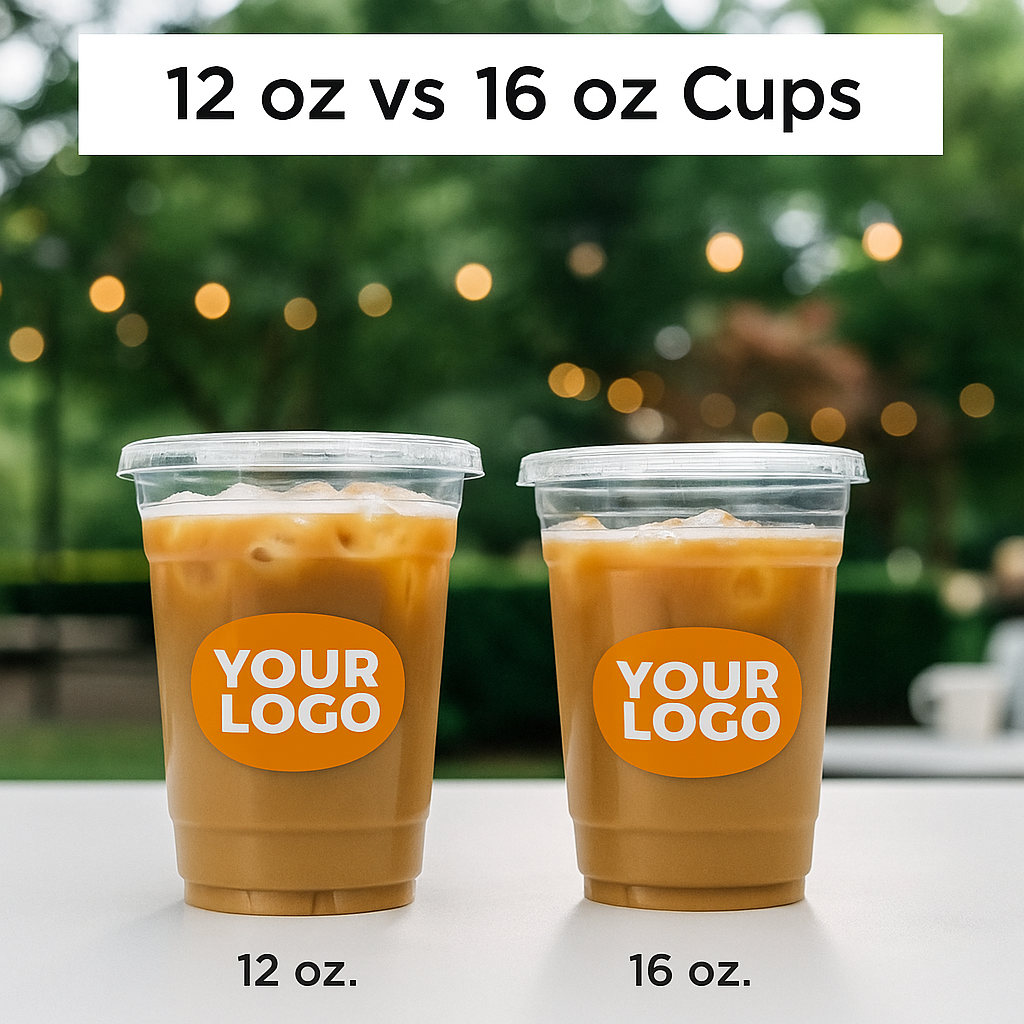
Factors to Consider When Choosing Between 12oz and 16oz
Your choice between these two sizes should be informed by multiple considerations that align with your business objectives and market expectations.
Beverage Type and Composition
Choosing a cup size should always consider the kind of drink being served. Each beverage has unique characteristics that could tilt the scale in favor of one cup size over the other.
- Coffee Strength and Flavor: In a 12-oz cup, flavors are concentrated, preserving the bold taste of coffee or tea for those who appreciate intensity. Yet, a 16-oz cup might be more fitting if dilution through additional ingredients is necessary.
- Ingredient Proportion: The ratio of ingredients significantly affects the final taste; therefore, choose a 12oz cup for richer flavor balance or a 16-oz cup for extra elements.
Customer Preferences and Experiences
Beyond physical attributes, understanding what your audience desires in their drink experience is paramount. Preferences should drive the decision-making process for optimal satisfaction.
- Portion Control and Satisfaction: Customers vary in their preferred portion sizes. Some might opt for the controlled gratification offered by a 12-oz cup, whereas others favor the indulgent delight of a larger 16-oz option.
- On-the-Go Consumption: The lightweight and compact nature of a 12-oz cup appeals to busy individuals who crave convenience, while a 16-oz cup is better suited for those seeking a prolonged coffee break.
Cost Efficiency and Environmental Impact
Cost and environmental considerations uniquely shape the choice between cup sizes, transcending mere consumer use to reflect broader ecological values.
- Pricing Strategy: Smaller cups, such as the 12oz, are cost-effective due to reduced material requirements, potentially translating to lower pricing.
- Environmental Considerations: Eco-friendliness is increasingly important. The less material in a 12-oz cup makes it a green choice compared to the more resource-intensive 16-oz counterpart.
Serving Recommendations Based on Context
Finding the ideal cup involves more than just selecting based on size; it’s about situational appropriateness. Explore how each cup size can elevate the beverage experience across different settings.
Cafés and Restaurants
Serving drinks in a public setting calls for a careful evaluation of customer dynamics and menu variance. Offering both sizes can optimize the appeal of your offerings.
- Diversify Options: By incorporating both cup sizes, cafés expand their menu flexibility, accommodating varied drinking preferences and fostering increased customer satisfaction.
- Menu Planning: Strategically pairing drink types with ideal cup sizes enhances the overall culinary experience, ensuring that both flavor and presentation are spot on.
Events and Gatherings
The dynamics of serving in an event or party demand a distinct analysis. Efficiency in service and satisfaction in experience are critical factors.
- Efficiency in Serving: In large gatherings, opting for 12-oz cups can standardize serving sizes, streamlining preparation and minimizing waste, whereas 16-oz cups provide ample room for festive embellishments.
- Customization: Tailor cup offerings to event themes or functional needs, showcasing both practical utility and creative flair.
Home and Personal Use
Personal beverage enjoyment is often dictated by individual restraint and storage considerations. At home, choice may hinge on daily routines or practical storage allowances.
- Storage and Usage: Space economy might drive a preference for 12oz cups, while larger families or social settings may necessitate the bigger 16oz alternative.
- Drink Variety: Consider cup size based on drink types, with 12-oz ensuring intensity for morning espresso and 16-oz accommodating afternoon smoothie concoctions.
Conclusion: Making the Right Choice
As you weigh the pros and cons of “12oz vs 16oz cups,” realize that the ultimate decision is influenced by factors ranging from beverage type and customer preference to environmental impact and personal context. The right choice will enhance customer satisfaction and maximize overall beverage enjoyment.
By embracing these considerations, whether you’re a café owner, an event manager, or a coffee aficionado, you can ensure that every drink served is perfectly poised to meet the expectations it deserves.