I Spent $2,000 Testing 3 Restaurant Packaging Types — Here’s What Actually Worked
By
Contents
Before you bulk custom restaurant packaging, spend $2,000 testing first — it’ll save you from a warehouse full of boxes nobody wants to use.
Why Most Restaurant Owners Get Packaging Wrong the First Time
You pick something that looks good on a supplier’s website. You order 5,000 units. Three months later, half of them are warping under your soup containers, your logo looks muddy on the material, or your delivery drivers hate refolding the lids.
That’s not a packaging problem. That’s a testing problem — and it’s more common than you’d think.
Consider this: roughly 75% of restaurant traffic in the U.S. now comes from off-premise channels — takeout, delivery, and drive-thru. [Source: National Restaurant Association / Nationwide Industry Report, 2025] Your packaging isn’t a back-of-house detail anymore. It’s a customer-facing product in its own right.
Here’s a framework that works: split a $2,000 trial budget across 3 packaging types, run them in real service conditions for 4–6 weeks, then scale what survives.
The 3 Packaging Types Worth Testing
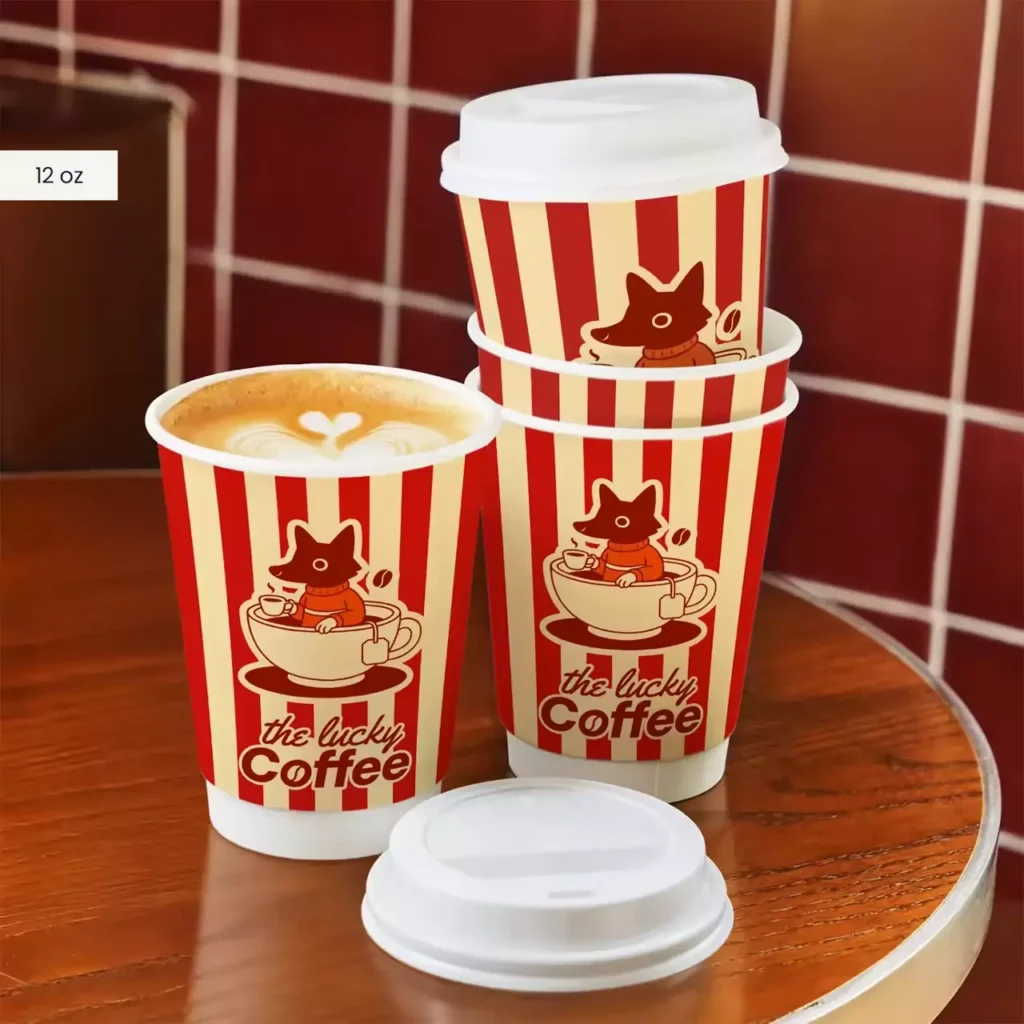
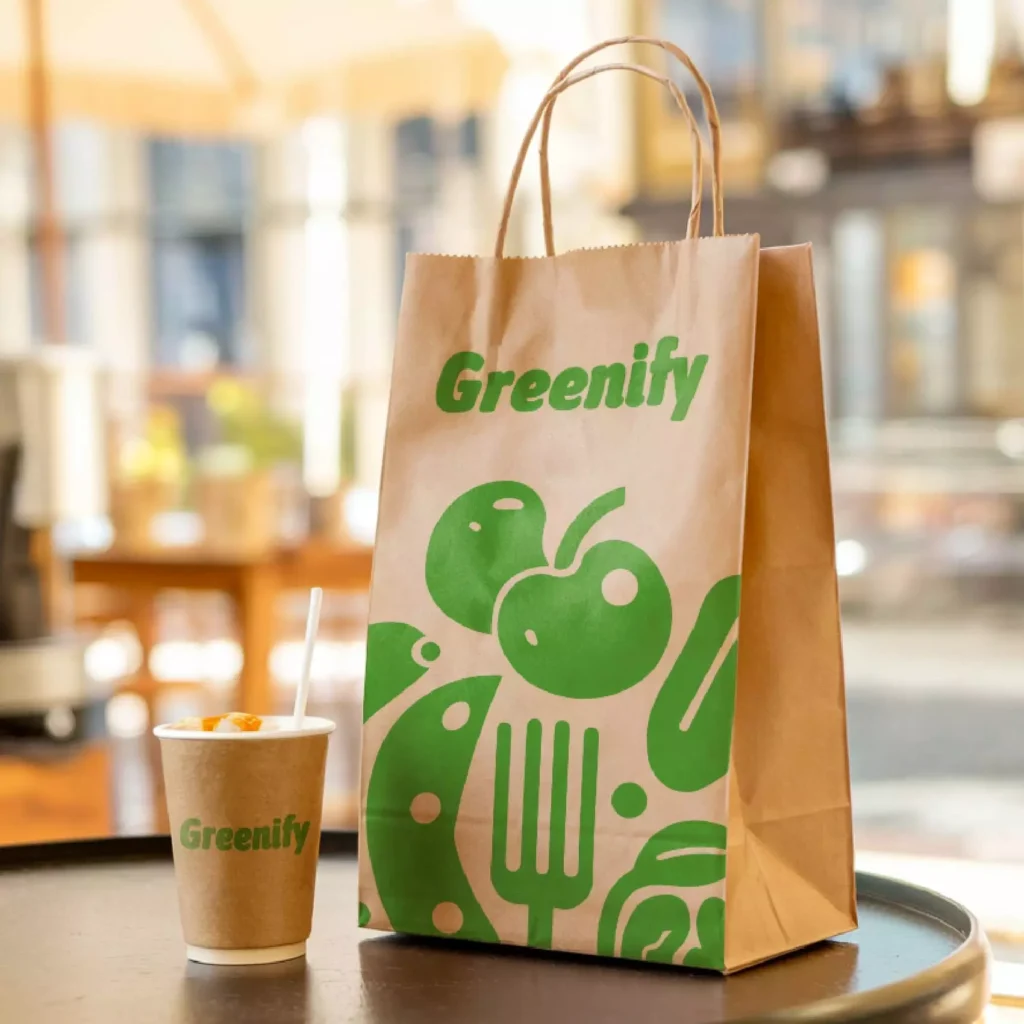
1. Custom Printed Paper Cups
Best for: Coffee shops, bubble tea bars, fast casual spots with hot or cold drinks.
A printed cup with your logo is a moving billboard — but only if the print holds up through condensation and heat.
What to test:
- Does the ink bleed after 30 minutes of cold condensation?
- Does the cup feel flimsy when full?
- Are your staff stacking and grabbing them fast enough during rush hour?
Estimated sample cost: $300–$500 for 300–500 units in 2–3 sizes
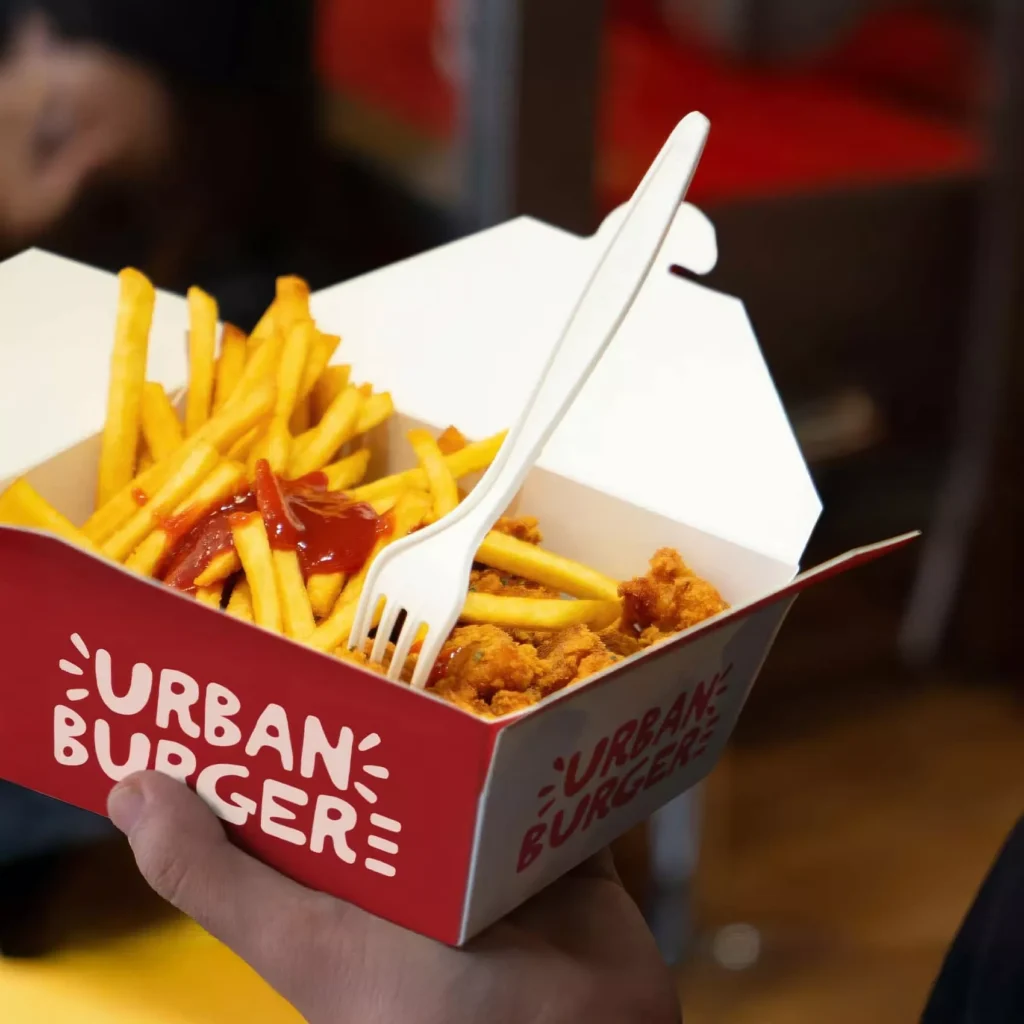
2. Takeout Food Boxes (Kraft or White Paperboard)
Best for: Full-service restaurants, ghost kitchens, meal prep brands.
The difference between a box that keeps fries crispy for 20 minutes versus one that turns them soggy in 8 is ventilation, wall thickness, and grease resistance — none of which show up in a product photo.
What to test:
- Grease bleed-through after 15 minutes
- Structural integrity when stacked 3 boxes high in a delivery bag
- How well your custom restaurant packaging print reproduces on kraft vs. white stock
Estimated sample cost: $600–$800 for 200–400 units across 2–3 box sizes
Here’s why this matters beyond logistics: at least 80% of consumers bought a new product last year because the packaging caught their attention, and roughly 30% of companies reported a revenue uptick after improving their product packaging. [Source: BusinessDasher / Food Dive, 2025] A box that photographs well on DoorDash isn’t cosmetic — it’s commercial.
3. Flat-Bottom or Stand-Up Pouches (for packaged goods)
Best for: Restaurants selling sauces, spice blends, coffee beans, or retail-ready products.
If you’re moving toward any retail or gifting line, pouches are worth one test round. The risk? Bad sealing on the supplier side leads to leaks at room temperature.
What to test:
- Seal strength under light pressure (simulate shipping)
- Zipper function after 10+ open/close cycles
- Label adhesion on the pouch material
Estimated sample cost: $400–$600 for 200–300 units
How to Structure the $2,000 Budget
| Packaging Type | Sample Units | Budget Allocation | Test Duration |
| Custom paper cups | 300–500 | $400 | 3–4 weeks |
| Takeout food boxes | 200–400 | $700 | 4–6 weeks |
| Stand-up pouches | 200–300 | $500 | 4 weeks |
| Buffer / reorder | — | $400 | As needed |
The buffer matters. You’ll want to reorder 1–2 variants mid-test when something breaks or surprises you.
What “Testing” Actually Means (Operationally)
Don’t just use the samples and move on. Track these four things per packaging type:
- Failure rate — how many units got damaged, leaked, or rejected by staff
- Speed of use — assembly time under rush-hour pressure
- Customer feedback — what people said, posted, or mentioned unprompted
- Unit economics — sample cost per unit vs. bulk cost per unit from the same supplier
If a packaging type clears at least 3 of these 4 checkpoints, it earns the bulk order.
This is where suppliers with low minimum order quantities make a real difference. Fusenpack free design included — which means you’re not paying a designer to mock up 3 packaging types before you even know which one works in your kitchen.
One Thing Suppliers Won’t Tell You
When you’re comparing paper cup vs. plastic container vs. food box costs, ask each supplier for their bulk price at 1,000, 3,000, and 5,000 units upfront. Some suppliers’ per-unit costs don’t meaningfully drop until you hit 5,000+. That changes the math on what’s worth scaling.
Also factor in the broader shift happening right now: the global foodservice packaging market is growing at a 4.34% CAGR and is projected to reach $189 billion by 2033 [Source: Straits Research, 2025] — which means your supplier’s pricing and material availability in 12 months may look different than it does today. Lock in bulk pricing with your test supplier before you run out of sample inventory.
One more number worth knowing: Americans now order food delivery an average of 4.5 times per month. [Source: Nationwide Industry Report, 2025] Every one of those orders arrives in your custom restaurant packaging. That’s not a sunk cost — it’s a brand impression at scale.
Suppliers like Fusenpack also offer free warehouse storage, which matters once you start scaling one packaging type from test to bulk. You don’t want 10,000 units of kraft boxes sitting in your prep kitchen.
FAQ
Q: Can I test all 3 packaging types at the same time?
A: Yes. In most cases, parallel testing is better because it lets you compare packaging under the same seasonal and operational conditions.
Q: What’s a realistic MOQ for a custom restaurant packaging sample?
A: A true sample order is usually much smaller than a bulk order. In many cases, 100 to 500 units per SKU is a practical testing range.
Q: How do I know my print will match the final bulk order?
A: Ask for a physical pre-production proof on the exact material and print method you plan to scale.
Q: Is $2,000 enough to test packaging properly?
A: Yes, for 3 core packaging types. If you need to test more SKUs, you should increase the budget and prioritize your highest-volume items first.
Final Takeaway
If you are investing in custom restaurant packaging, do not start with a bulk order.
Start with a test.
A $2,000 trial can reveal which packaging protects food, supports your staff, and represents your brand well. That is a much safer move than ordering thousands of units based on a product photo.
The best packaging is not the cheapest one on paper. It is the one that works in real service.
Contact Fusenpack for a free custom design.