Custom Bakery Bags: Window Types, Grease Resistance, and Freshness
By
Contents
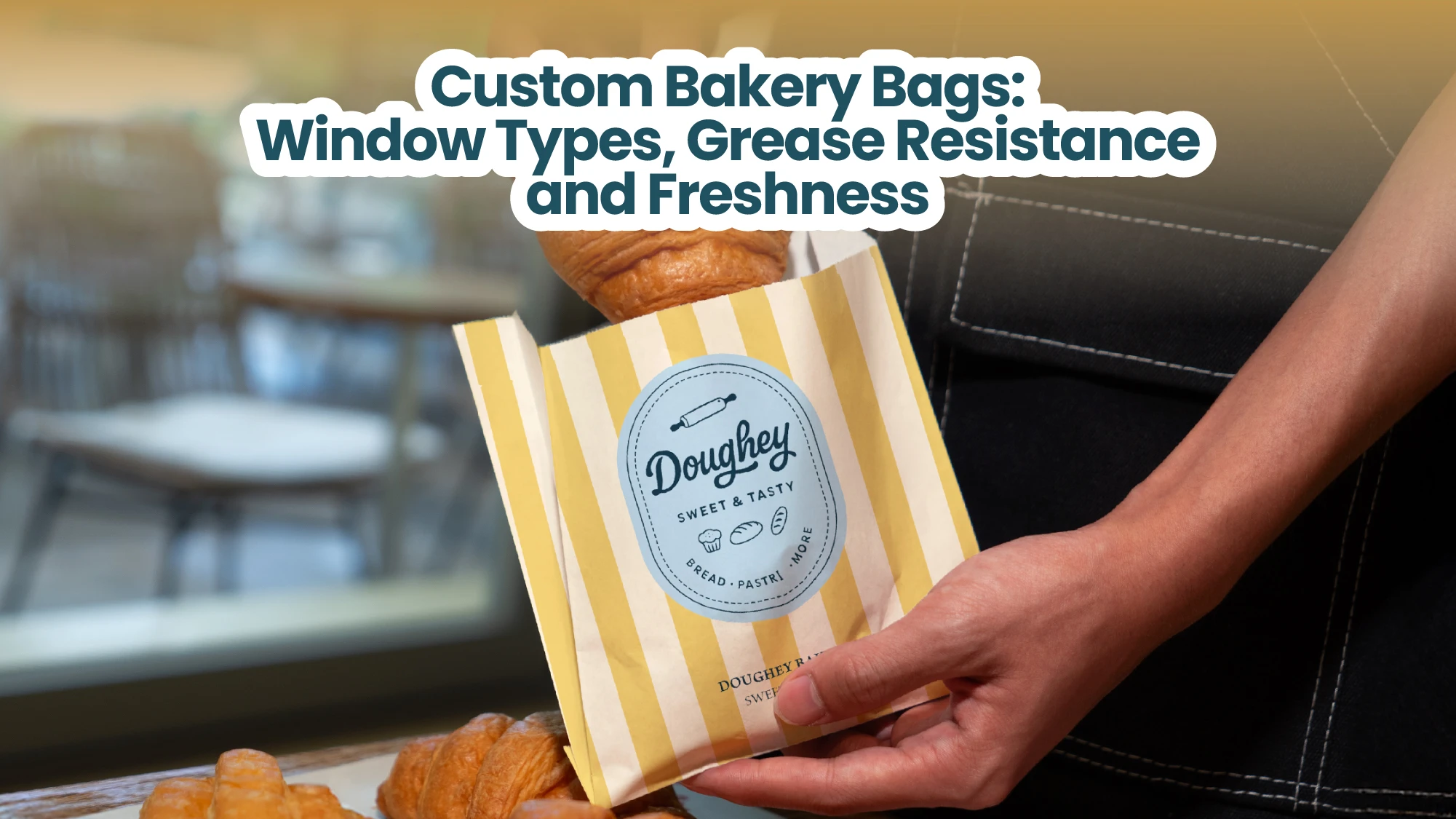
Two failures show up repeatedly in bakery packaging, and both appear after the sample has already been approved. A window fogs from a croissant that went in warm. A bag goes translucent with oil somewhere in the second hour on the shelf. Bread, pastry, and cookies each load a bag differently, so a style that photographs beautifully behind one product can quietly underperform behind the next.
Three decisions account for most of that. Whether a window earns its place on a given bag, which grease-resistant coating matches the fat content of what goes inside, and how to trade visible freshness against the airflow a baked good genuinely needs. Each is treated below with the product categories it applies to, and adjacent formats are linked rather than re-explained.
Short Version: Match the Bag to the Pastry
Add a window when the product itself sells the bag, meaning visibly golden crust, glaze, or filling, and skip it for items where freshness matters more than visibility, since every window is also a gap in the moisture and grease barrier. Match the coating to fat content: high-fat items such as donuts and croissants need a stronger grease-resistant liner, while drier goods such as bagels or dinner rolls can use a lighter coating without oil strike-through. Breathability then works against both of those choices, because a fully sealed bag traps steam and softens a crust, so bread specifically benefits from a perforated or open-top style even when a coated bag would otherwise be the safer default. Getting the fat content and moisture profile right before choosing the bag style prevents the two most common failures: a greasy bag customers notice, and bread that goes soft or moldy a day early.
Custom Bakery Bags: Features by Product Type
| Product type | Window | Grease coating | Airflow need |
|---|---|---|---|
| Artisan bread, baguettes | Optional, for shelf appeal | Low | High, perforated or open top |
| Croissants, danishes | Recommended | High | Low to moderate |
| Donuts | Recommended | High | Low |
| Cookies, dry snacks | Optional | Low | Low, sealed for freshness |
| Muffins, cupcakes | Recommended | Moderate | Moderate |
For the underlying material and minimum-order math behind bag sourcing generally, see the custom food packaging buyer’s guide. If your bakery also runs a takeout counter for sandwiches or savory items, custom bakery bags usually sit alongside custom takeout bags on the same purchase order, so it is worth comparing handle style and paper weight across both formats before you place either one.
Choosing a Window Type
A window is a marketing decision disguised as a packaging spec. It sells the product before a customer opens the bag, but every die-cut opening is also a point where moisture escapes and grease can migrate past the film if the seal around it is weak.
Custom paper bags with handles and when a full window helps
Custom paper bags with handles that include a large window work best for takeout formats where the bag itself functions as a mini display case, such as a single croissant or a pastry box replacement sold at the register. Because the visible product does the selling, a wide window frequently pays for itself in a bakery with real foot traffic and impulse purchases near checkout.
Custom printed bakery bags without a window
Custom printed bakery bags without a window suit items where freshness matters more than a photo opportunity, such as sliced bread or a dozen dinner rolls sold to a customer who already knows what they are buying. Printing carries the brand instead, and the bag stays a more consistent barrier without a cut opening working against it.
Grease Resistance and Coating Levels
Custom food packaging bags for baked goods are not interchangeable once fat content enters the picture. A bag rated for cookies will not survive a warm donut, and using an over-specified coating on a dry item just adds cost without a benefit anyone notices.
Matching coating strength to fat content
Custom takeaway bags for high-fat items, including donuts, croissants, and laminated pastries, need a grease-resistant liner or coated paper rated to hold up under sustained contact rather than a brief encounter. For the specific coating chemistries and where each one fails under heat or time, the greaseproof paper for food guide breaks down the options in more depth than a bag-specific page can.
| Bag feature | Bread | Croissants / danishes | Donuts | Cookies |
|---|---|---|---|---|
| Window recommended | — | ✓ | ✓ | — |
| Grease-resistant coating | — | ✓ | ✓ | — |
| Perforated or open top | ✓ | — | — | — |
| Fully sealed for freshness | — | — | — | ✓ |
Freshness Versus Breathability
Every coating and seal that protects a bag from grease or moisture from the outside also traps steam and softens texture from the inside, so custom bakery bags always involve a trade-off rather than a single best answer.
Why bread specifically wants airflow
Bread continues releasing moisture after it leaves the oven, and a fully sealed bag holds that moisture against the crust until it softens and, within a day or two, encourages mold. A perforated bag or an open-top paper style lets that steam escape, which is why bakeries selling same-day bread tend to favor breathable formats over a tightly sealed one even though a sealed bag looks more polished on a shelf.
Personalized bakery bags for cookies and dry goods
Personalized bakery bags for cookies and other dry, low-moisture items can go the opposite direction, since a well-sealed bag protects crispness rather than working against it. Custom pastry bags for laminated items sit in between: enough airflow to avoid trapping steam from a warm pastry, but enough of a barrier to hold the coating and filling in place during transport.
| Airflow need | Products | Bag construction |
|---|---|---|
| Highest airflow | Fresh bread and baguettes | Perforated or open-top bags that let steam escape and slow crust softening |
| Balanced airflow and barrier | Croissants, danishes, muffins | Coated bag with a window, sealed enough to hold shape without trapping excess steam |
| Sealed for freshness | Cookies and dry snacks | Fully sealed bag with minimal airflow, since moisture loss rather than steam is the risk |
Sourcing and Order Planning
Custom food bags with logo printing and a die-cut window both add setup cost, so it helps to know how much of your product mix benefits from each before committing tooling to a single design. A bakery selling mostly loose bread can often run custom printed food bags with a simple one-color design and no window, while a bakery built around a pastry case usually gets more return from the window and the added coating. Buyers comparing custom printed food packaging bags across suppliers should look at the same two variables every time: whether the coating is rated for the fat content of the product, and whether the print method matches the order size, since a multi-color design on a small run usually pushes the price well past what a simpler custom packaging bags approach would cost for the same volume.
Bakeries that trade heavily before ten in the morning face a related question about formats that survive a commute, which our guide to on-the-go breakfast packaging covers. Custom printed to-go bags built specifically for delivery differ from a standard counter bag mainly in the bottom seal and handle reinforcement, both of which add a small per-unit cost that is easy to justify once a bakery’s delivery share passes a meaningful fraction of total orders. Ordering that reinforced style only for the delivery portion of volume, rather than across the entire bag order, keeps the added cost proportional to where it earns its keep.
100 count custom food bags and sizing a first order
100 count custom food bags or similarly small trial runs are useful for testing a new bag style against real turnover before committing to a full production order, particularly for a new product line where the demand curve is still unknown. Custom printed food service bags ordered at a larger volume bring the unit price down once a design is confirmed, which is why a small trial batch followed by a full reorder tends to work better than guessing the final quantity up front.
Customized to go bags for delivery and catering
Customized to go bags and custom to go bags for bakery delivery or catering orders benefit from a sturdier bottom gusset and a secure closure, since a bag riding in a delivery bag or a car seat needs to survive more handling than one carried out the door. Custom togo bags built for this use case usually trade a smaller window, or none at all, for a more secure top fold.
For any bakery that also runs sandwich, salad, or lunch service alongside baked goods, the deli and sandwich packaging checklist covers the adjacent format decisions that a pure bakery bag guide does not.
| Bag specification | Tooling and setup commitment | Speed to reorder or adjust |
|---|---|---|
| Window plus grease coating | Highest | Slowest, both the window die and the coating are locked in |
| Coating only, no window | Moderate | Moderate, coating choice is fixed but no window die |
| Plain sealed or perforated bag | Lowest | Fastest, easy to reorder or change spec |
Compliance for Food-Contact Bags
Custom bags for food, including bakery bags, fall under the same federal food-contact framework as other paper packaging. Paper and paperboard components are covered by 21 CFR 176.170, which sets extractive limits by food type and condition of use. Custom food storage bags marketed as compostable should be checked against a real test standard; ASTM D6400 is the specification most municipal and industrial compostability claims are measured against. A number of states also restrict intentionally added PFAS in paper and plant-fiber food packaging, including Washington’s phased rule under RCW 70A.222.070. Confirm the documentation for your own ship-to states before placing a production order rather than after it ships.
Frequently Asked Questions
Do custom bakery bags need a window to sell well?
Only when the product itself is the selling point, such as a visible pastry or glazed item. Bread and dry goods generally do better without one, since a window is also a gap in the freshness barrier that a fully printed bag does not have.
What is the difference between custom take out bags and custom bakery bags?
The categories overlap in construction but differ in priority. Custom take out bags and custom takeout bags are typically sized and reinforced for savory meals and delivery handling, while bakery-specific bags prioritize grease resistance, window placement, and airflow for baked goods; see custom takeout bags for the meal-focused version of this decision.
How do I know if I need a grease-resistant coating?
If the product releases visible oil within an hour of baking, such as a donut or a buttery croissant, a coated or laminated bag is worth the added cost. Drier items such as bagels or cookies rarely need it.
Can I order a small trial batch before committing to a full run?
Yes. A 100 count custom food bags trial order, or a similarly small batch, is a reasonable way to test a new style against real customer turnover before locking in tooling and a larger production run.
What bag style works best for bakery delivery and catering orders?
Customized to go bags with a reinforced bottom gusset and a secure top closure hold up better in transit than a standard counter bag, since delivery and catering orders get handled more roughly than an item carried straight out the door.
Is a fully sealed bag always better for freshness?
No. Sealing helps dry goods such as cookies but works against bread, which needs to release steam as it cools. A perforated or open-top bag usually keeps bread fresher for longer than a fully sealed one.
Specifying Your Bakery Bag Order
Custom bakery bags come down to three linked decisions rather than one style choice: whether a window helps sell the product, how much grease resistance the fat content actually demands, and how much airflow the item needs to stay fresh rather than soften or trap moisture. Getting the fat content and moisture profile right before choosing the bag style is what separates a bag that photographs well from one that still performs after a day on the shelf. Where your bakery’s needs overlap with takeout meals or deli service, the linked cluster pages above go further than a bakery-only guide reasonably can.