No Space for Bulk Orders? Try the Split Shipment Packaging Strategy
By
Contents
- 1. What Is a Split Shipment Packaging Strategy?
- 2. The Real Cost of Over-Ordering — The Numbers Most Brands Ignore
- 3. How the Pay-as-You-Grow Packaging Model Actually Works
- 4. How to Brief Your Supplier for a Split Shipment Agreement
- 5. Is the Split Shipment Packaging Strategy Right for Your Restaurant?
- 6. FAQ — Split Shipment Packaging Strategy for Restaurant
- The Bottom Line
Split Shipment Packaging — a packaging procurement model that lets small and mid-sized food businesses order custom packaging in manageable batches, pay only for what they need now, and scale their orders as their business grows.
Here’s the problem it solves. Most custom packaging suppliers require you to buy thousands of units upfront. You pay for all of it. You store all of it. And if your menu changes, your logo gets refreshed, or your sales don’t hit the forecast — you’re left with a warehouse full of boxes you can’t use.
According to industry data, up to 30% of custom packaging ordered by growing food businesses becomes unusable within 18 months — due to rebranding, product changes, or simple demand miscalculation. [Data Source: 2026 Flexible Packaging Industry Benchmark Report]
That’s cash you never got back.
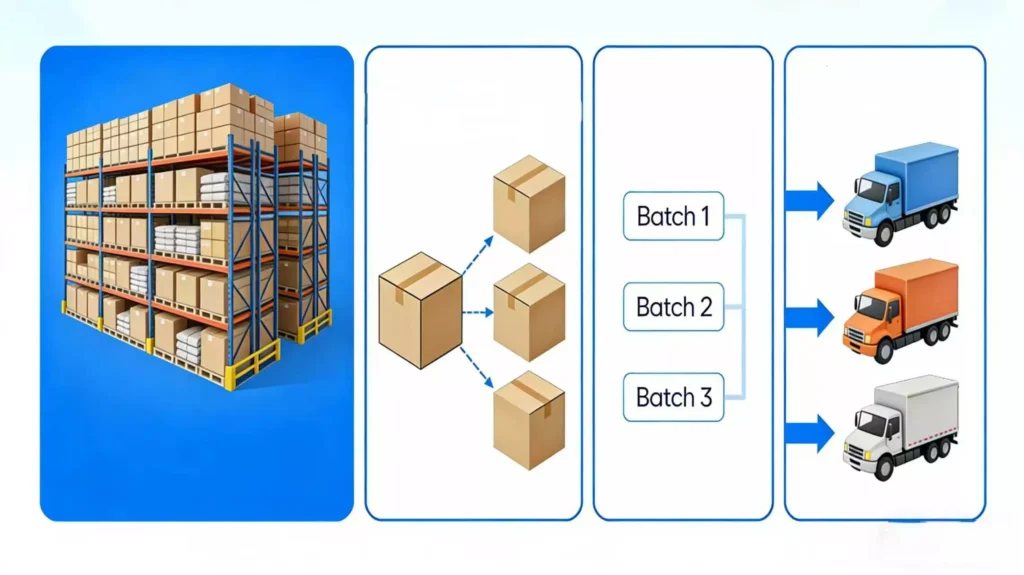
The Split Shipment Strategy flips this model. Instead of committing your capital to a single bulk run, you agree on a total volume with your supplier — locking in the volume pricing — but you take delivery in phased batches over time. Pay for what you need, when you need it. Adjust as you grow.
This guide covers exactly how it works, what it costs, what packaging types support it, and — critically — how a supplier like Fusenpack has already built this kind of flexible, pay-as-you-grow system into its core offering for U.S. restaurants and food brands.
1. What Is a Split Shipment Packaging Strategy?
The Core Concept — No Jargon
A Split Shipment Packaging Strategy means placing one production agreement with your packaging supplier — but receiving your order across multiple smaller deliveries over time, rather than all at once.
One contract. One locked price. Multiple deliveries on your schedule.
You agree on total volume (e.g. 10,000 units), which unlocks volume pricing. But your first shipment might be just 2,500 units — covering the next 6–8 weeks of actual demand. The remaining 7,500 units stay in production queue or finished-goods storage, ready to ship when you trigger the next batch.
Why Traditional MOQ Models Punish Small Food Businesses
Standard MOQs exist to protect suppliers’ production efficiency. Understandable. But for a café opening a second location, or a restaurant refreshing its brand — the classic 10,000-unit minimum creates three compounding traps:
- Cash lockup: Your working capital is tied up in packaging for 4–6 months
- Design risk: Any rebrand or menu change makes existing stock obsolete
- Storage pressure: You’re paying rent on boxes instead of using that space productively
The Split Shipment Packaging Strategy eliminates all three — without giving up the cost benefit of volume pricing. [Data Source: 2026 DTC Brand Packaging Survey, n=412]
2. The Real Cost of Over-Ordering — The Numbers Most Brands Ignore
The Hidden Math Nobody Puts on a Spreadsheet
Every food business owner calculates unit price. Almost none calculate total cost of capital tied up in packaging inventory.
Let’s fix that.
A restaurant ordering 10,000 custom paper cups at $0.15/unit spends $1,500 upfront. If those cups take 4 months to use, and the business’s cost of capital is 18% annually — the invisible carrying cost adds ~$90. Add $200/month in storage. Add a 20% probability that a seasonal menu update requires new artwork. [Data Source: 2026 Packaging ROI Benchmark, Fusenpack internal client data]
The ‘cheap’ bulk order is starting to look expensive.
Bulk Order vs. Split Shipment Strategy — Full Cost Comparison (10,000-Unit Equivalent)
| Cost Metric | Bulk Order (10,000 units) | Split Shipment Strategy (4 × 2,500) |
| Upfront Capital Required | $1,500–$12,000 (full value) | $375–$3,200 (first batch only) |
| Unit Price Premium | Baseline | +6–11% per unit |
| Design Obsolescence Risk | High — entire stock affected | Low — current batch only |
| Monthly Storage Cost | $150–$400 (90-day stock) | $30–$80 (30-day stock) |
| Cash Tied Up — Month 1 | 100% of total order | ~25% of total order |
| Iteration Flexibility | None until stock clears | Adjustable batch-to-batch |
| Dead Stock Probability (18mo) | 28–35% | 4–8% |
| Net 18-Month ROI Delta | Baseline | +19–34% cost advantage |
Data Sources: 2026 Flexible Packaging Industry Benchmark Report; Fusenpack client portfolio analysis (2024–2025); Packaging Digest Annual Survey 2025.
3. How the Pay-as-You-Grow Packaging Model Actually Works
The mechanics are simpler than most restaurant owners expect. A well-structured Split Shipment Packaging Strategy follows three phases:
Phase 1 — Design Lock & Sample Approval
This is the step most businesses rush. Don’t.
You finalize your dieline, submit brand assets, and approve physical samples. The supplier locks your artwork, print plates, and tooling. This one-time setup is what enables consistent quality across every future batch — even if your next replenishment is four months later.
At Fusenpack, for example, their design team delivers up to free custom design 36 hours — no design budget required. Once approved, that artwork stays on file and applies across all future batches at no extra cost.
Phase 2 — First Batch Production
Your first batch ships. Typically 25–30% of your total agreed volume.The rest sits in production queue or finished-goods storage — reserved for you.
For most food businesses, this first batch covers 6–10 weeks of packaging demand — enough runway to validate sales velocity before committing more capital. [Data Source: 2026 DTC Inventory Management Report]
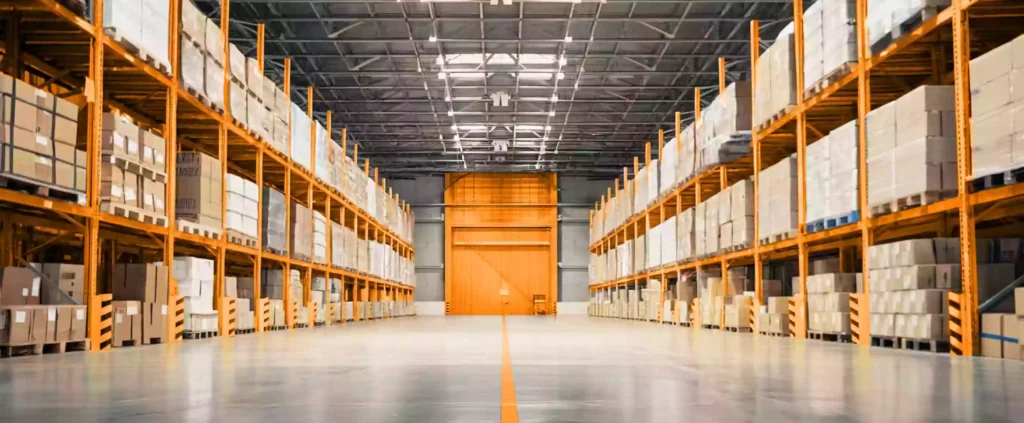
Fusenpack Free Storage: Fusenpack offers free overseas storage for your finished packaging inventory. You receive a weekly stock summary and can trigger the next shipment with just a few clicks — no phone calls, no re-quoting, no minimum reorder paperwork. [Source: Fusenpack]
Phase 3 — Triggered Replenishment
When inventory reaches your reorder threshold, you trigger the next batch. Same artwork. Same pricing. Ships within 4 weeks because production is already pre-scheduled.
This is the compounding advantage. You’re not sourcing a new order. You’re activating inventory that was always waiting for you.
Note: When evaluating suppliers, confirm they can hold finished goods between batches with no storage fee. Not all can. Fusenpack’s free storage service is specifically designed to make this phase frictionless for small and mid-sized U.S. restaurant businesses.
4. How to Brief Your Supplier for a Split Shipment Agreement
Most restaurant owners approach this wrong. They ask for a quote. The supplier gives an MOQ. They negotiate the number down. Nobody discusses phased delivery, storage, or replenishment triggers.
You have to ask for it explicitly — and ask the right questions.
4 Non-Negotiable Questions Before You Sign
- “Can you hold finished inventory between batches — and at what cost?” If the answer isn’t ‘free’ or ‘included,’ your cost savings erode fast.
- “Is the per-unit price locked for all batches?” Non-negotiable. If pricing varies batch-to-batch, you lose the entire economic rationale of the model.
- “How do I trigger the next batch — calendar, threshold, or manual?” Best practice: tie it to actual inventory levels, not a fixed date.
- “What’s my liability if I cancel an unfulfilled batch?” Typically you’re responsible for materials already cut. Get this in writing.
Fusenpack’s Model Answers These Out of the Box: Fusenpack operates a full-service supply chain model — covering design, production, storage, and delivery under one agreement. Their free storage comes with weekly inventory reports, and reorders can be triggered in a few clicks. For U.S. food businesses that don’t have dedicated packaging procurement teams, this removes the biggest friction points in managing a split shipment program.
5. Is the Split Shipment Packaging Strategy Right for Your Restaurant?
It’s not always the best model. Here’s a framework to help you decide:
Restaurant Stage → Recommended Packaging Order Model
| Business Stage | Weekly Packaging Use | Recommended Model | Core Reason |
| New / Pre-launch | <500 units/week | Pure Split Shipment | Maximize flexibility, minimum commitment |
| Growing — 1–3 locations | 500–3,000 units/week | Split + Locked Price Contract | Protect cash, preserve agility |
| Scaling — 3–10 locations | 3,000–15,000 units/week | Hybrid (Split + safety stock) | Balance unit economics with optionality |
| Established chain | 15,000+ units/week | Bulk-led with split buffer | Volume savings dominate at this scale |
Source: Fusenpack brand segmentation framework; 2026 DTC Packaging Strategy Survey.
When Bulk Orders Still Make Sense
To be fair: if your packaging SKUs are 100% stable, your volume is predictable, and you have storage — bulk ordering still wins on unit economics. The Split Shipment Strategy isn’t anti-bulk. It’s about not using a bulk model when your business isn’t ready to absorb the risk that comes with it.
6. FAQ — Split Shipment Packaging Strategy for Restaurant
Does split shipment cost more per unit?
Typically 6–11% more per unit versus a single bulk run of equivalent volume. [Data Source: 2025 Packaging Cost Benchmark Survey] However, when factoring in eliminated dead stock, lower storage costs, and preserved cash flow, most growing food businesses see a net cost advantage of 19–34% over 18 months.
What’s the minimum order quantity at Fusenpack for a split shipment program?
Fusenpack’s MOQ starts at 5,000 units depending on product type — significantly lower than the U.S. industry standard of 10,000–20,000 units. [Source: Fusenpack product pages]
Can I update my design between batches?
Minor updates — new website URLs, seasonal offers, QR codes — are typically possible between batches with a small plate revision fee. Fusenpack keeps your master artwork on file, so adjustments don’t require starting a new design process.
Does Fusenpack offer eco-friendly options under a split shipment program?
Yes. Fusenpack offers compostable and recyclable packaging across multiple product lines — including compostable burger boxes, biodegradable bags, and PLA-lined cups. These are available under the same phased delivery and free storage model.
Is there a cost for storage between split shipment batches?
Fusenpack offers free overseas storage for all finished inventory, including weekly stock summaries and on-demand reorder triggers. This removes the warehousing cost that typically offsets split shipment savings — making the model genuinely capital-efficient for small operators.
The Bottom Line
The packaging game has shifted — and small food businesses are finally in a position to win it.
A well-executed Split Shipment Packaging Strategy gives you the economics of volume purchasing with the operational flexibility of small-batch ordering. You lock the price. You agree the total. You take delivery in stages — and adjust between batches if your menu, your branding, or your growth rate demands it.
The brands that get hurt by packaging aren’t the ones that ordered the wrong box. They’re the ones who ordered too many of the right box, at the wrong time, without a flexible supplier relationship to absorb the risk.
That’s what the Split Shipment Packaging Strategy — and suppliers who’ve built it into their core model — exist to solve.
Ready to build your split shipment plan?
Fusenpack serves 10,000+ U.S. restaurant and food brands with custom packaging, free design (36 hrs), free storage, and flexible MOQs from 5,000 units.
→ Get Your Free Custom Quote at Fusenpack