Is Custom Food Packaging Worth It? Real Numbers from 3 Restaurants
By
Contents
- The Short Answer: Yes, But Only When the Numbers Work
- Case Study #1: Burger Joint — Repeat Orders Up 18%
- Case Study #2: Café — Perceived Quality Changed the Price Conversation
- Case Study #3: Fast Casual Chain — Packaging That Scaled
- The ROI Formula You Can Apply to Your Restaurant
- When Custom Food Packaging Is Not Worth It
- What Fusenpack Costs Per Unit vs. the Return You Can Expect
- Final Verdict: Who Should Invest Now, and Who Should Wait
- FAQ
Is custom food packaging worth it? Yes — but only when it pays for itself. Not when it looks nice. Not when it sounds premium. Not when it makes the box feel more “on brand.” If the packaging does not help you win back customers, improve reviews, or lift order value, it is just a cost with better design.
After working with food businesses of all sizes, I have seen both sides of this. I have seen custom packaging quietly improve repeat orders and customer perception. I have also seen restaurants spend more on boxes and get almost nothing back. The difference is not taste. It is math.
The Short Answer: Yes, But Only When the Numbers Work
Custom packaging is a business decision first. A design decision second.
A beautiful box means very little if it does not change one of three things:
- repeat order rate
- review score
- average spend per visit
Those are the numbers that tell you whether custom packaging is actually doing work for the business.
What “worth it” really means
To say packaging is worth it, three things should be true:
- the higher packaging cost is offset by measurable revenue gain
- customers come back more often, or spend more per order
- the brand becomes easier to remember, which lowers pressure on paid marketing
If none of that happens, the box may still look better. That does not make it profitable.
Case Study #1: Burger Joint — Repeat Orders Up 18%
A fast-casual burger shop in Austin came to us with a familiar problem. Their delivery food was arriving soggy, tilted, and packed in generic white boxes. Customers were not furious, but they were not coming back either. Repeat order rate sat at 22%, which was weak for their category.
What changed in the packaging
We kept the change simple:
- a sturdier double-wall base to stop the box from collapsing
- a custom-printed logo wrap with stronger color blocking
- ventilation slits to reduce sogginess in fries and hot sides
What happened next
Within 90 days, repeat orders climbed to 40%. Negative delivery reviews dropped by about a third.
Was packaging the only reason? No. But it was the most visible operational change they made during that period, and it gave customers a better first impression at the exact moment the food arrived.
That is where custom packaging for delivery restaurants starts to make sense: not as decoration, but as part of the product experience.
Case Study #2: Café — Perceived Quality Changed the Price Conversation
A single-location café in Portland thought customers had a coffee problem. People kept saying the drinks “felt expensive for what they were.”
The coffee was not the real issue. The packaging was sending the wrong signal.
What the packaging change was
We tightened up the whole presentation:
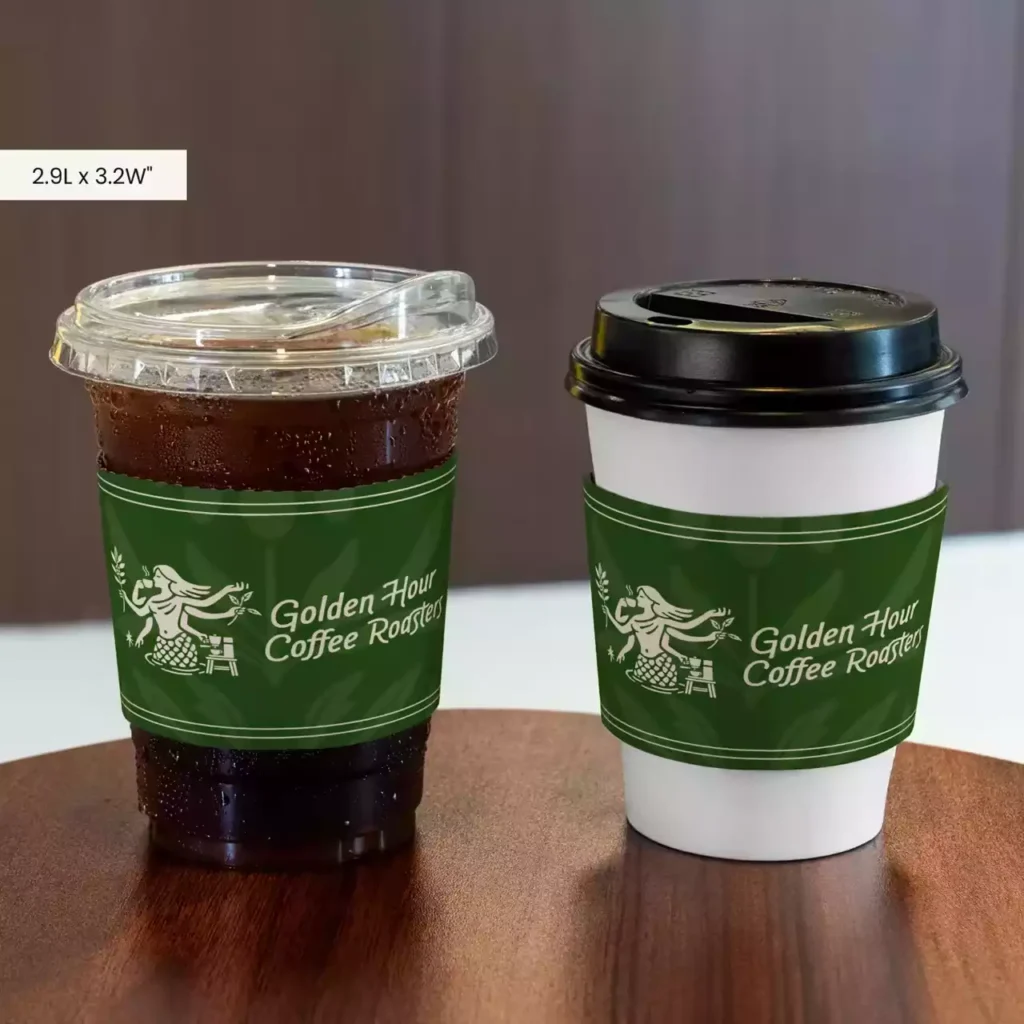
- a unified sleeve and cup design with a matte finish and earthy colors
- flat-bottom kraft bags for baked goods
- consistent tissue wrap inside the bakery boxes
What happened next
Within two months, their Google review score moved from 4.1 to 4.6. Average spend per visit increased by $2.30. Customers also began tagging the café on Instagram without being asked.
That last part matters more than it sounds like. The packaging did not just look better. It made the café feel more intentional, and that changed how people talked about the brand.
For cafés, custom food packaging benefits are often less about protection and more about perception. If the customer feels the experience is premium, price resistance usually drops.
Case Study #3: Fast Casual Chain — Packaging That Scaled
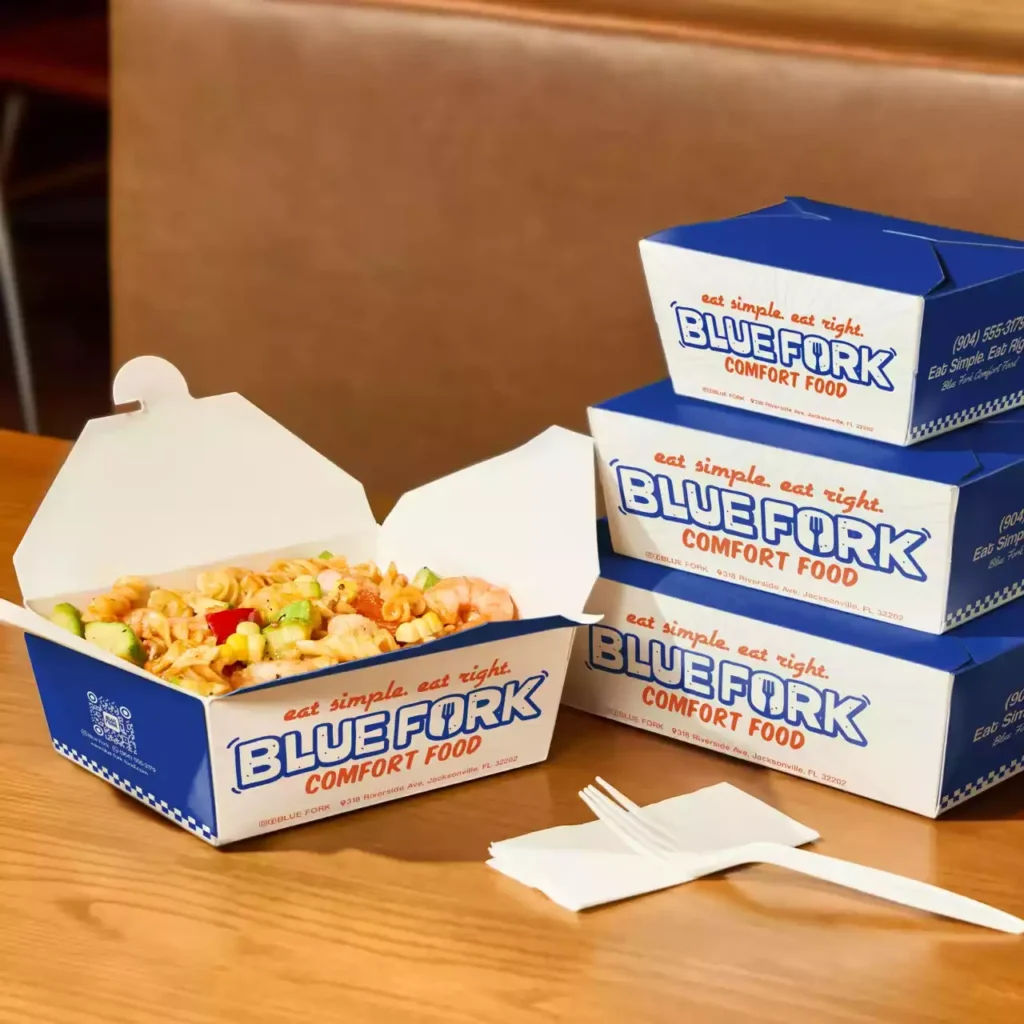
A regional fast-casual brand with 11 locations was growing fast. That created a new problem: packaging inconsistency. One store used three different bag styles depending on what was in stock. Another location had a different box size for the same menu item.
That kind of mess does not stay small for long.
What the packaging solved
We simplified the system:
- one SKU structure across all 11 locations
- reinforced handles on every delivery bag
- a standardized size lineup that covered about 90% of menu combinations
What happened next
Complaints about torn bags fell by more than 60%. Social photos looked more consistent. New-store onboarding also became easier because there were fewer packaging decisions to make.
This is where custom packaging ROI becomes clearer. You are not only trying to impress customers. You are reducing friction inside the operation.
And that matters, because the easiest savings are often the ones people forget to count.
The ROI Formula You Can Apply to Your Restaurant
A lot of packaging conversations stop at “it looks better.”
That is not enough.
Use this instead:
ROI = (Additional profit generated − Extra packaging cost) ÷ Extra packaging cost
How to plug in your numbers
Let’s say:
- current packaging cost per unit = $0.18
- custom packaging cost per unit = $0.35
- monthly order volume = 3,000 orders
- repeat rate increases by 5%
- average order value = $22
Now run the math:
- extra packaging cost per month = ($0.35 − $0.18) × 3,000 = $510
- extra revenue from repeat lift = 150 extra orders × $22 = $3,300
- ROI = ($3,300 − $510) ÷ $510 = about 547.06%
That is the kind of number that gets attention.
Even if your assumptions are more conservative, the packaging can still work — but only if the product and service are already decent enough that packaging is helping, not trying to rescue the business.
When Custom Food Packaging Is Not Worth It
I will be blunt: there are real situations where custom packaging is the wrong move.
- Low order volume — if you are under roughly 800 orders per month, minimum order quantities can make the math ugly
- Low repeat rate — if people are not coming back anyway, packaging will not fix the real problem
- No clear branding goal — if you do not know what the packaging should change, you are buying a pretty box
- No budget to test — full rollout without a small-batch test is how restaurants waste money
This is the part most packaging conversations skip: packaging is a multiplier, not a miracle. It amplifies what is already working. It does not replace weak food, weak service, or weak positioning.
What Fusenpack Costs Per Unit vs. the Return You Can Expect
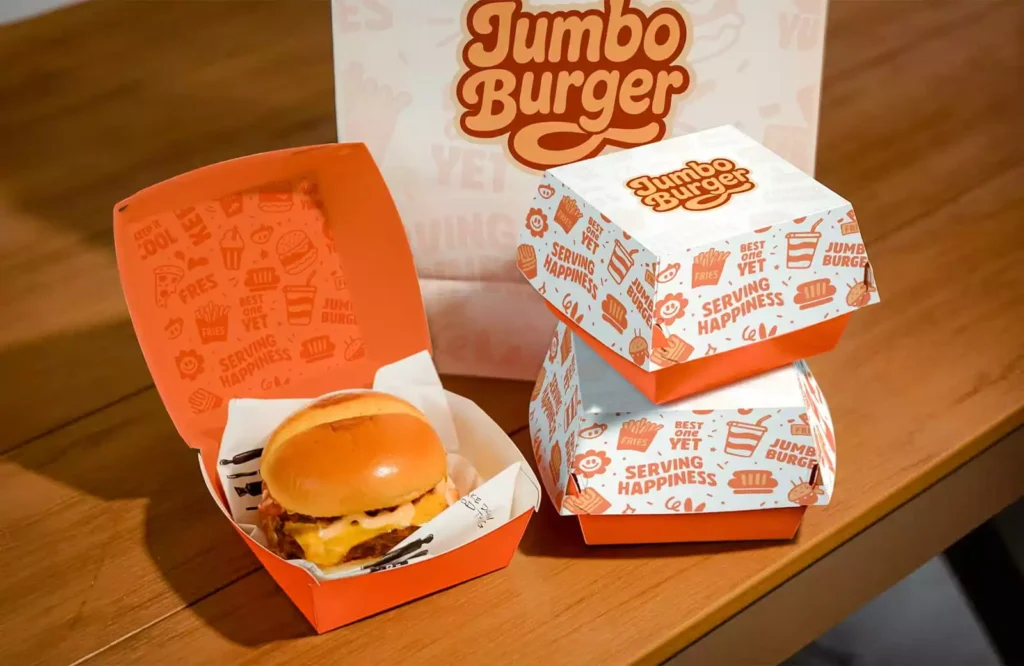
Fusenpack emphasizes low minimum order quantity, free design, and free storage, and the standard MOQ starts at 5,000 units for most products. The site also publishes product-level starting prices rather than one universal restaurant-wide rate. For example, a custom paper hot cup starts at $0.071/unit, a custom paper burger box starts at $0.144/unit, and a custom paper food tray starts at $0.053/unit.
So instead of forcing one flat “restaurant type” range, the better way to think about it is this:
- cup-driven cafés can start from the low per-unit range on cups
- burger and sandwich brands can model against box pricing
- tray-based menus can test lower-cost entry points first
The smartest way to start is a small test batch of 500 to 1,000 units in your highest-volume channel.
Measure:
- repeat rate
- review score
- complaint volume
- average spend
Give it 60 days. Then let the numbers decide whether the packaging deserves to scale.
Final Verdict: Who Should Invest Now, and Who Should Wait
Move now if:
- delivery makes up more than 30% of your revenue
- your repeat order rate is already decent and has room to climb
- you want the brand to be remembered beyond your immediate neighborhood
Wait if:
- you are doing under 500 orders per month
- your core product still has consistency issues
- you cannot afford a real test
Custom packaging for restaurants is worth it when it can pay itself back. That is the whole thesis.
A box that costs you an extra $0.17 per order can be a good investment if it brings back one more customer often enough. A box that looks premium but never changes behavior is just an expense with better graphics.
Run the numbers first. Order later.
FAQ
Q: How much does custom food packaging cost per unit?
A: The cost depends on material, print method, size, and quantity. On Fusenpack’s site, product-level starting prices vary by item; for example, a custom paper hot cup starts at $0.071/unit, a burger box at $0.144/unit, and a paper food tray at $0.053/unit.
Q: What is a realistic ROI timeline for custom packaging?
A: Most restaurants that see a lift can measure it within 60–90 days, as long as they track repeat rate and reviews from day one.
Q: Is custom packaging worth it for small restaurants?
A: Sometimes, but not always. If order volume is too low, it is harder to recover the cost. Start with a small test batch and let the data decide.
Q: Does packaging actually affect online reviews?
A: Yes. Delivery experience, including packaging, often shows up in customer feedback, especially when food arrives damaged, messy, or hard to carry.