Custom Donut Box Guide: Choose the Right Size, Material, and Design
By
Contents
- Why does a custom donut box matter?
- What size should a custom donut box be?
- How do material and structure affect performance?
- Is a window worth the extra cost?
- How much should a custom donut box cost?
- Where Fusenpack fits into the process
- Frequently Asked Questions
- Conclusion: Is a Custom Donut Box Right for You?
A custom donut box should solve a real problem. If it does not reduce damage, support sales, or strengthen recall, it is just extra cost.
A custom donut box guide should not start with design trends. It should start with one simple question: what must the box protect, carry, and sell?
Donuts are fragile in a way that gets underestimated all the time. Glaze smears. Frosting shifts. Filled donuts get crushed. Even a box that looks beautiful on screen can fail the moment it moves from the counter to a delivery bag.
If the box protects the product, keeps the shape intact, and makes the brand look professional, it earns its place. If it does none of those things, it is decoration.
Why does a custom donut box matter?
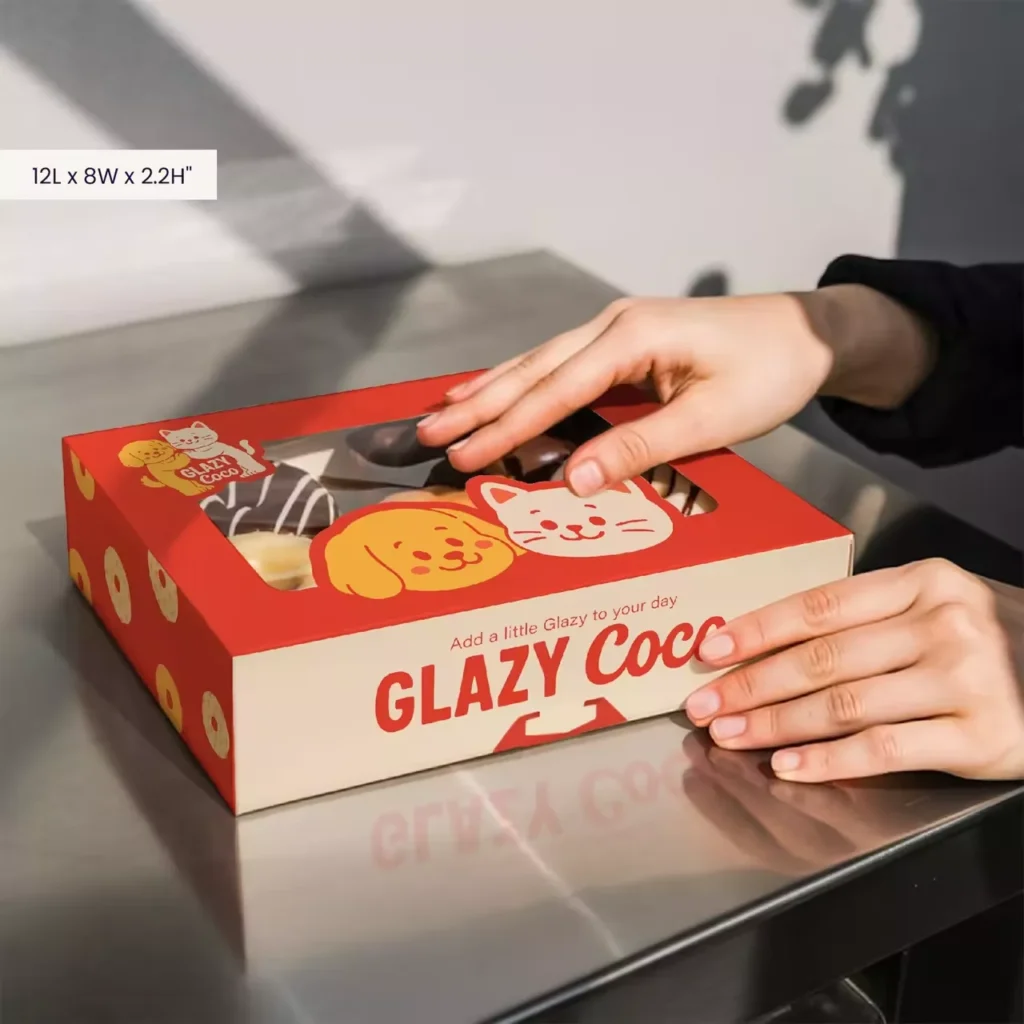
A custom donut box matters because it does three jobs at once: it protects the product, supports the brand, and affects the buying experience.
For one thing, it helps prevent damage. A standard box may be fine for a sturdy donut, but a delicate glazed or filled donut needs a better fit. Too much empty space lets the donuts slide. Too little space crushes the topping. The real problem is often not outside pressure, but movement inside the box.
It also changes how customers judge the product. For in-store sales, the box is part of the shelf presentation. For delivery orders, it is the first thing the customer sees when the order arrives. A box that looks thoughtful makes the whole product feel more valuable.
And finally, it can support sales. A window box can make a donut look irresistible at the counter. A strong, well-structured box can reduce refunds, complaints, and wasted product during delivery. That is not branding for the sake of branding. That is packaging doing actual work.
The short version: the box should help the donut arrive intact and make the brand look worth remembering.
What size should a custom donut box be?
Size is the first decision, and honestly, it is the one people get wrong most often.
A box that fits poorly creates avoidable problems. If it is too large, the donuts move around. If it is too small, the toppings get damaged. Either way, the customer notices.
Common sizes by donut count
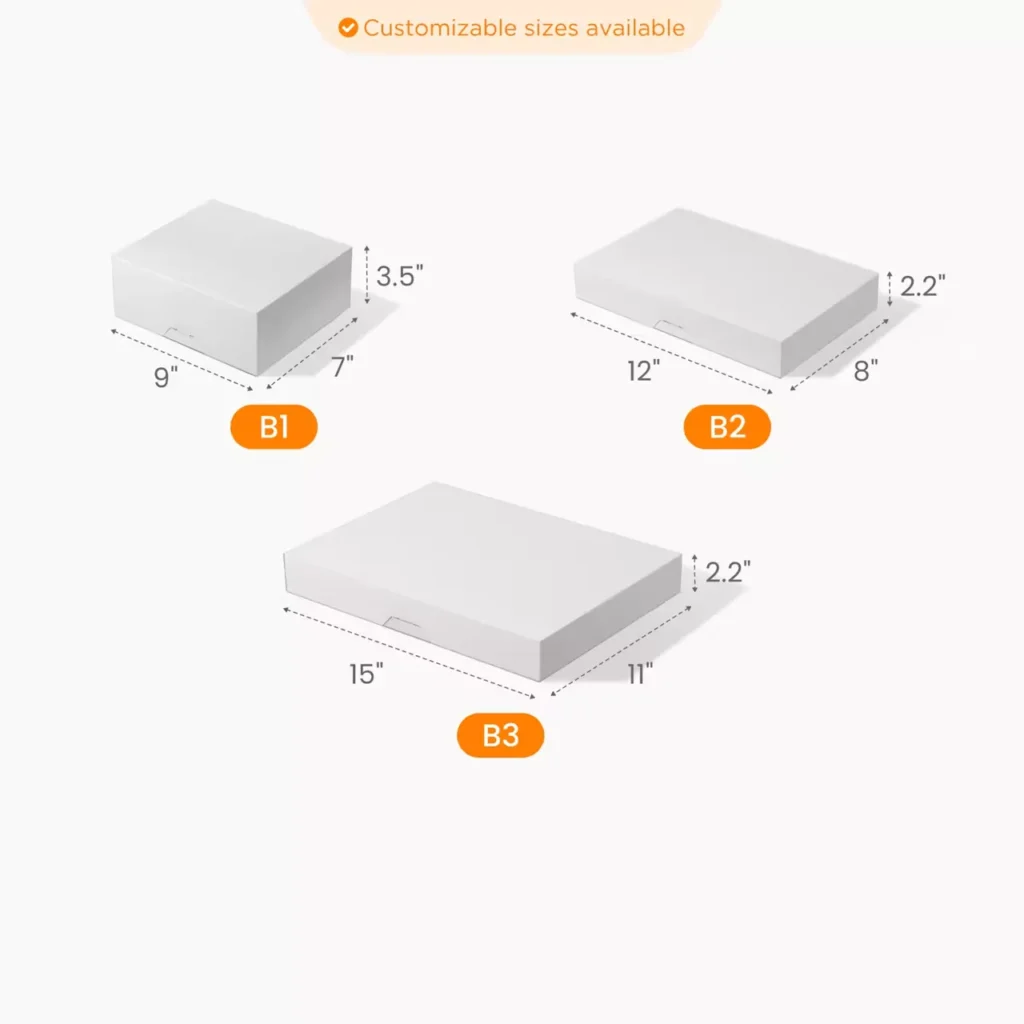
The most popular configurations are 4-, 6-, and 12-donut boxes, although custom sizes are available for specialty products and bakery requirements.
That is a practical starting point, but the exact internal dimensions depend on the donut’s diameter, height, and topping style.
Here is a simple reference:
| Box Capacity | Internal Dimensions (L × W × H) | Recommended Use |
| 4 Donuts | 9″ × 7″ × 3.5″ | Individual purchases, cafés, grab-and-go sales |
| 6 Donuts | 12″ × 8″ × 2.2″ | Half-dozen orders, bakery counters, takeout |
| 12 Donuts | 15″ × 11″ × 2.2″ | Delivery orders, gifting, family packs |
| Custom Sizes | Customizable | Specialty donuts, filled donuts, seasonal products |
How to size it correctly
Measure your largest donut, not your smallest one. Add enough clearance so the top does not scrape the lid, but not so much room that the donut slides from side to side.
A good rule: the box should feel like a glove, not a garage.
If you sell more than one donut style, test the biggest and most fragile one first. That is the one most likely to expose sizing problems.
When a standard size is enough
If you only sell one donut type, you do not deliver, and the product is sturdy, a standard stock box may be enough.
But once your menu gets more varied, or once delivery becomes part of the business, a custom size usually pays for itself in fewer complaints and less damage.
How do material and structure affect performance?
Material choice should follow the product, the route, and the amount of handling the box will face.
A box that looks eco-friendly but collapses in transit is not a smart choice. It becomes waste the moment it fails.
Cardboard vs. kraft paperboard
Kraft paperboard usually gives a natural, handmade look. It works well for local pickup and short delivery runs.
Thicker cardboard offers more stiffness and stronger crush resistance. That makes it better for stacking, shipping, or heavier product loads.
A useful way to think about it is this:
- Kraft board for lighter, local use
- Thicker cardboard for shipping or stacked delivery
- Reinforced structure when the box will travel farther or face more handling
Thickness and crush resistance
Thickness matters, but stiffness matters just as much.
A thin board may look neat, yet still bend too easily. A stronger board gives the box better shape retention and helps protect frosting, toppings, and fillings.
When talking to a supplier, ask about:
- board thickness
- stiffness
- grease resistance
- crush resistance
- food-safe coatings
That gives you a much clearer picture than asking only for “better quality.”
Food-safe structure matters too
Donut boxes are not just display pieces. They need to be safe for food contact.
That means asking the supplier about food-safe inks, coatings, and grease barriers. If the donut is oily or glazed, the inside of the box should not soak through or become messy before the customer even opens it.
A box should look clean because it is clean, not just because the print looks nice.
Is a window worth the extra cost?
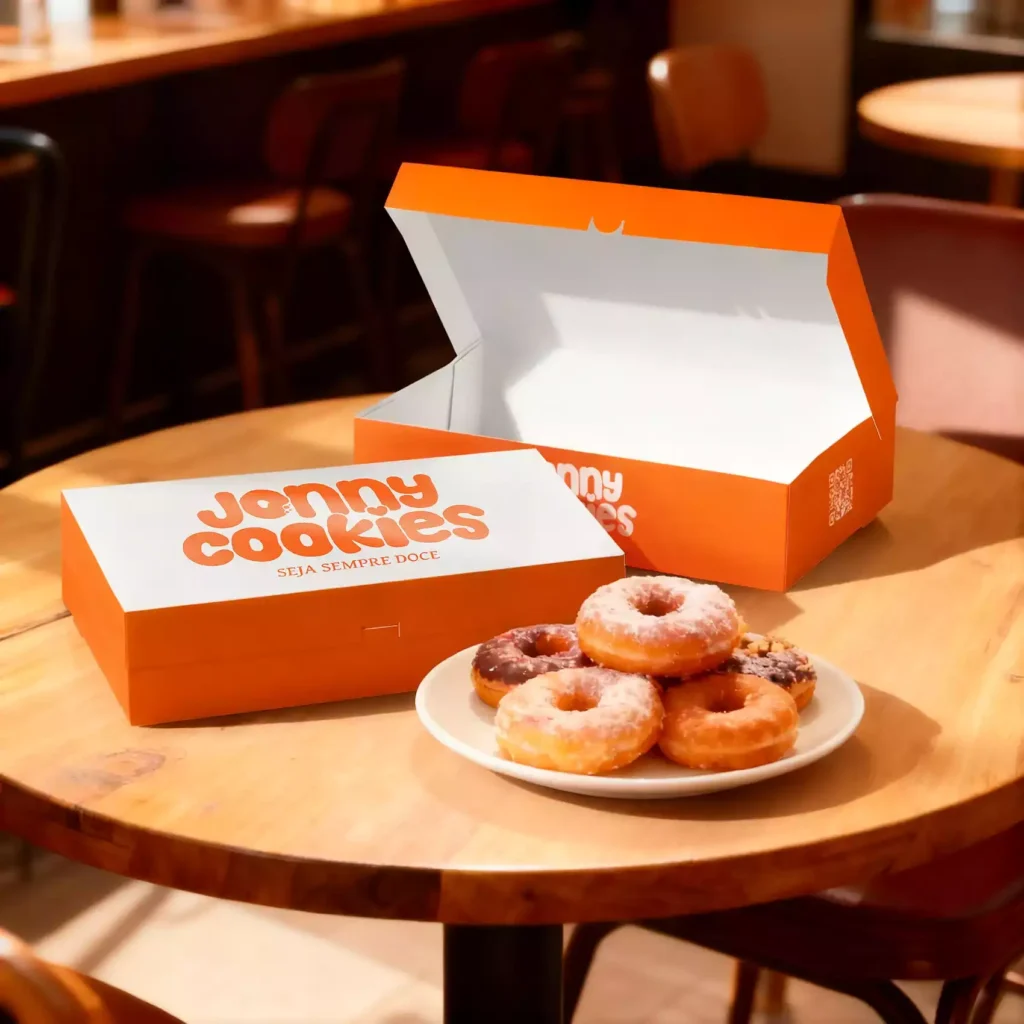
A window can be a strong selling tool. It can also create extra cost and slightly less protection.
The right answer depends on how the box will be used.
When a window helps
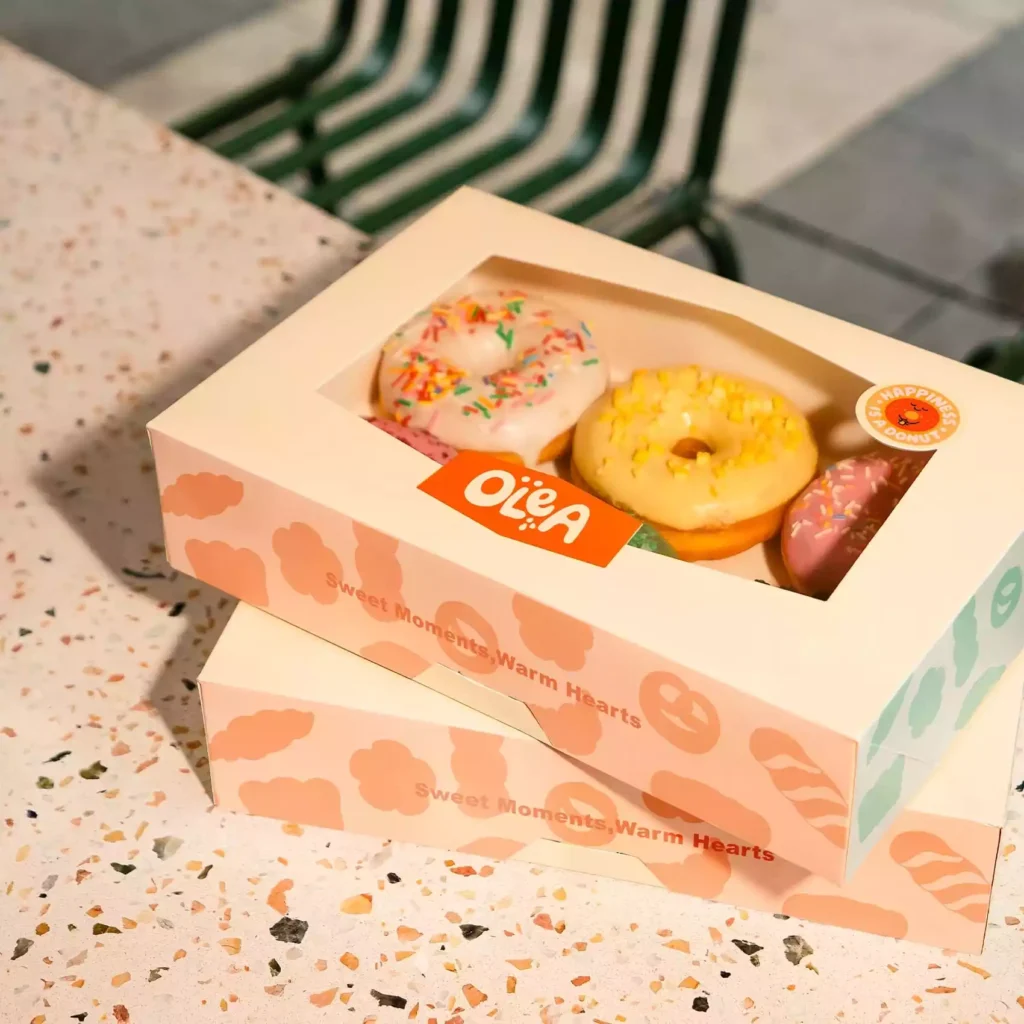
A window is useful when the donut itself is part of the selling experience.
That usually means:
- retail counters
- in-store pickup
- gift packaging
- impulse-buy displays
When customers can see the glaze, filling, or decoration, the product does some of the selling by itself. That is especially useful when the visual appeal is one of the reasons they are buying.
When a closed box is better
A closed box is usually better for delivery and shipping.
Why? Because a window adds one more weak point. It can fog, crack, tear, or pop out under pressure. A closed design is often more dependable and usually cheaper to produce.
So the choice is not really “better design” versus “worse design.” It is visual selling versus stronger protection.
If the box is going to travel, keep it closed.
How much should a custom donut box cost?
Custom donut box pricing depends on size, material, print complexity, order quantity, and structure.
There is no single number that fits every order. A simple one-color box for a local bakery will cost far less than a large, highly printed box with a special cutout or window.
What actually affects price the most?
- Order quantity: larger orders lower the per-unit cost
- Print complexity: more colors and inside printing add cost
- Structure: windows, handles, and special folds increase production difficulty
- Material: thicker board and grease resistance cost more
The important point is not to chase the lowest number. It is to choose the box that does the job without creating hidden losses from damage, complaints, or weak presentation.
Where Fusenpack fits into the process
If you are comparing suppliers, Fusenpack is worth checking because the right supplier should make the decision easier, not harder.
At https://www.fusenpack.com/, you can explore custom packaging options that support size, branding, and product protection together. That matters because a donut box should be chosen as a working tool, not just a printed container.
The best supplier conversation is not “What looks nice?” It is:
- What size fits my donut best?
- What material will hold up during delivery?
- What structure protects glaze and toppings?
- Can I get a sample before mass production?
Those are the questions that keep packaging from becoming a guessing game.
Frequently Asked Questions
How can I get a quote for custom donut boxes?
Simply submit your packaging requirements through the quote form. The Fusenpack team provides free custom packaging designs and a quotation, typically within 36 hours. Be sure to include your desired size, quantity, and branding requirements.
Are these custom donut boxes safe for food?
Yes. They are made from 350g food-grade paperboard and meet FDA food safety standards. The paper is also FSC-certified, ensuring responsible sourcing.
What are the boxes made from?
They are made from sturdy food-grade paperboard that is recyclable and biodegradable, making them a practical and eco-friendly packaging choice.
Can I customize the boxes with my logo?
Absolutely. Businesses can add:
- Custom logos
- Full-color printing
- Pantone printing
- Clear windows
- Inserts
- Custom artwork on all six sides
These branding options help bakeries create more memorable packaging and stronger brand recognition.
Can these boxes protect donuts during delivery?
Yes. The strong paperboard helps prevent crushing, shifting, and frosting damage during takeout and local delivery.
Conclusion: Is a Custom Donut Box Right for You?
The right custom donut box does more than package your products—it helps protect your donuts, creates a better customer experience, and reinforces your brand with every order.
Before choosing a box, think about how your donuts are sold and delivered. The right size, material, and box style should match your products and your daily operations, not just your design.
Looking for custom donut boxes that combine quality, reliable protection, and flexible customization? Explore Fusenpack’s custom packaging solutions to find the right option for your bakery.