The Pizza Shop Owner’s Guide to Choosing the Right Box
By
Contents
As a pizzeria owner, your reputation is built on delivering a perfect pizza every time. You focus on the quality of your dough, the freshness of your sauce, and the perfect melt of your cheese. But the moment that pizza leaves your shop for delivery, its fate rests in the hands of its packaging. A poorly designed pizza box can turn a crispy crust into a soggy disappointment before it ever reaches the customer.
Your pizza box is one of the most critical pieces of equipment in your business. It is responsible for protecting the quality of your product and serving as a primary marketing tool. This guide will walk you through the essential features of a high-performance pizza box, helping you choose a solution that keeps your customers happy and strengthens your brand.
Why the Right Material and Structure Matter
Not all cardboard is created equal. The material and construction of your pizza box are the first line of defense against a cold or damaged pizza.
A proper pizza box is made from corrugated paperboard. This isn’t just a single layer of thick paper; it’s a layered material with a fluted (wavy) sheet of paper sandwiched between two outer liners. This fluted design creates air pockets, which provide excellent insulation to keep the pizza hot. It also gives the box incredible structural strength, allowing multiple boxes to be stacked without crushing the one at the bottom.
When choosing your box, you’ll often see options for either white or kraft (brown) paperboard. Kraft paper provides a classic, rustic, and eco-friendly look, while white paperboard offers a clean, modern canvas that can make printed colors appear more vibrant. The choice depends on your brand’s specific aesthetic.
Small Features That Prevent a Soggy Crust
The biggest enemy of a delivered pizza is steam. A hot pizza releases a significant amount of steam, and if that steam is trapped inside the box, it condenses into water, making the crust and toppings wet. This is where small, but critical, design features come into play.
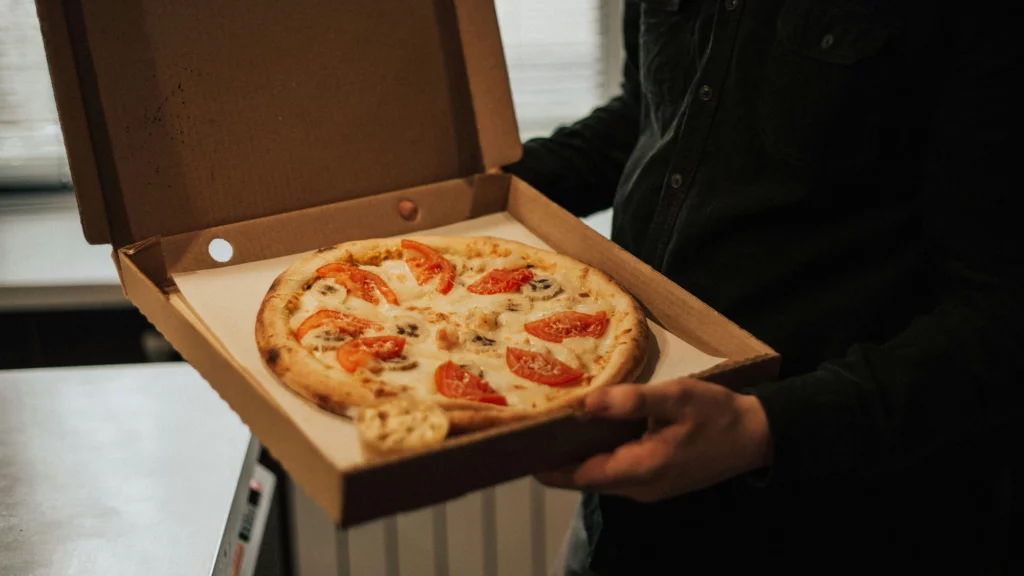
Look for boxes with well-placed ventilation holes. These small vents, usually located on the sides or back of the box, allow steam to escape. This is the single most important feature for maintaining the crispy texture of your crust. Additionally, a well-designed box will have a secure locking mechanism. The tabs should fit together snugly to prevent the box from accidentally opening during transit, while also being easy for the customer to open.
Turning Your Box into a Marketing Billboard
The large, flat surface of a pizza box is a marketer’s dream. It’s a huge canvas that sits on your customer’s kitchen counter for the duration of their meal. Using generic, unbranded boxes is a massive wasted opportunity.
Effective branding on custom pizza boxes goes beyond just printing your logo in the middle. The space allows you to tell a story. You can share information about the fresh ingredients you use, tell a brief story about your shop’s origins, or list your social media handles.
A highly effective strategy is to use the box to drive future sales. Print a QR code in the corner that links directly to your online ordering page with a special offer, such as “Scan for 15% off your next order.” This encourages customers to order directly from you, saving you money on third-party platform fees.
Choosing the Right Box Sizes for Your Menu
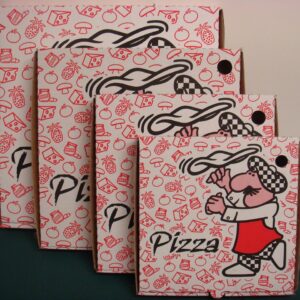
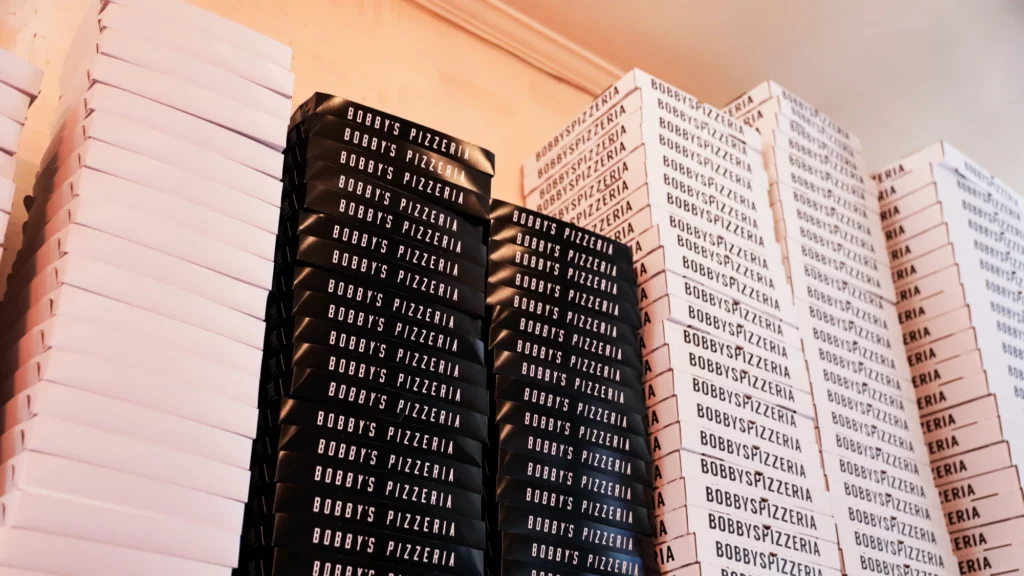
Consistency in your sizing is key to a smooth operation. Most pizzerias offer a standard range of sizes, such as 10-inch, 12-inch, 14-inch, and 16-inch boxes. It’s crucial to match the box size as closely as possible to the pizza size. Placing a 12-inch pizza in a 16-inch box not only looks unprofessional but also allows the pizza to slide around during delivery, potentially ruining the toppings.
By offering a consistent range of custom pizza boxes with your branding across all sizes, you create a professional and reliable image for your business. Some shops even consider smaller, custom-sized boxes for individual slices or specialty items like calzones.

Frequently Asked Questions (FAQ)
Here are some common questions pizzeria owners have about their boxes.
- Can a greasy pizza box be recycled?
This is a common point of confusion. In most municipalities, the parts of the pizza box that are heavily soiled with grease and cheese cannot be recycled, as the food residue contaminates the paper fibers. However, the clean top half of the box is often recyclable. You can even consider printing a small, helpful message on your box like, “Please recycle the clean parts of this box!”
- What is the difference between CMYK and Pantone printing for boxes?
CMYK is a four-color process used for printing full-color photos and complex graphics. Pantone (or spot color) printing uses pre-mixed, specific ink colors. For a simple design with one or two specific brand colors, Pantone printing can be more color-accurate and sometimes more cost-effective. For a full-color image, CMYK is necessary.
- What is a typical minimum order for custom pizza boxes?
Due to the setup process for printing presses, custom-printed boxes require a minimum order quantity (MOQ). This can range from a few thousand to ten thousand boxes, depending on the supplier and the complexity of the design. While this is a significant upfront investment, the per-unit cost is often very reasonable, and it secures your inventory for a long period.
- How can I make my design stand out without it being too expensive?
You don’t need a complex, multi-color design to be effective. A simple, one-color print on a high-quality kraft or white box can look incredibly professional. Using a bold, clever slogan or a unique, simple graphic can be more memorable than a cluttered, full-color design.
Your pizza box is the final handshake with your customer. It protects the quality of your hard work and represents your brand long after the meal is over. At Fusenpack, we are experts in creating high-performance custom pizza boxes that are both durable and beautifully branded. Contact us to discuss how we can help you design a box that delivers a perfect pizza, every time.